
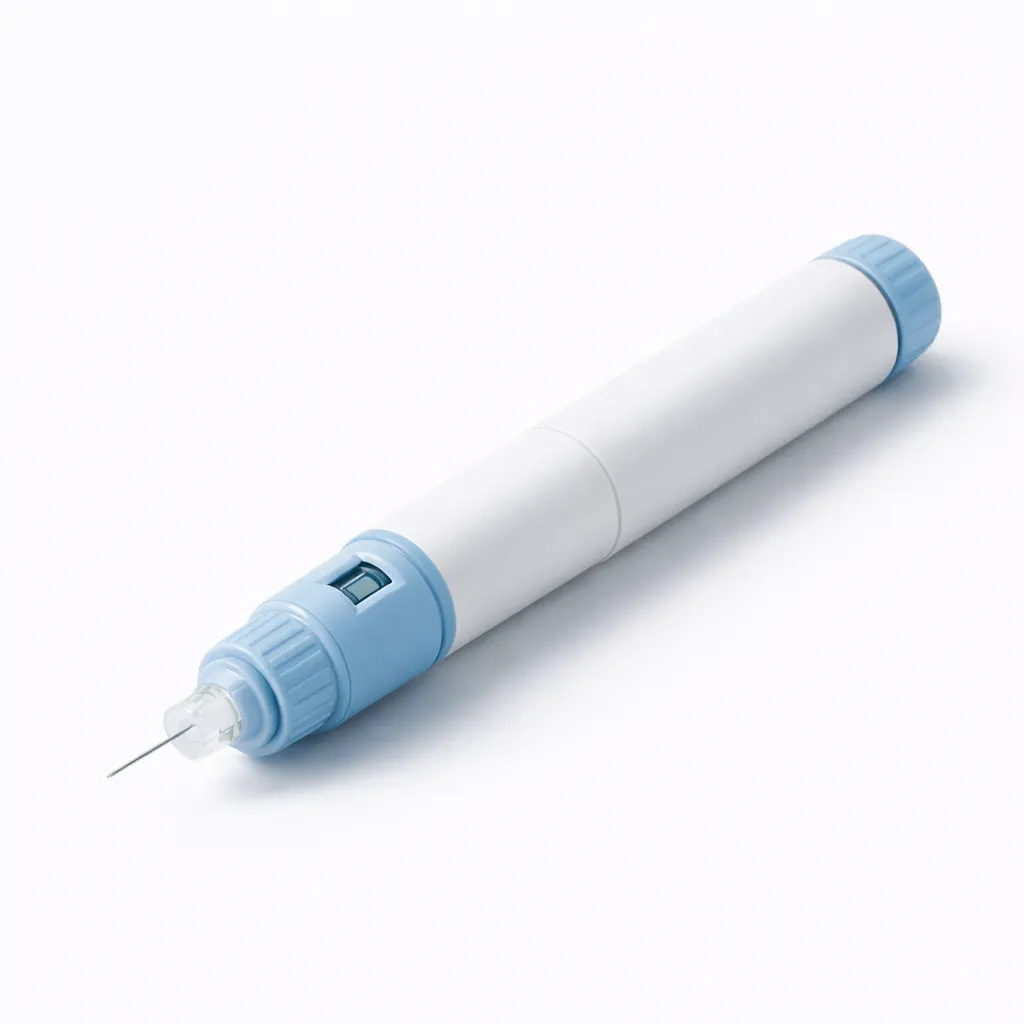
Description
Copellor Autoinject Pen
Indications
The Copellor Autoinject Pen is primarily indicated for the treatment of severe allergic reactions, including anaphylaxis, in patients who are at risk of such reactions. It is also utilized in the management of acute asthma exacerbations and other conditions that require rapid administration of epinephrine. This device is designed for use by individuals who have been prescribed epinephrine for emergency situations, providing a user-friendly method of self-administration.
Mechanism of Action
Copellor Autoinject Pen delivers epinephrine, a sympathomimetic agent that acts on both alpha and beta-adrenergic receptors. The activation of alpha-1 receptors leads to vasoconstriction, which increases systemic vascular resistance and raises blood pressure. Beta-1 receptor stimulation enhances cardiac output by increasing heart rate and myocardial contractility. Additionally, beta-2 receptor activation results in bronchodilation, which alleviates respiratory distress associated with anaphylaxis and asthma. The rapid onset of action of epinephrine is crucial in emergency situations, as it counteracts the life-threatening effects of severe allergic reactions.
Pharmacological Properties
Ephedrine, the active ingredient in the Copellor Autoinject Pen, is characterized by its rapid absorption and onset of action when administered intramuscularly. It has a half-life of approximately 2 to 3 hours, and its effects can be observed within minutes of injection. The pharmacokinetics of epinephrine may vary based on the site of administration, with intramuscular injections providing the most reliable absorption in emergency settings. The drug is metabolized primarily by the liver and excreted in urine, with a small portion undergoing conjugation.
Contraindications
The use of the Copellor Autoinject Pen is contraindicated in patients with a known hypersensitivity to epinephrine or any of the other components of the formulation. It should also be avoided in individuals with certain medical conditions, including but not limited to, narrow-angle glaucoma, shock (other than anaphylactic shock), and certain types of arrhythmias. Patients with cardiovascular diseases, such as coronary artery disease or hypertension, should use this medication with caution and under medical supervision.
Side Effects
Common side effects associated with the use of the Copellor Autoinject Pen may include palpitations, tachycardia, anxiety, tremors, dizziness, and headache. Serious side effects can occur, including hypertension, cardiac arrhythmias, and pulmonary edema. Patients should be advised to seek immediate medical attention if they experience severe side effects or signs of an allergic reaction to the medication itself. It is essential to monitor patients closely after administration, especially in those with pre-existing cardiovascular conditions.
Dosage and Administration
The recommended dosage of the Copellor Autoinject Pen for adults and children weighing over 30 kg is typically 0.3 to 0.5 mg of epinephrine, administered intramuscularly into the mid-anterolateral thigh. For children weighing less than 30 kg, a lower dose of 0.01 mg/kg (up to a maximum of 0.3 mg) is recommended. The autoinjector is designed for single-use, and if symptoms persist or recur, a second dose may be administered after 5 to 15 minutes, depending on the severity of the reaction and the patient’s response. Patients should be educated on the proper technique for using the autoinjector to ensure effective administration during emergencies.
Interactions
Potential drug interactions with the Copellor Autoinject Pen include those with other sympathomimetic agents, which may enhance the cardiovascular effects of epinephrine. Additionally, certain medications such as beta-blockers can counteract the effects of epinephrine, potentially leading to increased blood pressure and heart rate. Patients taking monoamine oxidase inhibitors (MAOIs) or tricyclic antidepressants should also exercise caution, as these can potentiate the effects of epinephrine. It is advisable for patients to inform their healthcare provider of all medications they are currently taking to avoid potential interactions.
Precautions
When using the Copellor Autoinject Pen, patients should be aware of specific precautions. Individuals with pre-existing cardiovascular conditions, such as hypertension or arrhythmias, should use the device with caution. It is also important to ensure that the autoinjector is stored properly, as exposure to extreme temperatures can affect the efficacy of the epinephrine. Patients should be educated on recognizing the signs of anaphylaxis and the importance of seeking immediate medical attention after using the autoinjector, even if symptoms appear to resolve. Regular training and practice with the device can enhance confidence and effectiveness in emergency situations.
Clinical Studies
Clinical studies have demonstrated the efficacy of epinephrine in treating anaphylaxis and severe allergic reactions. Research indicates that timely administration of epinephrine significantly reduces morbidity and mortality associated with anaphylaxis. A study published in the Journal of Allergy and Clinical Immunology highlighted that patients who received epinephrine within minutes of the onset of anaphylactic symptoms had a higher rate of successful treatment outcomes compared to those who delayed administration. Additional studies have also shown that autoinjectors, such as the Copellor Autoinject Pen, improve the likelihood of timely epinephrine administration in emergency situations, particularly among individuals with a history of severe allergies.
Conclusion
The Copellor Autoinject Pen is a vital tool for individuals at risk of severe allergic reactions, providing a reliable and efficient means of self-administration of epinephrine. Understanding its indications, mechanism of action, and proper usage is essential for maximizing its effectiveness in emergency situations. Patients should remain informed about potential side effects, contraindications, and interactions with other medications. Ongoing education and practice are crucial for ensuring that individuals can respond effectively when faced with life-threatening allergic reactions.
Important
It is crucial to use the Copellor Autoinject Pen responsibly and as directed by a healthcare professional. This device is intended for emergency situations only and should be part of a comprehensive allergy management plan. Always consult your healthcare provider for guidance on the appropriate use and maintenance of your autoinjector.


