Description
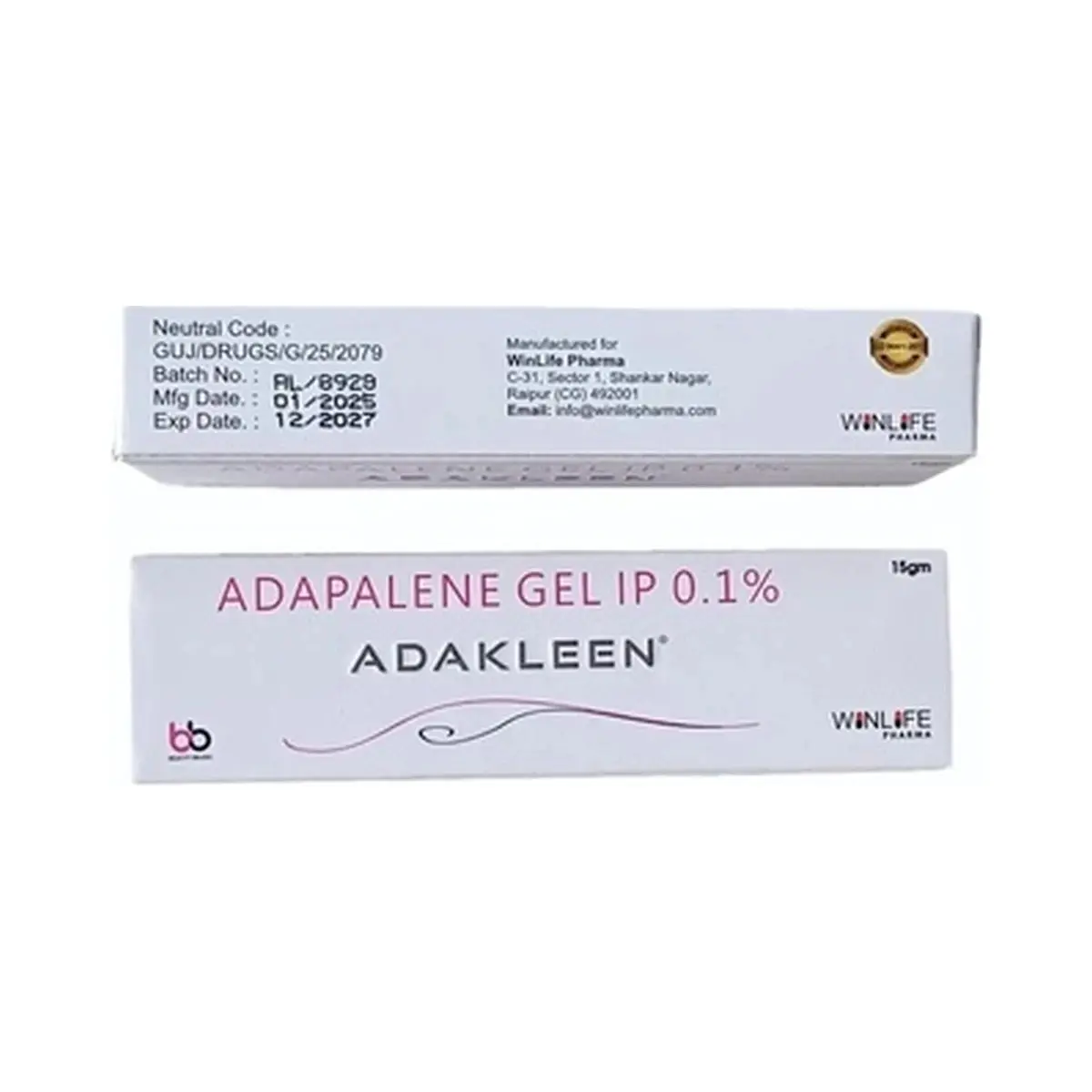
Adakleen (Adapalene) 0.1%
Adakleen 0.1% is a topical acne medicine identified here by its verified active ingredient, adapalene 0.1%. Adapalene is a retinoid used on the skin for acne management. The description below is based on official drug-label information for adapalene 0.1% gel and peer-reviewed clinical literature on topical adapalene.
Active Ingredient and Medicine Class
The active ingredient is adapalene, a topical retinoid (also described as a naphthoic-acid derivative with retinoid activity). Official labeling for adapalene 0.1% gel identifies it as an acne treatment and classifies it as a retinoid. ([dailymed.nlm.nih.gov](https://dailymed.nlm.nih.gov/dailymed/drugInfo.cfm?setid=a9816181-d643-4579-8b12-3927120dc627))
Established Medical Uses
Adapalene 0.1% gel is established for the treatment of acne. This use is supported by official OTC labeling and long-standing clinical study data in mild to moderate acne vulgaris. The medicine is not a general skin care product; its use is specifically tied to acne treatment. ([dailymed.nlm.nih.gov](https://dailymed.nlm.nih.gov/dailymed/drugInfo.cfm?setid=a9816181-d643-4579-8b12-3927120dc627))
How It Works
Adapalene helps normalize the way skin cells grow and shed inside the pores, which is important in acne formation. As a retinoid, it acts on retinoic acid receptors in skin cells and also has anti-inflammatory activity. This combination helps reduce the development of clogged pores and inflammatory acne lesions. Scientific reviews and pharmacology papers describe adapalene as a retinoid with receptor-mediated effects and anti-inflammatory properties. ([pubmed.ncbi.nlm.nih.gov](https://pubmed.ncbi.nlm.nih.gov/9990413/?utm_source=openai))
Important Safety Information
Official labeling states that adapalene 0.1% is for external use only. It should not be used on damaged skin such as cuts, abrasions, eczema, or sunburn, and it should not be used by people who are allergic to adapalene or any ingredient in the product. Labeling also advises limiting sun exposure and using sunscreen, because skin may become more sensitive to irritation. Contact with the eyes, lips, and mouth should be avoided. ([dailymed.nlm.nih.gov](https://dailymed.nlm.nih.gov/dailymed/drugInfo.cfm?setid=a9816181-d643-4579-8b12-3927120dc627))
Important precautions include the possibility of increased irritation during the first few weeks of use and with use of more than one topical acne medicine at the same time. Official labeling also cautions that pregnancy or breast-feeding should be discussed with a doctor before use. ([dailymed.nlm.nih.gov](https://dailymed.nlm.nih.gov/dailymed/drugInfo.cfm?setid=a9816181-d643-4579-8b12-3927120dc627))
Possible Side Effects
The most commonly reported adverse effects with adapalene are local skin reactions such as redness, dryness, itching, burning, and peeling. These are usually mild to moderate, but can occasionally become severe enough to stop treatment. In clinical studies, adapalene was generally well tolerated, and irritation was often less than with some older topical retinoids. ([dailymed.nlm.nih.gov](https://dailymed.nlm.nih.gov/dailymed/drugInfo.cfm?setid=a9816181-d643-4579-8b12-3927120dc627))
Less common but important reactions include signs of allergy, marked irritation, or worsening skin sensitivity. If severe irritation or allergic symptoms occur, the product label advises stopping use and seeking medical advice. ([dailymed.nlm.nih.gov](https://dailymed.nlm.nih.gov/dailymed/drugInfo.cfm?setid=a9816181-d643-4579-8b12-3927120dc627))
Scientific Evidence
Clinical trials and reviews support adapalene 0.1% as an effective topical option for acne vulgaris. In comparative studies, adapalene gel 0.1% produced acne improvement similar to tretinoin in efficacy, while often showing better cutaneous tolerability. In a large practice-setting study, most participants improved and treatment-related adverse events were uncommon. A maintenance study also found benefit from continued adapalene use in preventing relapse after initial improvement. ([pubmed.ncbi.nlm.nih.gov](https://pubmed.ncbi.nlm.nih.gov/11845947/?utm_source=openai))
Overall, the evidence base suggests that adapalene is a well-established topical retinoid for acne, with effectiveness supported by randomized trials and a tolerability profile that is often favorable compared with older retinoids. ([pubmed.ncbi.nlm.nih.gov](https://pubmed.ncbi.nlm.nih.gov/15764031/?utm_source=openai))
Medical Sources
- DailyMed – Official label for ADAPALENE gel (adapalene 0.1%); includes active ingredient, acne indication, warnings, and adverse-effect information. View label
- S Michel, A Jomard, M Démarchez. “Pharmacology of adapalene.” British Journal of Dermatology, 1998. PubMed record: https://pubmed.ncbi.nlm.nih.gov/9990413/
- E Grosshans et al.. “Evaluation of clinical efficacy and safety of adapalene 0.1% gel versus tretinoin 0.025% gel in the treatment of acne vulgaris, with particular reference to the onset of action and impact on quality of life.” British Journal of Dermatology, 1998. PubMed record: https://pubmed.ncbi.nlm.nih.gov/9990418/
Medical Information Notice
This page is an educational summary based on sources available at the time of review and does not replace the official patient leaflet, prescribing information, or assessment by a qualified healthcare professional.