Description
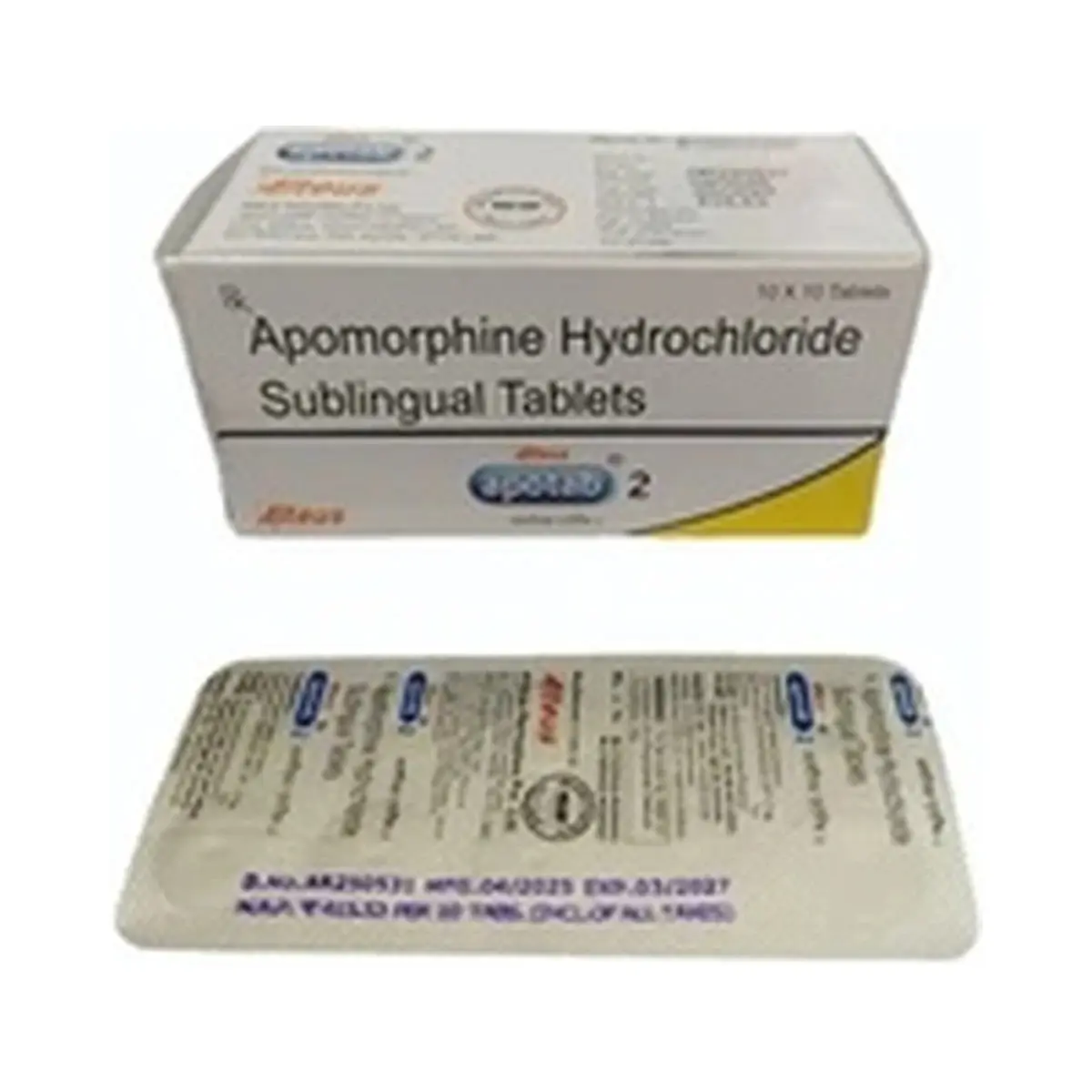
Apotab (Apomorphine) 2 mg Sublingual
Apotab is presented here as a sublingual apomorphine product. The verified active ingredient is apomorphine hydrochloride, a non-ergoline dopamine agonist used as an on-demand treatment for Parkinson’s disease “off” episodes in official prescribing information for the sublingual apomorphine formulation. The exact trade name “Apotab” could not be confirmed from the available official sources, so the information below is based on the verified active ingredient and approved sublingual apomorphine labeling.
Active Ingredient and Medicine Class
The active ingredient is apomorphine hydrochloride. It belongs to the dopamine agonist class, meaning it stimulates dopamine receptors in the brain. It is not an ergot-derived medicine.
Established Medical Uses
Official regulatory labeling for sublingual apomorphine supports use for the acute, intermittent treatment of “off” episodes in patients with Parkinson’s disease. “Off” episodes are periods when motor symptoms such as slowness, stiffness, or impaired movement temporarily worsen despite ongoing treatment.
How It Works
Apomorphine is believed to work by stimulating post-synaptic dopamine D2-type receptors in brain regions involved in movement control. This can help reduce the abrupt return of Parkinsonian symptoms during an “off” episode. The exact mechanism for clinical benefit is not fully established, but dopamine receptor activation is the accepted explanation.
Important Safety Information
Apomorphine sublingual products have important safety limitations. They are contraindicated in patients using 5HT3 antagonists such as ondansetron, because of the risk of profound hypotension and loss of consciousness. They are also contraindicated in patients with hypersensitivity to apomorphine or ingredients in the product, including sodium metabisulfite.
Clinically significant precautions include orthostatic hypotension, syncope, daytime somnolence, sudden sleep episodes, hallucinations, psychotic-like reactions, impulse control problems, and oral mucosal irritation. Blood-pressure-lowering effects may be increased by alcohol, antihypertensive medicines, and vasodilators such as nitrates. Dopamine antagonists may reduce effectiveness or worsen Parkinsonian symptoms.
Because the formulation contains a sulfite excipient, people with sulfite sensitivity, and especially those with asthma, require particular caution.
Possible Side Effects
Common adverse effects reported with sublingual apomorphine include nausea, vomiting, dizziness, sleepiness, oral discomfort, mouth swelling or irritation, and taste changes. Some patients also experience hypotension or related symptoms such as lightheadedness.
More serious reactions may include fainting, hallucinations, confusion, allergic reactions, severe oral soft-tissue swelling, and compulsive behaviors. Apomorphine products have also been associated with QTc prolongation risk, so cardiac risk factors matter clinically.
Scientific Evidence
Human studies support sublingual apomorphine as an on-demand option for Parkinson’s disease “off” episodes. A randomised phase 3 study showed that apomorphine sublingual film improved motor function during treated episodes, while oral-mucosal adverse effects were generally manageable. A later dose-optimization study found that some patients benefited from higher tolerated doses than the initial dose that first produced an “on” response. A review article also concluded that the sublingual formulation represents a useful non-injectable rescue treatment for selected patients, although safety limitations remain important.
Medical Information Notice
This page is an educational summary based on sources available at the time of review. It does not replace the official patient leaflet, full prescribing information, or assessment by a qualified healthcare professional.
Medical Sources
- U.S. Food and Drug Administration. KYNMOBI (apomorphine hydrochloride) sublingual film, Prescribing Information. View official prescribing information
- U.S. Food and Drug Administration. KYNMOBI (apomorphine hydrochloride) sublingual film, updated label. View updated label
- Caughman CY et al. A critical review of apomorphine hydrochloride sublingual film for the treatment of Parkinson’s disease ‘OFF’ episodes. Expert Review of Neurotherapeutics, 2021. View scientific article
- Olanow CW et al. Dose optimization of apomorphine sublingual film for treating “OFF” episodes in Parkinson’s disease. Parkinsonism & Related Disorders, 2021. View scientific article