Description
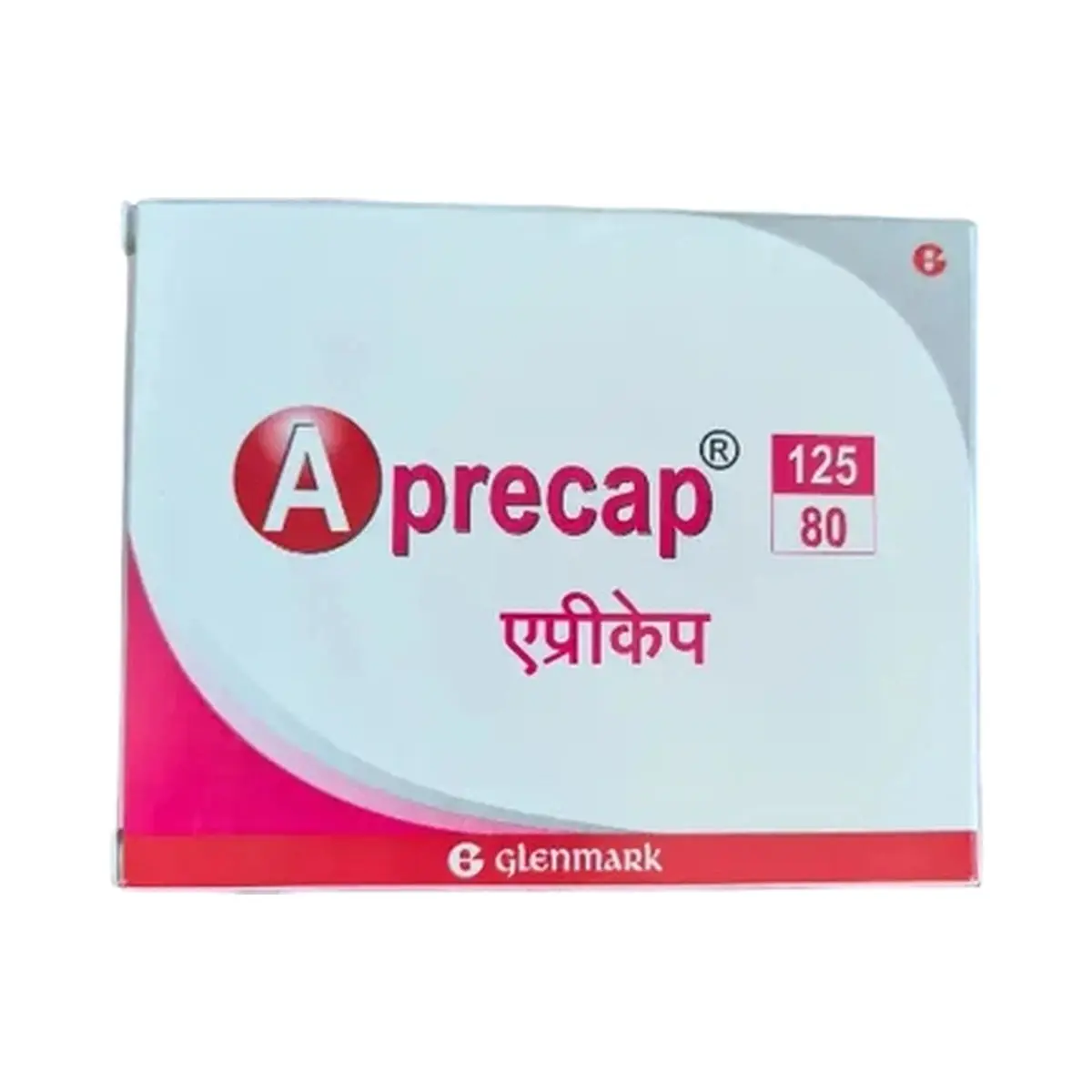
Aprecap (Aprepitant) 125/80 mg
Aprecap 125/80 mg is a brand presentation of aprepitant, an oral antiemetic medicine. Verified prescribing information identifies aprepitant as a substance P/neurokinin 1 (NK1) receptor antagonist. The 125 mg and 80 mg capsule strengths are established oral strengths used in aprepitant treatment regimens.
Active Ingredient and Medicine Class
The active ingredient is aprepitant. It belongs to the NK1 receptor antagonist class of antiemetics. This class works differently from serotonin receptor antagonists and corticosteroids, and it is commonly used as part of combination antiemetic therapy in cancer care.
Established Medical Uses
Official prescribing information identifies aprepitant capsules for prevention of chemotherapy-induced nausea and vomiting in patients aged 12 years and older, when used with other antiemetic medicines. It is also indicated in adults for prevention of postoperative nausea and vomiting. The medicine is not established for treatment of nausea and vomiting that is already present.
How It Works
Aprepitant blocks NK1 receptors, which are activated by the neuropeptide substance P. By interrupting this pathway in the brain and related emetic pathways, it helps reduce nausea and vomiting triggered by chemotherapy or surgery. Its mechanism supports use alongside other antiemetics rather than as a substitute for them in established chemotherapy prevention regimens.
Important Safety Information
Prescribing information lists hypersensitivity to aprepitant or any component as a contraindication. Concurrent use with pimozide is also contraindicated because aprepitant can increase pimozide exposure and raise the risk of serious cardiac effects such as QT prolongation.
Aprepitant has clinically significant interaction potential because it affects CYP3A4. It can increase exposure to some CYP3A4 substrates and alter the effect of other medicines. Important interaction concerns include certain benzodiazepines, strong or moderate CYP3A4 inhibitors or inducers, warfarin, and hormonal contraceptives. Prescribing information warns that contraceptive efficacy may be reduced during treatment and for a period after the last dose.
Because of these interaction risks, the full medicine label should be reviewed carefully whenever aprepitant is used with other prescription or non-prescription medicines. Chronic continuous administration is not recommended in the approved capsule labeling.
Possible Side Effects
Reported adverse effects include fatigue, diarrhea, asthenia, dyspepsia, abdominal pain, hiccups, decreased white blood cell count, dehydration, and increased alanine aminotransferase. In postoperative use, constipation, hypotension, dizziness, hypoesthesia, syncope, bradycardia, dry mouth, dyspnea, and hypoxia have also been reported. Serious hypersensitivity reactions such as angioedema and urticaria have been reported after approval.
Scientific Evidence
Human studies and reviews support aprepitant as an effective component of combination antiemetic therapy, especially for prevention of chemotherapy-related nausea and vomiting. Review and meta-analytic data indicate that adding aprepitant to a standard regimen can improve complete response rates in both acute and delayed phases of chemotherapy-induced nausea and vomiting. Evidence also supports a role in postoperative nausea and vomiting prevention, though the clinical setting and regimen determine the overall benefit.
Scientific literature also emphasizes that aprepitant is most useful as part of multi-drug antiemetic prophylaxis, rather than as a single-agent solution for all nausea and vomiting. Findings from clinical studies should be interpreted in the context of the approved indications and the full prescribing information.
Medical Information Notice
This page is an educational summary based on sources available at the time of review. It does not replace the official patient leaflet, prescribing information, or assessment by a qualified healthcare professional.
Medical Sources
- U.S. Food and Drug Administration / DailyMed. Aprepitant Capsules, for oral use. Official prescribing information. View prescribing information
- Tingting Qiu et al. Antiemetic regimen with aprepitant in the prevention of chemotherapy-induced nausea and vomiting: An updated systematic review and meta-analysis. Medicine (Baltimore), 2020. View scientific article
- Matti S Aapro et al. Review of the efficacy of aprepitant for the prevention of chemotherapy-induced nausea and vomiting in a range of tumor types. Cancer Treatment Reviews, 2013. View scientific article