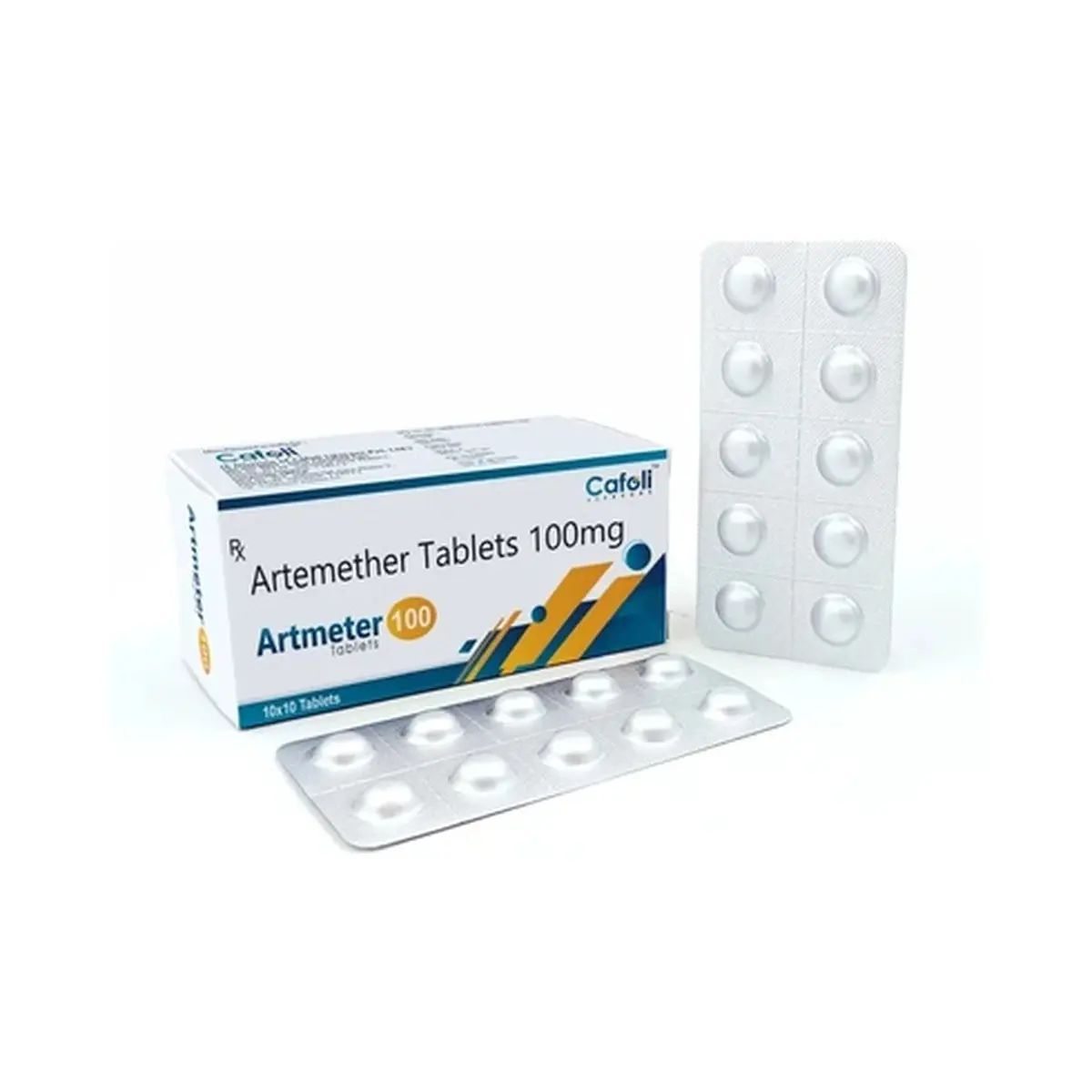
Description
Artemether (Artemether) 100 mg – 10 tablets
Artemether is a fast-acting antimalarial medicine in the artemisinin class. The product name supplied here identifies artemether as the active ingredient, but the exact branded product and market-specific formulation could not be independently verified from official sources. Regulatory information most commonly describes artemether as part of combination antimalarial therapy, while oral artemisinin monotherapy is discouraged because it can contribute to resistance.
Active Ingredient and Medicine Class
The verified active ingredient is artemether. It is a semi-synthetic derivative of artemisinin and belongs to the antimalarial, artemisinin-derived class. In official product information for artemether-containing medicines, artemether is described as a rapid-acting blood-stage antimalarial.
Established Medical Uses
Artemether is used in malaria treatment, especially for infections caused by Plasmodium falciparum. In regulatory prescribing information for artemether-containing combination products, the established indication is treatment of acute, uncomplicated falciparum malaria. World Health Organization guidance also notes that artemisinin derivatives are used in artemisinin-based combination therapies for malaria treatment.
Oral artemisinin monotherapy is not supported as a preferred approach for routine malaria treatment because it may promote parasite resistance. Severe malaria is treated with different regimens, and artemether-containing oral combination products are not approved for prophylaxis.
How It Works
Artemether acts on malaria parasites living inside red blood cells. After activation within the parasite, it damages parasite proteins and other essential structures through reactions linked to its peroxide bridge. This rapidly reduces the number of parasites in the bloodstream. Because parasites can persist and resistance can develop, artemisinin derivatives are generally used with a partner antimalarial in established treatment programs.
Important Safety Information
Important safety concerns for artemether-containing antimalarial products include hypersensitivity to artemether or related ingredients, and clinically significant interactions with other medicines. Official prescribing information for artemether-containing products warns against use with strong CYP3A4 inducers such as rifampin, carbamazepine, phenytoin, and St. John’s wort. QT interval prolongation is also a concern in artemether-containing combination therapy, especially in patients with known QT prolongation, low potassium, low magnesium, or when used with other QT-prolonging drugs. Caution is also advised with some antiretroviral medicines and with CYP2D6 substrates.
Possible Side Effects
Reported adverse effects in artemether-containing antimalarial treatment include headache, dizziness, anorexia, asthenia, fever, cough, vomiting, nausea, abdominal pain, muscle aches, and joint pain. Most reactions described in regulatory labeling were mild to moderate. Less common but more serious concerns include hypersensitivity reactions and cardiac rhythm effects related to QT prolongation in combination products.
Scientific Evidence
Published clinical reviews of artemether-containing therapy support its role as a rapid antimalarial component in uncomplicated falciparum malaria, with generally good parasite clearance and acceptable tolerability. Reviews also emphasize that artemisinin derivatives are most effective when combined with a partner drug, both to improve cure rates and to help protect against resistance. Human evidence has also shown that oral artemether can be effective in malaria treatment regimens, although modern policy generally favors combination therapy rather than monotherapy.
Medical Information Notice
This page is an educational summary based on sources available at the time of review. It does not replace the official patient leaflet, local prescribing guidance, or assessment by a qualified healthcare professional.
Medical Sources
- U.S. Food and Drug Administration / DailyMed. COARTEM (artemether and lumefantrine) tablets, full prescribing information. Official prescribing information for an artemether-containing antimalarial product. View official label
- U.S. Food and Drug Administration. Coartem (artemether/lumefantrine) Tablets Prescribing Information. Official FDA label for an artemether-containing antimalarial product. View prescribing information
- Medicines and Healthcare products Regulatory Agency / electronic Medicines Compendium. Riamet 20 mg/120 mg Tablets – Summary of Product Characteristics. Regulatory product information describing artemether’s pharmacology and mechanism in combination therapy. View SmPC
- World Health Organization. Global Malaria Programme: Treatment. WHO guidance on antimalarial treatment and artemisinin-based combination therapies. View WHO guidance
- George O Adjei et al. Artemether-lumefantrine: an oral antimalarial for uncomplicated malaria in children. Expert Review of Anti-infective Therapy, 2009. View scientific article
- Artemether-lumefantrine review article. Artemether-lumefantrine in the treatment of uncomplicated falciparum malaria. PubMed-indexed review. View scientific article