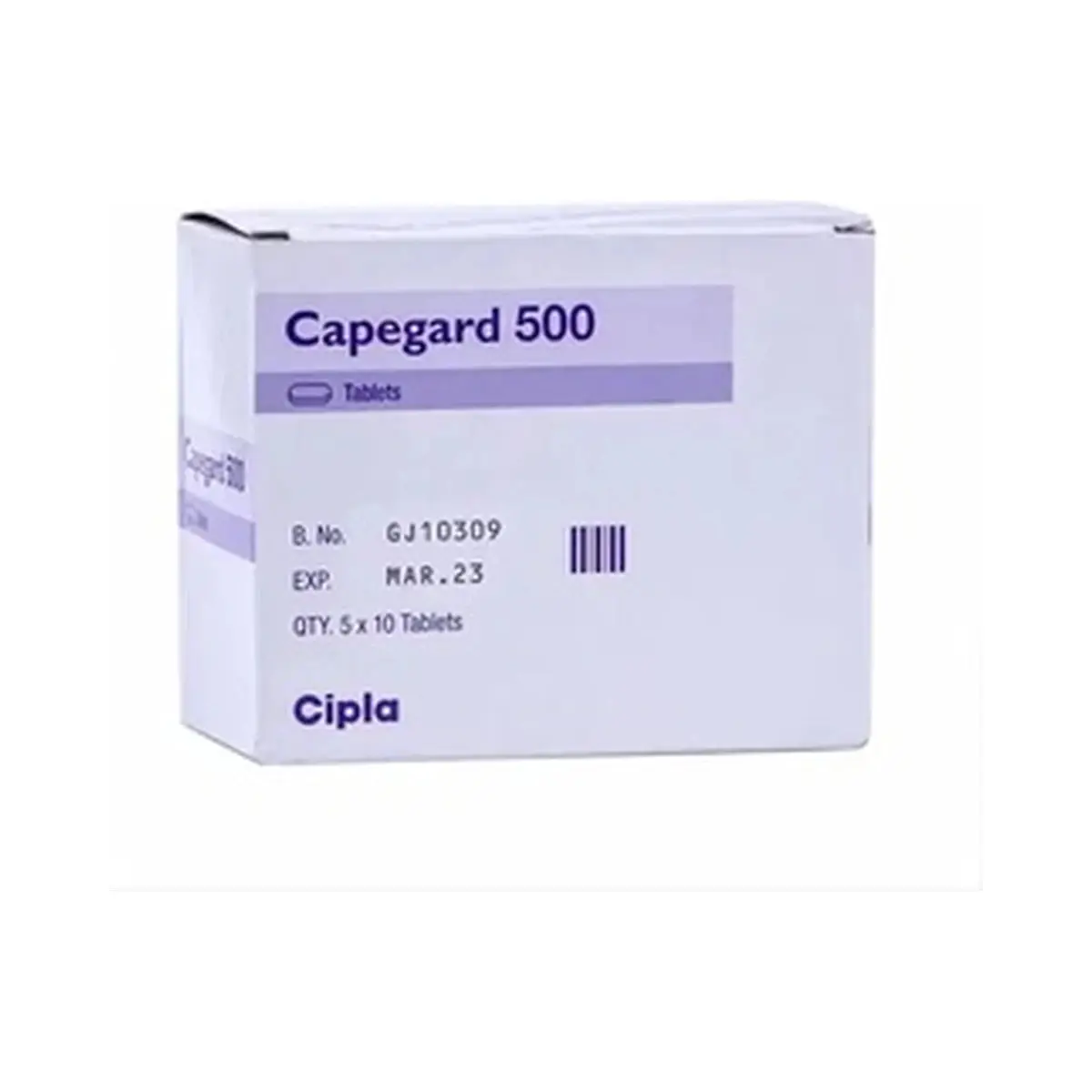
Description
Capegard (Capecitabine) 500 mg
Capegard appears to be a brand of capecitabine, an oral fluoropyrimidine anticancer medicine. Capecitabine is used as a systemic chemotherapy agent for selected solid tumours, and the 500 mg strength identifies the tablet formulation rather than a recommended dose.
Active Ingredient and Medicine Class
The verified active ingredient is capecitabine. It is an antimetabolite and fluoropyrimidine prodrug that is converted in the body to fluorouracil, a cytotoxic anticancer compound.
Established Medical Uses
According to official prescribing information for capecitabine tablets, established uses include the treatment of:
- Stage III colon cancer, as a single agent or as part of combination therapy.
- Unresectable or metastatic colorectal cancer, as a single agent or in combination.
- Metastatic breast cancer, including use with docetaxel and as monotherapy in selected settings.
- Unresectable or metastatic gastric, esophageal, or gastroesophageal junction cancer, as part of combination regimens.
- Pancreatic adenocarcinoma, as a component of combination chemotherapy.
Approved indications can vary by country and product label. This summary reflects the established information verified from official prescribing documents.
How It Works
Capecitabine is designed to be converted into fluorouracil after absorption. Enzymatic steps in the body, including conversion within tumour tissue, produce the active drug that interferes with DNA synthesis and cell division. Because rapidly dividing cells are especially vulnerable, the medicine can slow the growth of certain cancers.
Important Safety Information
Capecitabine should not be used in people with a history of severe hypersensitivity to capecitabine or fluorouracil. Official labels also warn about serious toxicity in people with DPD deficiency, which can lead to unexpectedly severe or fatal reactions.
Clinically significant interactions include oral vitamin K antagonists, which may increase bleeding risk and require close monitoring, and phenytoin, whose levels may rise. Caution is also needed with allopurinol, leucovorin, nephrotoxic medicines, and other treatments that can add to toxicity.
Important precautions include risk of dehydration, diarrhoea, renal toxicity, cardiotoxicity, severe skin reactions, hand-foot syndrome, and bone marrow suppression. Capecitabine is also considered a hazardous anticancer drug and should be handled according to appropriate safety procedures.
Possible Side Effects
Common adverse effects include diarrhoea, nausea, vomiting, abdominal pain, stomatitis, fatigue, decreased appetite, hand-foot syndrome, rash, and elevated bilirubin or liver tests. Blood count suppression may also occur.
Serious reactions can include severe diarrhoea and dehydration, marked myelosuppression, chest pain or cardiac events, severe skin toxicity, renal impairment, and rare but potentially life-threatening toxicity in patients with DPD deficiency.
Scientific Evidence
Clinical reviews and trial reports have shown that capecitabine has established activity in colorectal and breast cancer, and it is widely used in combination regimens for several solid tumours. Published evidence also supports its role as an oral alternative to some fluorouracil-based regimens, with efficacy that can be comparable in selected settings while maintaining a distinct toxicity profile.
Scientific literature should be interpreted alongside the official product label, because benefits, risks, and approved uses differ by cancer type, disease stage, and treatment combination.
Medical Information Notice
This page is an educational summary based on sources available at the time of review. It does not replace the official patient leaflet, prescribing information, or assessment by a qualified healthcare professional.
Medical Sources
- U.S. Food and Drug Administration. XELODA (capecitabine) tablets, prescribing information
- DailyMed / National Library of Medicine. Capecitabine tablets, full prescribing information
- J K McGavin et al. Capecitabine: a review of its use in the treatment of advanced or metastatic colorectal cancer. Drugs, 2001. View scientific article
- John F. Cassidy et al. Capecitabine: indications and future perspectives in the treatment of metastatic colorectal and breast cancer. Clinical Colorectal Cancer, 2002. View scientific article