Description
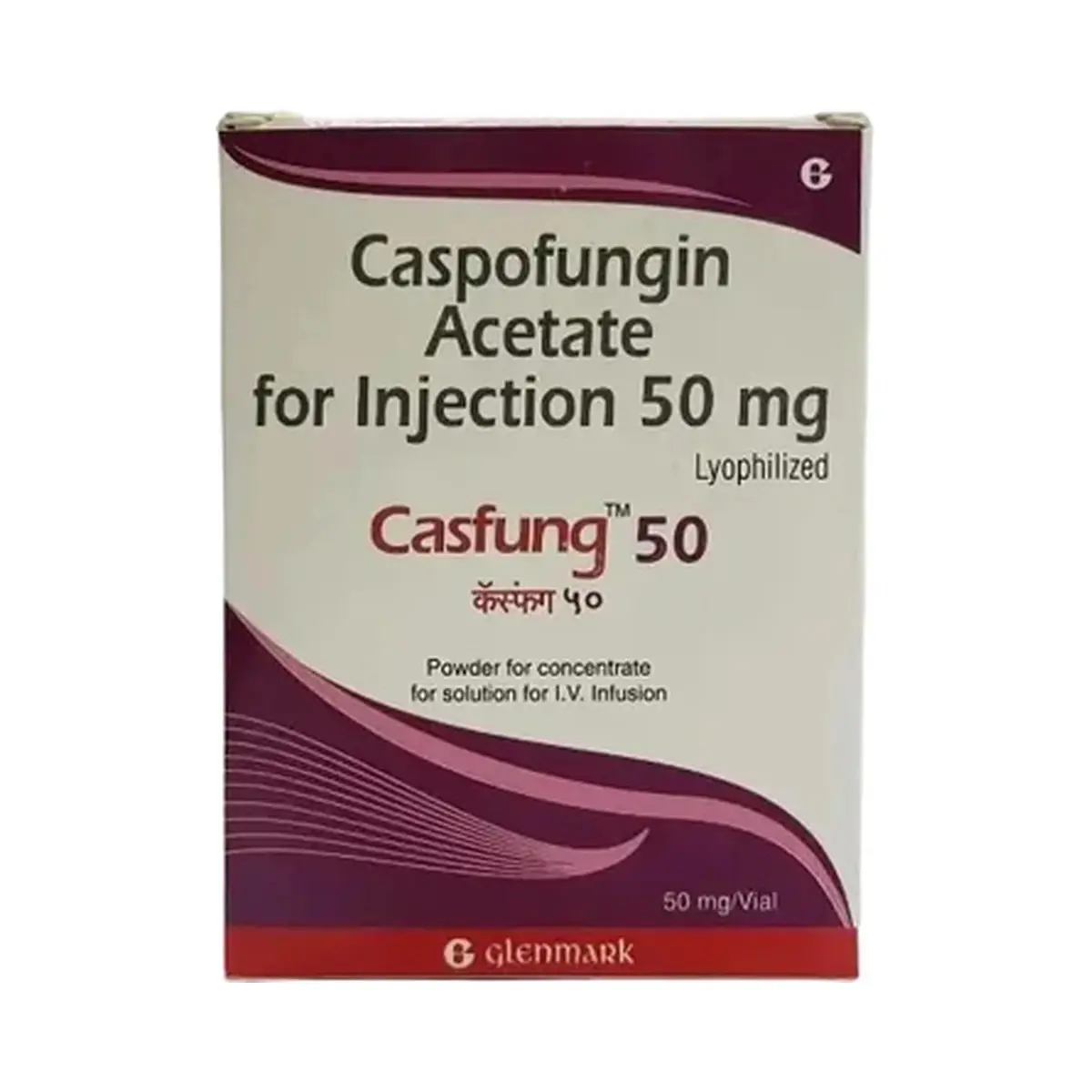
Casfung (Caspofungin) 50 mg
Casfung 50 mg is a brand name used for a medicine containing caspofungin, supplied as an intravenous injection for hospital use. Caspofungin is an antifungal medicine in the echinocandin class. It is used to treat certain serious fungal infections, especially those caused by Candida species and, in selected situations, Aspergillus infection.
Active Ingredient and Medicine Class
The verified active ingredient is caspofungin acetate. It belongs to the echinocandin antifungal class. Echinocandins are systemic antifungal medicines used against invasive fungal disease. Caspofungin is formulated for intravenous administration and is not an oral antifungal.
Established Medical Uses
Authoritative prescribing information identifies caspofungin for several established uses in adults and in paediatric patients aged 3 months and older. These include empirical therapy for presumed fungal infection in febrile, neutropenic patients; treatment of candidemia and certain other invasive Candida infections such as intra-abdominal abscesses, peritonitis, and pleural space infection; treatment of esophageal candidiasis; and treatment of invasive aspergillosis in patients who are refractory to or intolerant of other therapies.
Clinical use has therefore focused on serious hospital-managed fungal infections rather than uncomplicated local infections. It has not been studied for some Candida-related infections such as endocarditis, osteomyelitis, or meningitis.
How It Works
Caspofungin works by inhibiting the synthesis of beta-(1,3)-D-glucan, an essential structural component of the fungal cell wall. Because human cells do not have this cell wall target, the drug acts selectively on fungi. Disrupting cell-wall formation weakens fungal growth and can lead to fungal cell damage or death, depending on the organism.
Important Safety Information
Caspofungin is contraindicated in patients with known hypersensitivity to any component of the product. Serious hypersensitivity reactions, including bronchospasm, facial swelling, angioedema, rash, itching, and flushing, have been reported, and rare severe skin reactions such as Stevens-Johnson syndrome and toxic epidermal necrolysis have also been described.
Clinically important precautions include possible hepatic effects, especially liver enzyme elevations and bilirubin changes. The prescribing information also notes significant interactions with hepatic enzyme inducers such as rifampin, efavirenz, nevirapine, phenytoin, dexamethasone, and carbamazepine, which may reduce caspofungin exposure and affect treatment decisions. Caspofungin should not be mixed or co-infused with other medications.
Possible Side Effects
Commonly reported adverse effects include fever, nausea, vomiting, diarrhoea, headache, infusion-site or vascular irritation such as phlebitis, and laboratory evidence of liver enzyme elevation. Low potassium and other laboratory abnormalities may also occur.
More serious reactions can include hypersensitivity, hepatic dysfunction, and severe cutaneous adverse reactions. As with many intravenous antifungals used in seriously ill patients, adverse events may reflect both the medicine and the underlying infection or comorbid illness.
Scientific Evidence
Human studies have shown caspofungin to be effective in invasive candidiasis and supportive evidence also exists for use in esophageal candidiasis and salvage treatment of invasive aspergillosis. Randomized clinical trials compared caspofungin with amphotericin B and found comparable antifungal efficacy with a generally more favourable toxicity profile. Review literature and clinical studies continue to support its role as an established echinocandin for serious invasive fungal disease, especially when alternative agents are not suitable.
Medical Information Notice
This page is an educational summary based on sources available at the time of review. It does not replace the official patient leaflet, full prescribing information, or individual assessment by a qualified healthcare professional.
Medical Sources
- U.S. Food and Drug Administration. Caspofungin Acetate for Injection official prescribing information. View official FDA label
- DailyMed / National Library of Medicine. Caspofungin Acetate for Injection drug label. View prescribing information
- European Medicines Agency. Cancidas European public assessment report. View EMA medicine overview
- Jorge Mora-Duarte et al. Comparison of caspofungin and amphotericin B for invasive candidiasis. New England Journal of Medicine, 2002. View scientific article
- Eduardo G Arathoon et al. Randomized, double-blind, multicenter study of caspofungin versus amphotericin B for treatment of oropharyngeal and esophageal candidiases. Antimicrobial Agents and Chemotherapy, 2002. View scientific article