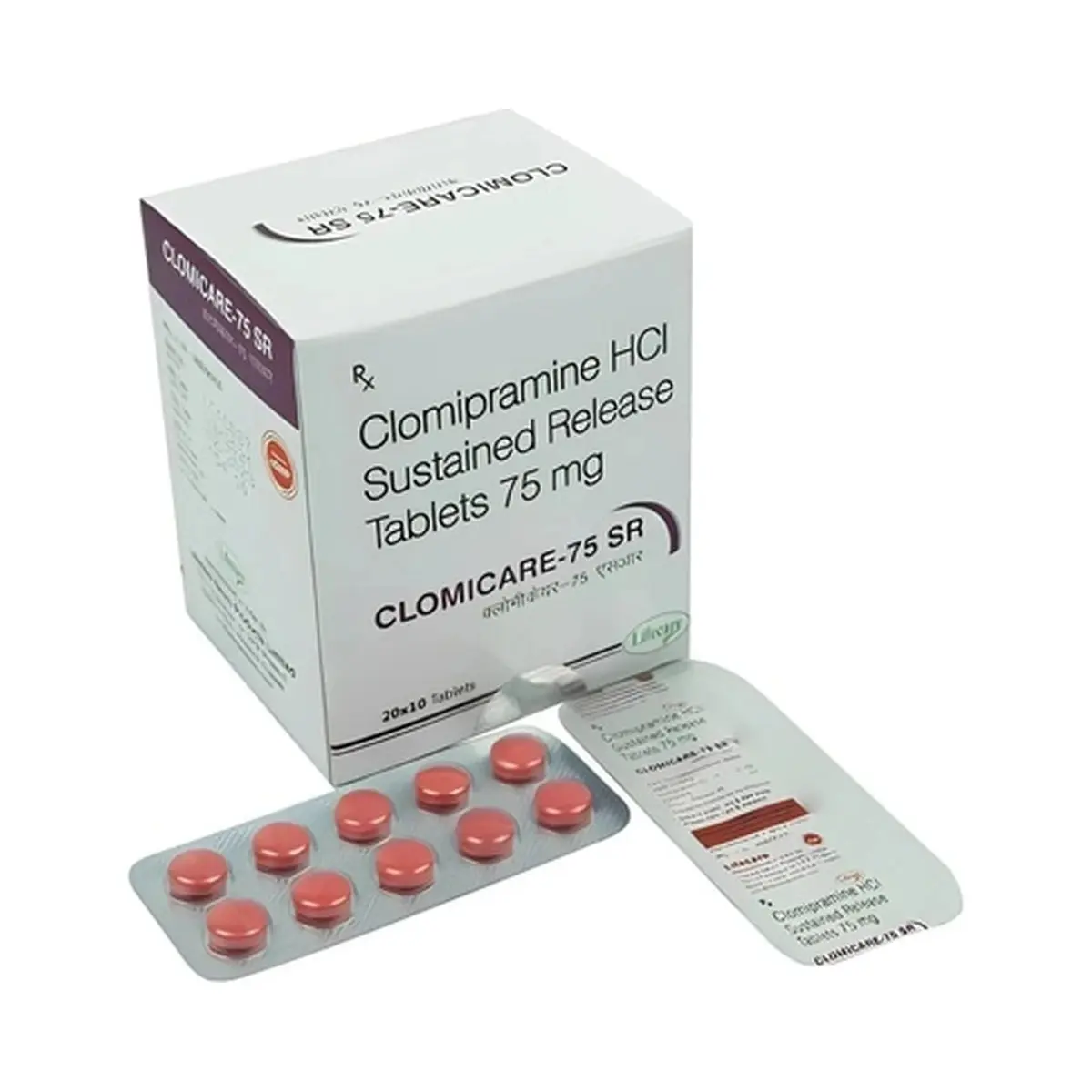
Description
Clomicare SR (Clomipramine) 75 mg
Clomicare SR 75 mg is presented as a sustained-release clomipramine product. Clomipramine hydrochloride is a tricyclic antidepressant with prominent serotonin reuptake-inhibiting activity, and it is used in established prescribing information for obsessive-compulsive disorder. The exact branded product name may vary by market, but the active ingredient class and core safety profile are well established.
Active Ingredient and Medicine Class
The verified active ingredient is clomipramine hydrochloride. It belongs to the tricyclic antidepressant group, specifically a dibenzazepine compound. In clinical pharmacology, clomipramine is also described as an anti-obsessional medicine because of its effects on serotonergic transmission.
Established Medical Uses
Official prescribing information identifies clomipramine as a treatment for obsessive-compulsive disorder. Some national labels for clomipramine products may include additional psychiatric uses, but these depend on the jurisdiction and product-specific approval. For this description, only the use supported by the reviewed official prescribing information is stated as established.
How It Works
Clomipramine is thought to reduce obsessive and compulsive symptoms mainly by inhibiting the reuptake of serotonin in the brain, which increases serotonin signalling between nerve cells. Its full neurochemical effect is not completely understood, and its antidepressant and anti-obsessional actions are likely related to several pharmacologic properties rather than a single mechanism.
Important Safety Information
Clomipramine should not be used together with monoamine oxidase inhibitors, and it is also contraindicated within 14 days of stopping an MAOI because of the risk of serotonin syndrome. It is contraindicated in people with a history of hypersensitivity to clomipramine or other tricyclic antidepressants, and during the acute recovery period after myocardial infarction.
Important precautions include the risk of serotonin syndrome with other serotonergic medicines, the possibility of seizure threshold lowering, and caution in people with cardiovascular disease. The medicine may also worsen narrow-angle glaucoma by causing pupillary dilation. Like other antidepressants, it carries a warning about suicidal thinking and behaviour in children, adolescents, and young adults, particularly early in treatment or when doses are changed.
Possible Side Effects
Commonly reported adverse effects include dry mouth, constipation, nausea, dyspepsia, reduced appetite, sleepiness, tremor, dizziness, nervousness, sweating, weight gain, fatigue, and visual changes. Some patients also experience urinary difficulties, sexual dysfunction, or changes in libido.
More serious reactions can include seizures, serotonin syndrome, marked confusion, hallucinations, abnormal heart rhythm or conduction changes, severe low sodium, and blood count abnormalities such as leukopenia or agranulocytosis. Unusual mood activation, including mania or hypomania, has also been reported with tricyclic antidepressants.
Scientific Evidence
Human clinical studies have shown clomipramine to be effective for obsessive-compulsive disorder compared with placebo, including early double-blind trials and multicentre studies. These studies support a meaningful reduction in obsessive-compulsive symptoms, although side effects were more frequent than with placebo. Review literature also describes clomipramine as a useful option for obsessive-compulsive disorder and certain anxiety-related conditions, while emphasising its anticholinergic and tolerability limitations.
Medical Information Notice
This summary is an educational overview based on official prescribing information and selected scientific publications available at the time of review. It does not replace the official patient leaflet, product label, or an individual assessment by a qualified healthcare professional.
Medical Sources
- DailyMed. Clomipramine Hydrochloride Capsules, USP — official prescribing information
- FDA / DailyMed. Clomipramine Hydrochloride Capsules, USP — safety and prescribing information
- P. Thorén et al. Clomipramine treatment of obsessive-compulsive disorder. I. A controlled clinical trial. Archives of General Psychiatry, 1980. View scientific article
- J. H. Greist et al. Clomipramine and obsessive compulsive disorder: a placebo-controlled double-blind study of 32 patients. Journal of Clinical Psychiatry, 1990. View scientific article