Description
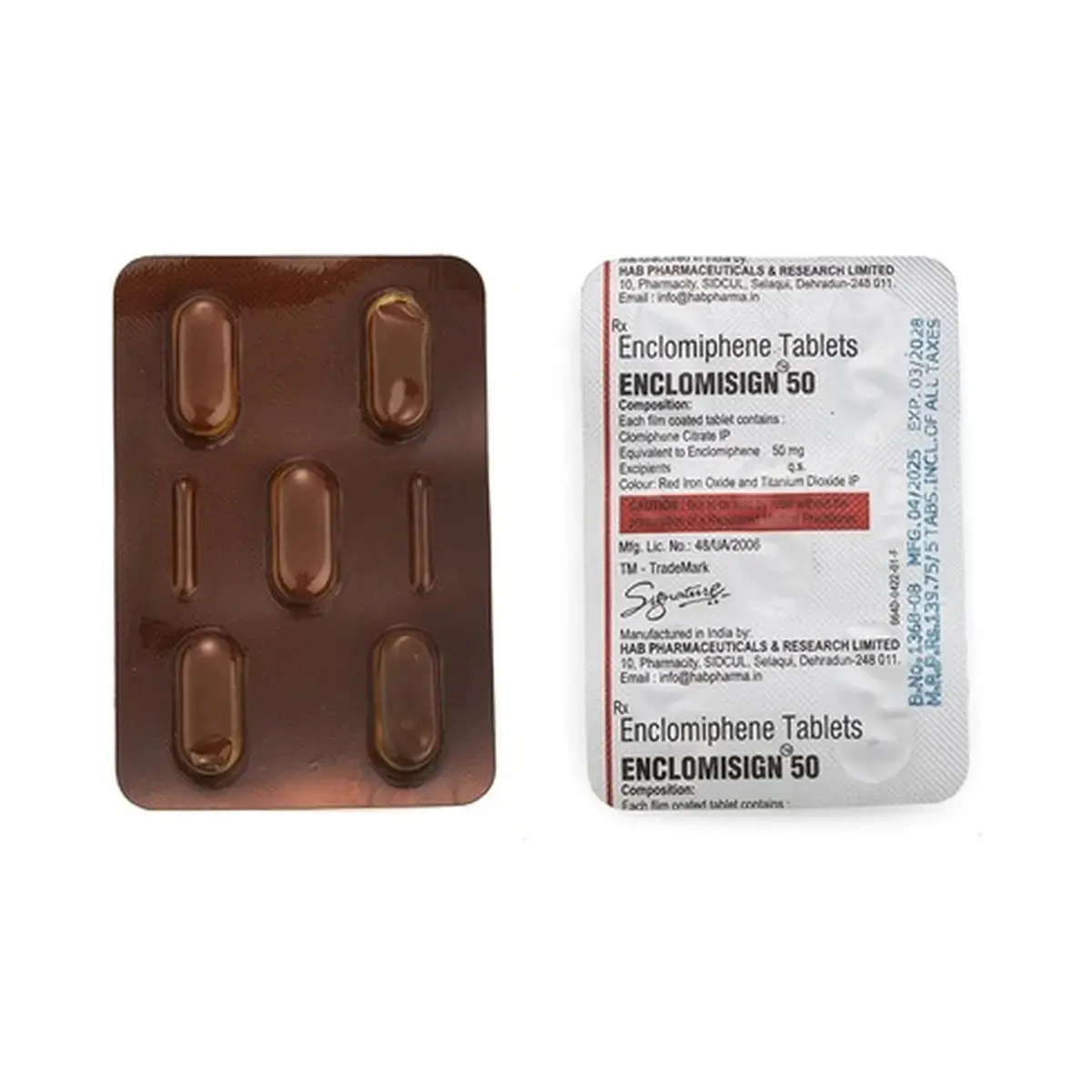
Enclomisign (Enclomiphene) 50 mg
Enclomisign is listed as a 50 mg oral tablet containing enclomiphene. Enclomiphene is a selective estrogen receptor modulator related to clomiphene. Available regulatory information indicates that enclomiphene has been investigated for male hypogonadotropic hypogonadism, but it has not received broad regulatory approval as a routine marketed medicine in major jurisdictions such as the United States or the European Union.
Active Ingredient and Medicine Class
The verified active ingredient is enclomiphene. It is the trans-isomer of clomiphene and is classified as a selective estrogen receptor modulator (SERM). In endocrine use, it is discussed as a medicine that acts on the hypothalamic-pituitary-gonadal axis rather than as replacement testosterone.
Established Medical Uses
Regulatory and scientific sources have focused on enclomiphene for secondary hypogonadism, also described as hypogonadotropic hypogonadism, in men. In this setting, the objective has been to raise endogenous testosterone while preserving gonadotropin signaling and sperm production. Published clinical studies have also examined its potential role in men with low testosterone who wish to avoid suppression of fertility.
These uses remain best understood as investigational or limited-evidence applications rather than universally established labeled indications.
How It Works
Enclomiphene blocks estrogen feedback at the hypothalamus and pituitary. By reducing the body’s perception of estrogen signaling, it can increase release of gonadotropin-releasing hormone and stimulate luteinizing hormone and follicle-stimulating hormone. This may encourage the testes to produce more testosterone and support spermatogenesis. This mechanism differs from exogenous testosterone therapy, which can suppress the body’s own hormone production.
Important Safety Information
Because enclomiphene has limited formal regulatory labeling, safety information is drawn mainly from trial data and related SERM experience. Important precautions include a history of hormone-sensitive conditions, unexplained visual symptoms, thromboembolic disease, liver disease, and endocrine disorders that require specialist evaluation. As with other estrogen receptor modulators, attention is warranted for possible effects on mood, libido, estradiol balance, and visual function.
Clinically significant interactions have not been fully established in approved-label terms for enclomiphene. However, medicines that alter sex hormone signaling, fertility treatments, or endocrine therapies may require careful review by a clinician. Caution is also prudent in patients taking other agents associated with clotting risk or visual adverse effects.
Possible Side Effects
Reported adverse effects in human studies have generally included headache, nausea, mood changes, reduced energy, and changes in libido. Visual disturbance is a class-related concern for SERMs and should be taken seriously if it occurs. Less commonly, medicines in this family may be associated with hot flushes, breast tenderness, or laboratory changes in sex hormones. Serious adverse reactions are not well characterized for enclomiphene because large long-term safety studies are limited.
Scientific Evidence
Clinical studies in men with secondary hypogonadism suggest that enclomiphene can increase testosterone while preserving or improving luteinizing hormone, follicle-stimulating hormone, and sperm counts. Randomized trials compared enclomiphene with topical testosterone and found that enclomiphene increased endogenous testosterone without the same suppression of sperm production seen with testosterone replacement. A recent retrospective comparison reported fewer documented adverse effects with enclomiphene than with clomiphene, but this does not establish definitive superiority or long-term safety.
Overall, the evidence supports a biologically plausible and clinically interesting endocrine effect, but the published human evidence base remains relatively small compared with established testosterone therapies.
Medical Information Notice
This educational summary is based on authoritative sources available at the time of review. It does not replace the official patient leaflet, prescribing information where available, or individual assessment by a qualified healthcare professional.
Medical Sources
- European Medicines Agency (EMA) — EnCyzix (enclomifene): refusal of the marketing authorisation. View official EMA page
- FDA — Enclomiphene citrate substance entry. View FDA substance record
- R. Wiehle et al. Testosterone restoration by enclomiphene citrate in men with secondary hypogonadism: pharmacodynamics and pharmacokinetics. BJU International, 2014. View scientific article
- R. Wiehle et al. Oral enclomiphene citrate stimulates the endogenous production of testosterone and sperm counts in men with low testosterone: comparison with testosterone gel. Journal of Urology, 2014. View scientific article
- Jeff Foster et al. British Society of Sexual Medicine: Position Statement for the Potential Use of Enclomiphene in the Treatment of Male Hypogonadism. World Journal of Men’s Health, 2026. View scientific article