Description
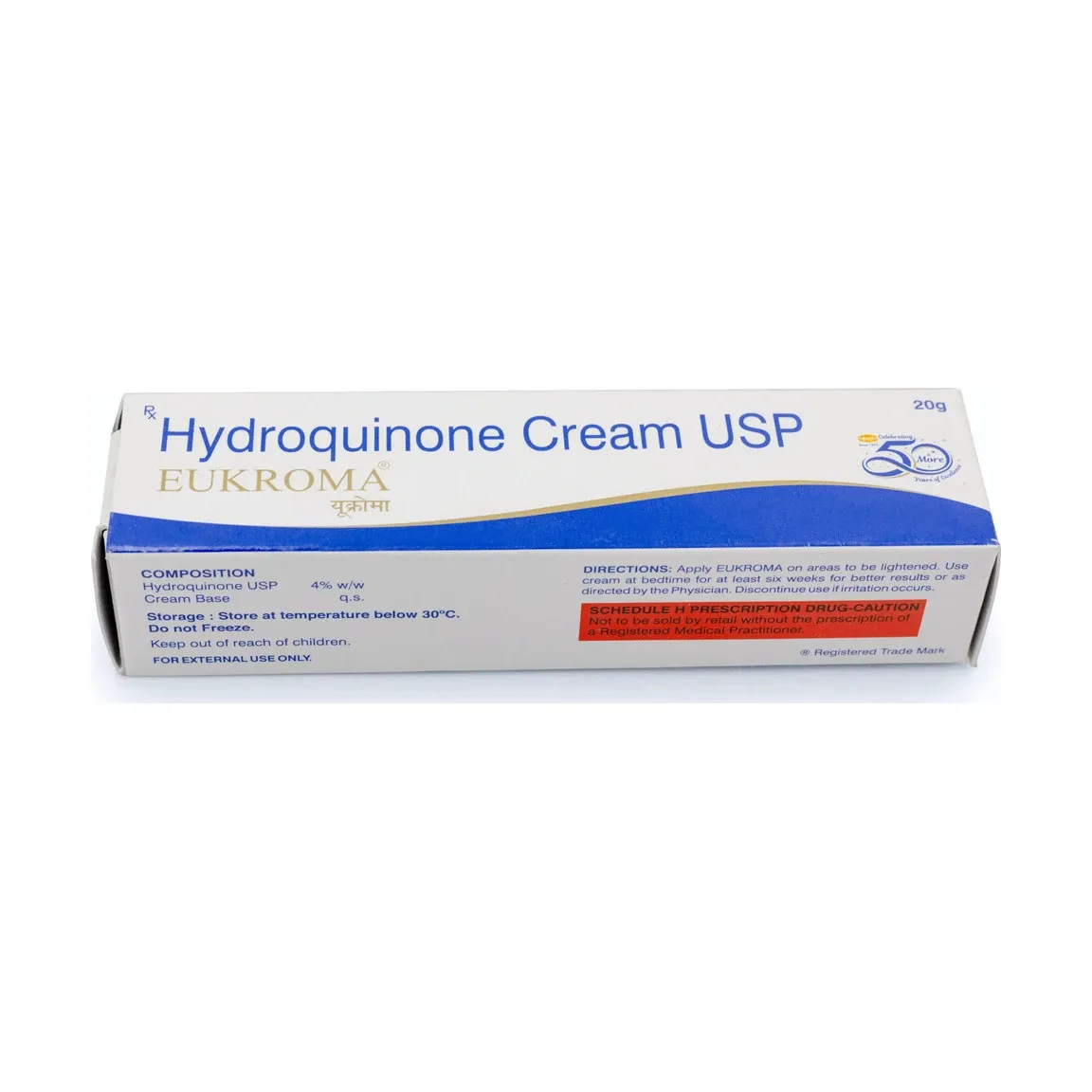
Eukroma cream (Hydroquinone Cream) 4%
Eukroma cream 4% is a topical hydroquinone preparation used as a skin-lightening medicine for selected hyperpigmented skin conditions. Based on the available prescribing information for hydroquinone 4% creams, the verified active ingredient is hydroquinone, and the pharmaceutical form is a cream for external topical use.
Active Ingredient and Medicine Class
Active ingredient: hydroquinone 4%.
Class: topical depigmenting agent, also described as a skin-bleaching or skin-lightening medication.
Hydroquinone is used in dermatology to reduce excess pigment in areas where melanin production is increased. It is not a cosmetic moisturizer or general skin-care cream; it is a medicated topical product intended for pigment-related conditions.
Established Medical Uses
Official prescribing information for hydroquinone 4% cream describes use for the gradual bleaching of hyperpigmented skin conditions such as melasma, chloasma, freckles, senile lentigines, and other unwanted areas of melanin hyperpigmentation.
Its use is established for epidermal hyperpigmentation, where excess pigment is present in the outer layers of the skin. It is not presented in the prescribing information as a treatment for every cause of darkening or for all forms of skin discoloration.
How It Works
Hydroquinone reduces skin pigmentation by interfering with melanin formation. The prescribing information describes reversible depigmentation through inhibition of the enzymatic oxidation of tyrosine to dopa, along with suppression of other melanocyte metabolic processes. In practical terms, this means it can slow pigment production in treated areas.
Because ultraviolet light can stimulate repigmentation, sun exposure is an important factor in how well the medicine works and how long the lightening effect lasts.
Important Safety Information
Hydroquinone 4% cream should not be used by people with a prior sensitivity or allergic reaction to hydroquinone or to any ingredient in the product. The safety of topical hydroquinone during pregnancy and in children 12 years and under has not been established in the product information reviewed.
The product contains sodium metabisulfite, which may cause allergic-type reactions in susceptible individuals, including people with sulfite sensitivity and some patients with asthma.
Clinically important precautions include avoiding unnecessary sun exposure because sunlight can sustain pigment activity and lead to repigmentation. The product information also warns about concomitant use with photosensitizing medicines. Long-term or inappropriate use has been associated with exogenous ochronosis, a blue-black darkening of the skin that can be difficult to treat.
General precautions also include avoiding contact with the eyes and mucous membranes and limiting use to appropriately supervised medical situations.
Possible Side Effects
Commonly reported adverse effects include mild burning, transient redness, stinging, dryness, and fissuring, especially in delicate facial areas. Localized contact dermatitis or other hypersensitivity reactions can occur and may require stopping the medicine.
More serious but less common reactions include exogenous ochronosis. This has been reported particularly with prolonged use and with higher hydroquinone concentrations. Because of this risk, hydroquinone should be used cautiously and with medical oversight.
Scientific Evidence
Clinical reviews and dermatology literature support hydroquinone as an established topical treatment for hyperpigmentation, especially melasma and post-inflammatory hyperpigmentation. Reviews also note that it remains a standard reference treatment in pigment disorders, although tolerability and safety concerns limit prolonged use in some patients.
Published systematic review data on exogenous ochronosis show that this complication is associated with long-term hydroquinone exposure and is more often reported with higher strengths and extended courses of use. This does not mean the reaction is inevitable, but it supports careful risk-benefit assessment when hydroquinone is used in routine practice.
Medical Information Notice
This page is an educational summary based on sources available at the time of review. It does not replace the official patient leaflet, product labelling, or assessment by a qualified health professional for an individual patient.
Medical Sources
- DailyMed, U.S. National Library of Medicine. Hydroquinone Cream 4% prescribing information
- Isabella M. Fabian et al. Topical Hydroquinone for Hyperpigmentation: A Narrative Review. Cureus, 2023. View scientific article
- Stephanie Ishack et al. Exogenous ochronosis associated with hydroquinone: a systematic review. International Journal of Dermatology, 2022. View scientific article