Description
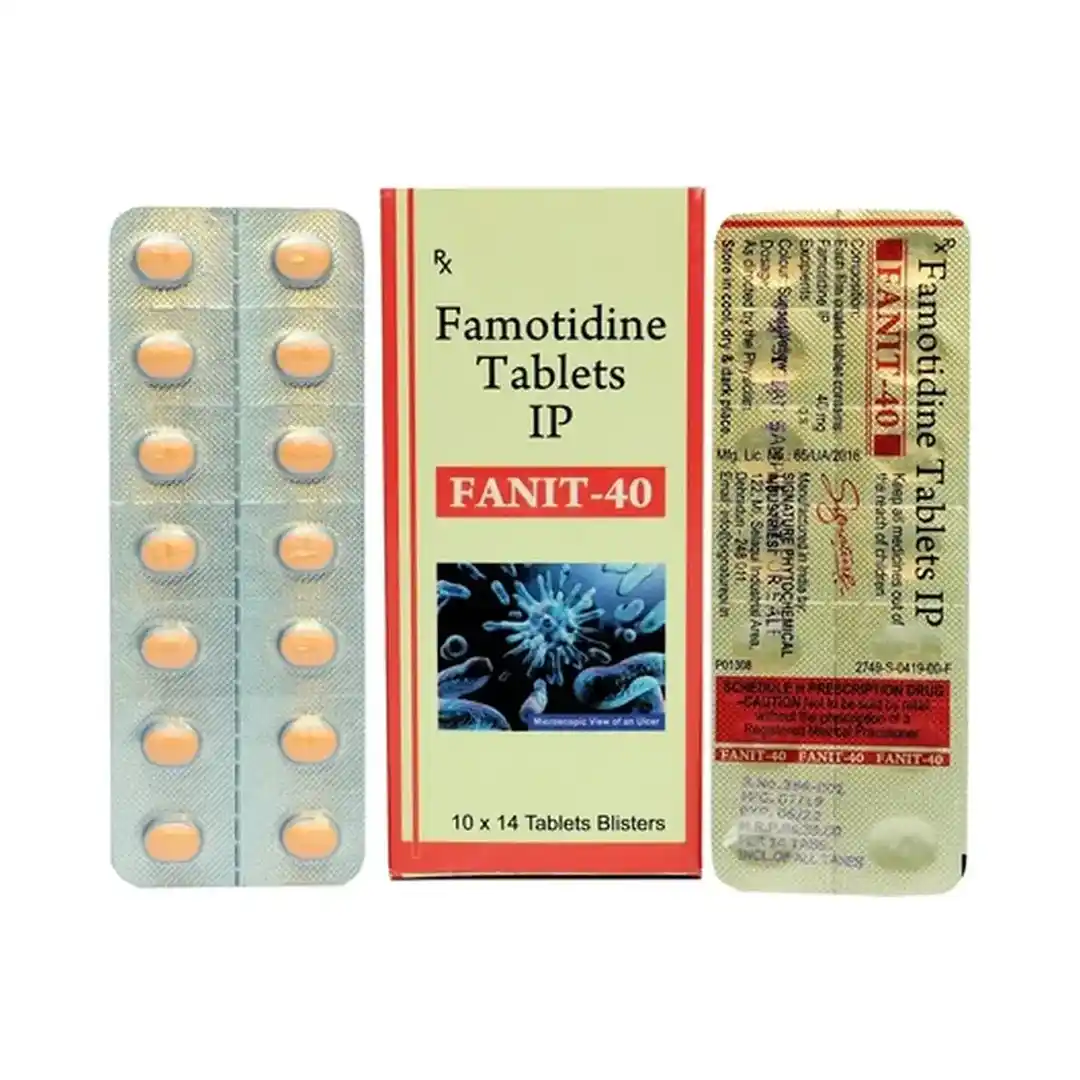
Fanit (Famotidine) 40 mg
Fanit 40 mg is a tablet medicine containing famotidine, a histamine H2-receptor antagonist used to reduce stomach acid. The verified source material supports its use in acid-related gastrointestinal conditions where lowering gastric acid can help relieve symptoms or promote healing.
Active Ingredient and Medicine Class
The active ingredient is famotidine. It belongs to the H2-receptor antagonist class, also called an H2 blocker. This group of medicines reduces acid production by blocking histamine H2 receptors in the stomach lining.
Established Medical Uses
Official prescribing information for famotidine tablets describes use in adults and, for some indications, in pediatric patients weighing at least 40 kg. Established uses include treatment of duodenal ulcer, gastric ulcer, symptomatic non-erosive gastroesophageal reflux disease, erosive esophagitis due to GERD, and pathological hypersecretory conditions such as Zollinger-Ellison syndrome. Famotidine is also used to reduce the risk of duodenal ulcer recurrence.
How It Works
Famotidine works by blocking histamine H2 receptors on acid-producing cells in the stomach. This reduces both basal and stimulated gastric acid secretion. By lowering acid exposure, famotidine can help reduce irritation of the stomach and oesophagus and support healing in acid-related disease.
Important Safety Information
Famotidine is contraindicated in patients with a history of serious hypersensitivity reactions to famotidine or other H2-receptor antagonists. Product information also warns that symptoms may improve even when an underlying gastric malignancy is present; in adults with a poor response or early relapse, further evaluation may be needed. Extra caution is advised in older adults and in people with moderate to severe renal impairment, because drug exposure can rise and central nervous system adverse reactions have been reported more often in these groups.
Official product information notes that famotidine can reduce the absorption of medicines whose uptake depends on gastric acidity. It also reports a clinically important interaction with tizanidine, and co-administration is not recommended. Some official sources also advise caution with certain tyrosine kinase inhibitors because reduced stomach acidity may lower their concentrations.
Possible Side Effects
Commonly reported side effects include headache, dizziness, constipation, and diarrhea. Other recognised effects can include nausea or abdominal discomfort. Less common but more serious reactions have been reported, including hypersensitivity reactions, blood cell abnormalities such as thrombocytopenia or leukopenia, and rare psychiatric or neurological effects such as confusion, agitation, hallucinations, or seizures. In patients with renal impairment, the risk of CNS effects and QT prolongation may be increased.
Scientific Evidence
Clinical and review literature supports famotidine as an effective acid-suppressing H2 blocker. Review evidence describes it as a potent and selective inhibitor of gastric acid secretion, with established benefit in peptic ulcer disease and other acid-related disorders. Human studies also show that famotidine measurably increases intragastric pH, supporting its pharmacological effect. More recent research has continued to examine its acid-suppressing properties and potential additional biochemical actions, but these findings do not change its core established role as an H2-receptor antagonist for acid-related conditions.
Medical Information Notice
This page is an educational summary based on sources available at the time of review. It does not replace the official patient leaflet, full prescribing information, or assessment by a qualified healthcare professional.
Medical Sources
- U.S. National Library of Medicine / DailyMed. Famotidine tablets, full prescribing information. View prescribing information
- electronic Medicines Compendium (emc), UK. Famotidine 40 mg Film-coated Tablets, Summary of Product Characteristics. View SmPC
- Andrea Angeli et al. Famotidine, an Antiulcer Agent, Strongly Inhibits Helicobacter pylori and Human Carbonic Anhydrases. ACS Medicinal Chemistry Letters, 2018. View scientific article
- Kanji Ohkuma et al. Comparison of the early effects of vonoprazan, lansoprazole and famotidine on intragastric pH: a three-way crossover study. Journal of Clinical Biochemistry and Nutrition, 2018. View scientific article