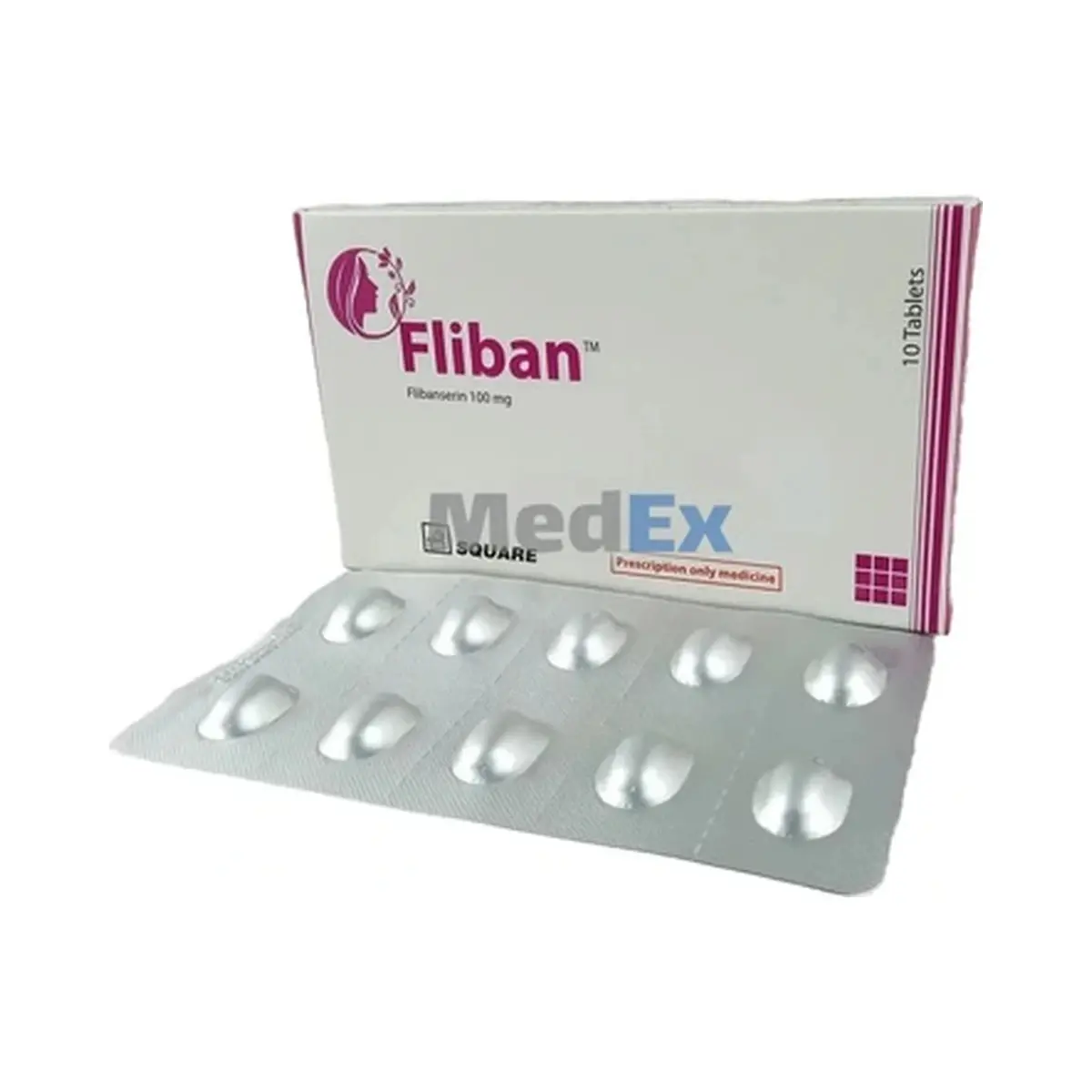
Description
Fliban (Flibanserin) 100 mg
Fliban (flibanserin) 100 mg is a prescription medicine containing flibanserin, a centrally acting agent used for the treatment of acquired, generalized hypoactive sexual desire disorder in selected women. The product is identified in official prescribing information as an oral tablet formulation of flibanserin 100 mg.
Active Ingredient and Medicine Class
The active ingredient is flibanserin. It is classified as a serotonin receptor modulator and is commonly described as a 5-HT1A receptor agonist and 5-HT2A receptor antagonist. It is not a hormone and is not intended to treat low desire caused by relationship problems, mental health conditions, medication effects, or other underlying medical causes unless those have been separately evaluated.
Established Medical Uses
Flibanserin is indicated for the treatment of acquired, generalized hypoactive sexual desire disorder in women under 65 years of age when the low desire causes marked distress or interpersonal difficulty. The established indication is limited to this specific clinical setting. It is not a general treatment for reduced libido, and it is not approved for use outside the populations described in the official prescribing information.
How It Works
Flibanserin acts on serotonin signaling in the brain and appears to influence pathways involved in sexual motivation and desire. By modulating serotonin receptors, it may shift neurotransmitter balance in a way that can improve desire-related symptoms in some patients. Its effect is gradual rather than immediate, reflecting its role in neurochemical regulation rather than direct stimulation.
Important Safety Information
Flibanserin has clinically important safety limitations. It is contraindicated in people with hepatic impairment because reduced liver function can raise flibanserin exposure and increase the risk of severe low blood pressure and fainting. It is also contraindicated with moderate or strong CYP3A4 inhibitors, because these medicines can substantially increase flibanserin levels and the risk of serious adverse effects.
Alcohol is a major concern with this medicine because the combination can increase the risk of hypotension, syncope, dizziness, and sedation. Flibanserin can also cause central nervous system depression on its own, and the risk may be greater with other sedating medicines or substances. Clinically relevant interactions may also occur with drugs that affect blood pressure, certain antidepressants, and other medicines that alter flibanserin metabolism or exposure. Caution is also warranted in people with a history of low blood pressure or syncope.
Possible Side Effects
Common adverse effects reported with flibanserin include dizziness, somnolence, nausea, fatigue, and insomnia. Dry mouth, constipation, and anxiety have also been reported. More serious reactions can include hypotension, syncope, marked sedation, and hypersensitivity reactions. Because these effects can impair alertness, the medicine may affect activities that require full concentration in some patients.
Scientific Evidence
Clinical trials and later systematic reviews show that flibanserin can produce modest improvements in sexual desire and satisfying sexual events in some premenopausal women with HSDD. The overall benefit is generally described as statistically significant but modest, and it must be weighed against the risk of dizziness, sleepiness, and blood-pressure-related adverse effects. Review literature also notes that the safety profile is strongly influenced by alcohol use and interacting medicines.
Medical Information Notice
This page is an educational summary based on sources available at the time of review. It does not replace the official patient leaflet, product labeling, or assessment by a qualified healthcare professional.
Medical Sources
- U.S. Food and Drug Administration / DailyMed. ADDYI (flibanserin) tablets, for oral use: Full Prescribing Information. View official prescribing information
- U.S. Food and Drug Administration. Addyi (flibanserin) regulatory review documents. View FDA review document
- Ida Dhanuka et al. Flibanserin for the treatment of hypoactive sexual desire disorder in premenopausal women. Expert Opinion on Pharmacotherapy, 2015. View scientific article
- A B M Kamrul-Hasan et al. Role of flibanserin in managing hypoactive sexual desire disorder in women: A systematic review and meta-analysis. Medicine (Baltimore), 2024. View scientific article