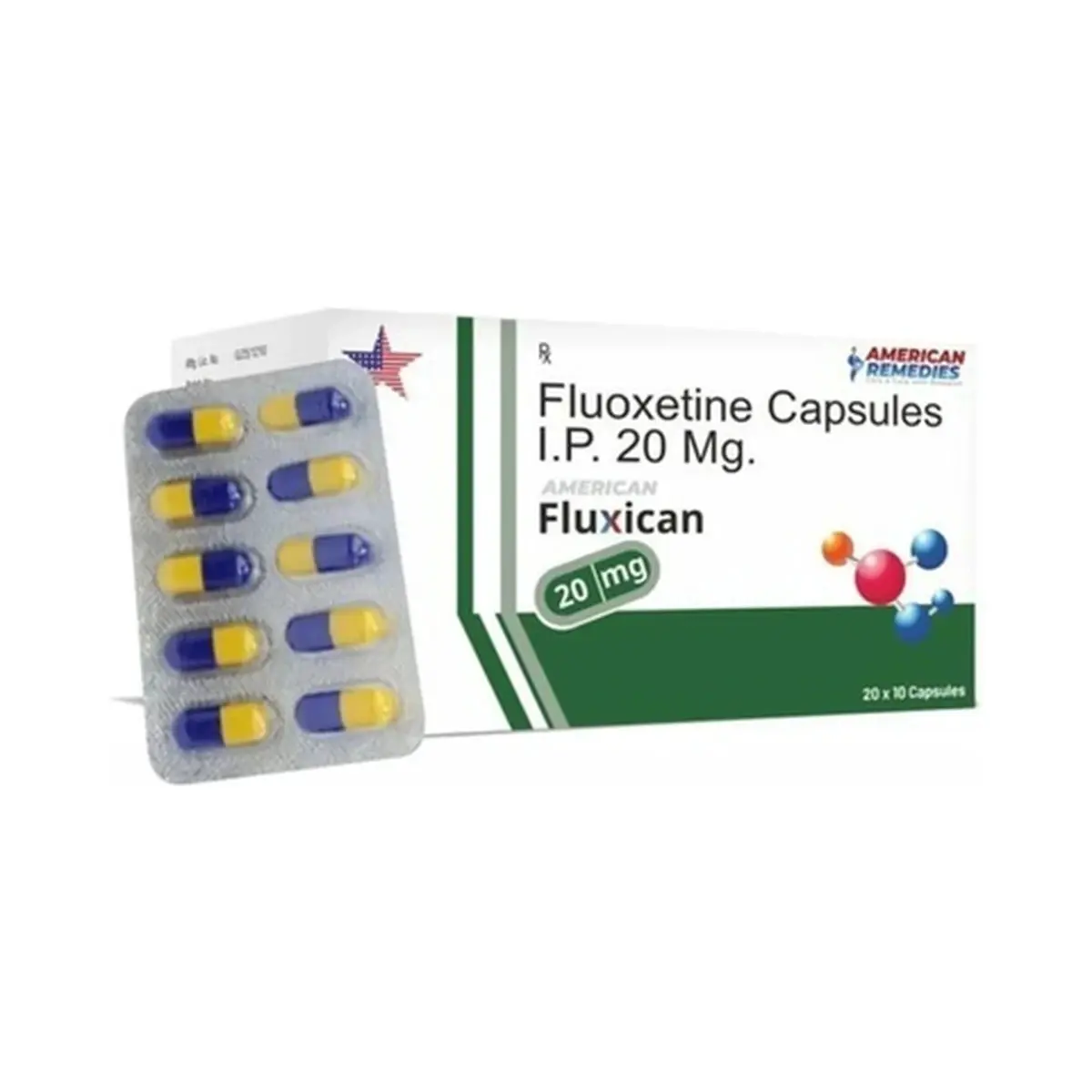
Description
Fluxican (Fluoxetine) 20 mg
Fluxican 20 mg is a capsule medicine containing fluoxetine hydrochloride, a selective serotonin reuptake inhibitor (SSRI). Fluoxetine is a well-established prescription antidepressant used in several mood and anxiety-related conditions. The product described here is an oral capsule formulation of fluoxetine 20 mg.
Active Ingredient and Medicine Class
The verified active ingredient is fluoxetine hydrochloride. Fluoxetine belongs to the SSRI class of medicines. SSRIs are commonly used in psychiatry because they increase serotonin signaling in the brain by reducing serotonin reuptake into nerve cells.
Established Medical Uses
According to official prescribing information for fluoxetine capsules, this medicine is indicated for the treatment of:
- Major depressive disorder in adults and in pediatric patients aged 8 to 18 years.
- Obsessive compulsive disorder in adults and in pediatric patients aged 7 to 17 years.
- Bulimia nervosa in adults.
- Panic disorder, with or without agoraphobia, in adults.
Fluoxetine is also widely discussed in the medical literature for its role in depressive disorders and related psychiatric conditions. Established use should always follow the approved product information for the specific medicine and market.
How It Works
Fluoxetine is believed to work by inhibiting the reuptake of serotonin in the central nervous system. This leads to greater availability of serotonin at nerve synapses, which is thought to contribute to its antidepressant and anti-obsessional effects. Like other SSRIs, fluoxetine does not act immediately; clinical improvement generally depends on continued treatment under medical supervision.
Important Safety Information
Important safety warnings for fluoxetine include the risk of suicidal thoughts and behaviors, especially in younger patients, and the possibility of serotonin syndrome, a potentially serious reaction that can occur when fluoxetine is combined with other serotonergic medicines. Official prescribing information also warns about mania or hypomania in susceptible patients, abnormal bleeding, hyponatremia, seizures, and skin reactions.
Fluoxetine is contraindicated with pimozide and thioridazine because of clinically significant interaction risk, including QT-related concerns. It should also not be used with monoamine oxidase inhibitors; serious, sometimes fatal reactions have been reported with this combination. Caution is also required with other serotonergic agents and with medicines that may increase bleeding risk, such as NSAIDs, aspirin, and warfarin. Fluoxetine is a potent inhibitor of CYP2D6, so it can alter the effects of other medicines metabolised by this pathway.
Possible Side Effects
Commonly reported adverse effects include nausea, insomnia, anxiety, nervousness, somnolence, headache, diarrhea, dry mouth, tremor, sweating, and decreased appetite. Some patients may also experience sexual dysfunction or weight change.
Serious adverse reactions are less common but may include serotonin syndrome, severe allergic or skin reactions, marked mood changes, significant bleeding, seizures, and low sodium levels. Sudden discontinuation may be associated with withdrawal-like symptoms in some patients.
Scientific Evidence
Clinical and review literature supports fluoxetine as an effective SSRI for major depressive disorder and other approved psychiatric indications. In a meta-analysis of fixed-dose 20 mg/day fluoxetine studies in major depression, fluoxetine showed greater improvement than placebo with similar discontinuation rates, while some adverse effects such as insomnia, somnolence, decreased libido, and gastrointestinal symptoms were reported more often than with placebo. Broader review articles also support fluoxetine’s established role as a serotonergic antidepressant with a long clinical history and a well-characterised safety profile.
Medical Information Notice
This page is an educational summary based on sources available at the time of review. It does not replace the official patient leaflet, product label, or individual assessment by a qualified healthcare professional.
Medical Sources
- U.S. Food and Drug Administration / DailyMed. Fluoxetine Capsules, USP for Oral Use — Full Prescribing Information
- C M Beasley Jr et al. Efficacy, adverse events, and treatment discontinuations in fluoxetine clinical studies of major depression: a meta-analysis of the 20-mg/day dose. J Clin Psychiatry, 2000. View scientific article
- French Service Hospitalo-Universitaire des Professeurs Lôo et Olié et al. Fluoxetine: an update of its use in major depressive disorder in adults. Drugs, 2004. View scientific article