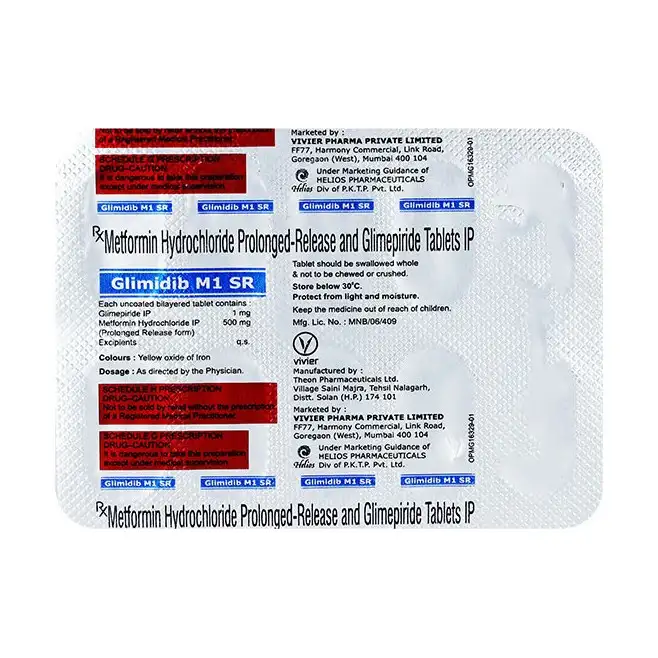
Description
Glimidib mv
Glimidib mv appears to be a fixed-dose oral antidiabetic medicine combining glimepiride, metformin, and voglibose in a sustained-release presentation. The combination is used in adults with type 2 diabetes mellitus when a single medicine does not provide enough blood glucose control.
Active Ingredient and Medicine Class
This medicine contains three glucose-lowering agents with complementary actions:
- Glimepiride — a sulfonylurea.
- Metformin — a biguanide.
- Voglibose — an alpha-glucosidase inhibitor.
Together, these ingredients target both fasting and post-meal glucose levels.
Established Medical Uses
The combination is intended for the treatment of type 2 diabetes mellitus. It is generally used as a blood sugar–lowering option when broader oral therapy is needed. The included ingredients are established medicines for type 2 diabetes, while voglibose is specifically associated with reducing postprandial glucose rises.
How It Works
Each ingredient acts differently. Glimepiride stimulates the pancreas to release more insulin. Metformin lowers glucose production in the liver and improves the body’s response to insulin. Voglibose slows the breakdown and absorption of carbohydrates in the intestine, which can reduce after-meal blood sugar spikes. Because the three drugs work through different pathways, the combination can provide more comprehensive glycaemic control than a single agent alone.
Important Safety Information
This medicine is not suitable for everyone. Important safety concerns include:
- Hypoglycaemia risk, especially from glimepiride, and particularly when combined with other glucose-lowering medicines, missed meals, or significant changes in routine.
- Lactic acidosis risk associated with metformin, especially in people with significant kidney impairment or other conditions that increase metformin accumulation.
- Kidney impairment, which is a major concern for metformin-containing products.
- Type 1 diabetes and diabetic ketoacidosis, for which glimepiride- and metformin-containing products are not appropriate.
- Drug interactions, including medicines that can intensify hypoglycaemia with glimepiride, and drugs or substances that may increase metformin exposure or lactic acidosis risk.
Clinical caution is also warranted in people with liver disease, heavy alcohol use, dehydration, or other significant medical illness.
Possible Side Effects
Common or clinically important adverse effects may include:
- Low blood sugar
- Nausea, abdominal discomfort, diarrhoea, or other gastrointestinal upset
- Loss of appetite
- Headache or dizziness
- Weight change, depending on the balance of ingredients and individual response
More serious reactions can include severe hypoglycaemia, lactic acidosis, allergic reactions, and abnormal blood test findings. Voglibose-containing regimens are also known to cause gastrointestinal intolerance in some patients.
Scientific Evidence
Human studies support the logic of combining these agents because they address different aspects of type 2 diabetes. Research on glimepiride and metformin has shown improved glycaemic control when used together compared with monotherapy in selected patients. Studies of voglibose indicate that alpha-glucosidase inhibition can reduce post-meal glucose excursions, and clinical trials of voglibose plus metformin have shown improved HbA1c reduction versus metformin alone in newly diagnosed patients. A recent observational study in India also reported routine clinical use of fixed-dose glimepiride, metformin, and voglibose combinations in type 2 diabetes. These findings support the rationale for the combination, although individual benefit and tolerability vary.
Medical Information Notice
This page is an educational summary based on sources available at the time of review. It does not replace the official patient leaflet, prescribing information, or assessment by a qualified healthcare professional.
Medical Sources
- U.S. Food and Drug Administration / DailyMed — Metformin Hydrochloride Extended-release Tablets, prescribing information
- U.S. Food and Drug Administration / DailyMed — Glimepiride Tablets USP, prescribing information
- Xiaolong Chen et al. “Voglibose (Basen, AO-128), one of the most important alpha-glucosidase inhibitors.” Current Medicinal Chemistry, 2006. View scientific article
- Tae Jung Oh et al. “Efficacy and Safety of Voglibose Plus Metformin in Patients with Type 2 Diabetes Mellitus: A Randomized Controlled Trial.” Diabetes & Metabolism Journal, 2019. View scientific article
- Paramesh Shamanna et al. “Observational, Multicenter, Retrospective, Study on the Usage Patterns of the Fixed Dose Combination of Glimepiride, Metformin, and Voglibose in Type 2 Diabetes Management.” Cureus, 2024. View scientific article