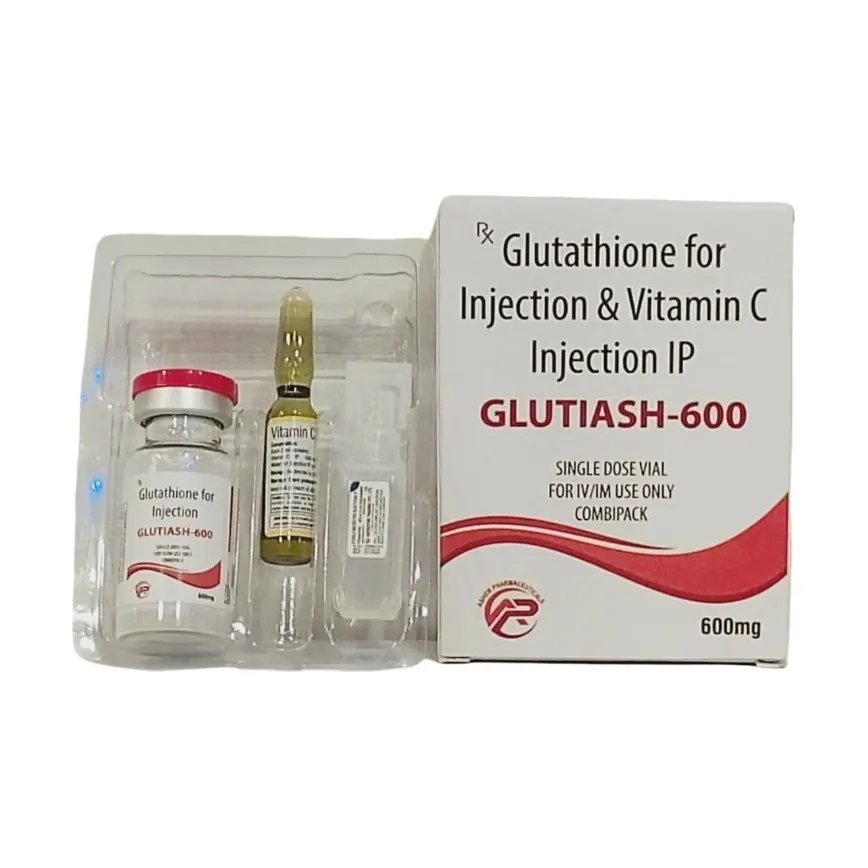
Description
Glutiash (Glutathione + Vitamin C) 600 mg
Glutiash 600 mg is presented as an injectable combination of glutathione and vitamin C. The exact trade-name product could not be verified from authoritative prescribing information, so this summary is based on the verified active ingredients and on published medical evidence about similar glutathione and vitamin C injectable formulations.
Active Ingredient and Medicine Class
Glutathione is a naturally occurring tripeptide with antioxidant activity. Vitamin C is also an antioxidant and a cofactor in several metabolic reactions. Together, these ingredients are generally discussed as antioxidant agents rather than as established treatments for a specific disease indication. Injectable vitamin C products are regulated in some settings for deficiency-related use, while injectable glutathione is not widely established as an approved prescription medicine for skin brightening or “detox” purposes.
Established Medical Uses
Vitamin C injection has an established medical role in the short-term treatment of scurvy when oral treatment is not possible, insufficient, or contraindicated. For glutathione, no broadly recognised, standard approved indication for skin lightening or routine wellness use could be confirmed from authoritative prescribing information. Reported cosmetic uses such as skin brightening remain off-label and are not supported as established medical indications.
How It Works
Glutathione helps maintain intracellular redox balance and supports the body’s antioxidant defenses. It may influence melanin-related pathways by affecting oxidation-reduction reactions involved in pigment formation. Vitamin C also helps neutralise reactive oxygen species and participates in antioxidant recycling. In theory, combining the two may increase antioxidant activity, but this does not mean that the combination has a proven clinical benefit for cosmetic use.
Important Safety Information
Safety depends on the exact formulation, concentration, and route of use. Vitamin C injection is associated with important precautions in people with renal impairment or risk of oxalate stones, and in those with glucose-6-phosphate dehydrogenase deficiency. It may also interfere with some laboratory tests. For glutathione, published reviews note concerns about the limited safety dataset for intravenous use, particularly when used outside established medical indications. Because this is an injectable product, product quality, sterility, and professional handling are important safety considerations.
Possible Side Effects
Reported adverse effects related to vitamin C injection include nausea, vomiting, diarrhoea, flushing, headache, rash, and fatigue, with more serious concerns such as oxalate nephropathy in susceptible patients. For glutathione, reports and reviews describe uncertainty about the frequency of adverse effects with intravenous use, and safety concerns have been raised in the literature. Any injectable combination may also cause local injection-site reactions or hypersensitivity-type reactions.
Scientific Evidence
Published reviews of glutathione for skin lightening describe a biologic rationale and some positive findings for oral or topical forms, but conclude that evidence for intravenous glutathione is limited and inconsistent. A systematic review of glutathione in skin color and related conditions found only a small evidence base, with the strongest signals coming from non-injectable use. Another review focusing on glutathione in melasma reported that intravenous glutathione lacks convincing efficacy and that safety concerns remain. Evidence for adding vitamin C to injectable glutathione for cosmetic purposes remains insufficient and should be interpreted cautiously.
Medical Information Notice
This page is an educational summary based on sources available at the time of review. It does not replace the official patient leaflet, prescribing information, or assessment by a qualified health professional.
Medical Sources
- U.S. Food and Drug Administration / DailyMed. ASCOR (ascorbic acid injection) prescribing information. View official prescribing information
- U.S. Food and Drug Administration. Pharmacy Compounding Advisory Committee material discussing glutathione injection safety concerns. View official FDA document
- Sidharth Sonthalia et al. Glutathione as a skin whitening agent: Facts, myths, evidence and controversies. Indian Journal of Dermatology, Venereology and Leprology, 2016. View scientific article
- Witoo Dilokthornsakul et al. The clinical effect of glutathione on skin color and other related skin conditions: A systematic review. Journal of Cosmetic Dermatology, 2019. View scientific article