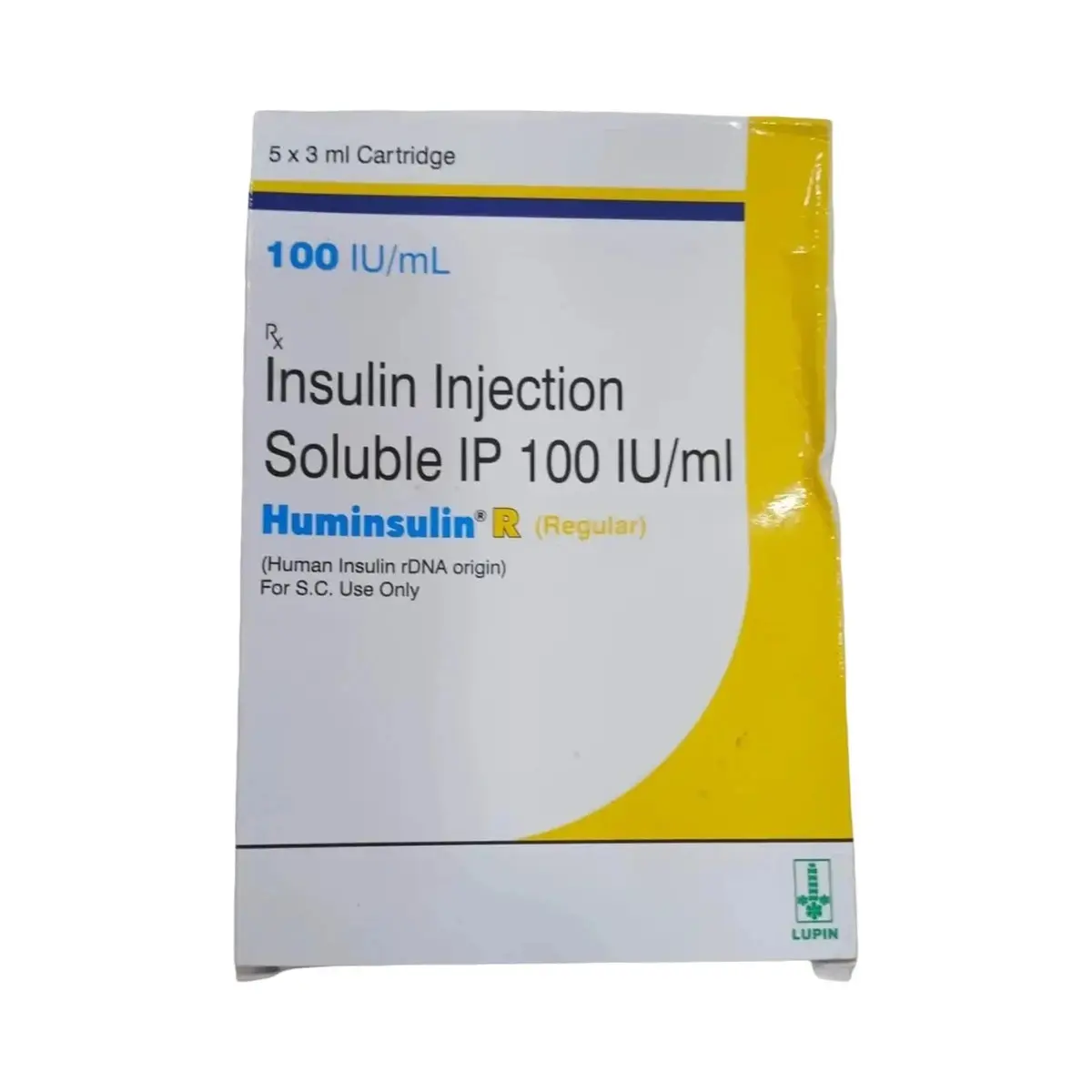
Description
Huminsulin R (Human Insulin (Regular)) 100 IU/ml
Huminsulin R 100 IU/ml is a short-acting human insulin preparation. The product name supplied suggests a regular insulin vial for injection, and the verified active substance is human insulin (regular), a recombinant insulin used for glycaemic control in diabetes.
Active Ingredient and Medicine Class
The active ingredient is human insulin. It belongs to the insulin class of glucose-lowering medicines. Regular human insulin is a short-acting formulation that has been used for many years in the management of diabetes mellitus.
Established Medical Uses
Regular human insulin is indicated for the treatment of diabetes mellitus when insulin is required to help maintain glucose homeostasis. It is used in adults and, in some regulatory labels, in paediatric patients with diabetes as part of an insulin regimen.
How It Works
Human insulin replaces or supplements the body’s own insulin. It helps glucose move from the bloodstream into body tissues and reduces glucose production by the liver. As a result, it lowers blood glucose levels and supports overall metabolic control in people who need insulin therapy.
Important Safety Information
Regular insulin should not be used during episodes of hypoglycaemia. It is also contraindicated in people with a known hypersensitivity to insulin human or to any excipient in the formulation.
Blood glucose may change when insulin regimens are altered, including changes in insulin strength, brand, type, injection site, or method of administration. Other medicines can also alter insulin requirements or mask warning signs of low blood sugar. Medicines that may reduce awareness of hypoglycaemia include some antiadrenergic drugs such as beta-blockers, clonidine, guanethidine, and reserpine.
Hypokalaemia is another clinically important risk, because insulin can shift potassium into cells. Caution is also advised with thiazolidinediones, which may increase fluid retention and worsen heart failure in susceptible patients.
Possible Side Effects
The most important adverse effect is hypoglycaemia. This can be severe and may lead to confusion, loss of consciousness, seizures, or, in extreme cases, death.
Other recognised adverse effects include injection-site reactions, local allergy, systemic allergic reactions, lipodystrophy at the injection site, weight gain, oedema, rash, and pruritus. Serious allergic reactions are uncommon but can occur.
Scientific Evidence
Clinical research supports the long-standing role of regular human insulin in diabetes care. Review literature shows that it remains an established glucose-lowering option, while newer rapid-acting insulin analogues may offer some postprandial advantages in certain settings. However, comparative reviews have not shown clear long-term superiority of short-acting analogues over regular human insulin for major patient-relevant outcomes in type 2 diabetes.
Overall, the evidence base is consistent with regular human insulin being an effective, well-established insulin preparation, with safety concerns dominated by the known class effects of insulin, especially hypoglycaemia.
Medical Information Notice
This page is an educational summary based on sources available at the time of review. It does not replace the official patient leaflet, prescribing information, or individual assessment by a qualified healthcare professional.
Medical Sources
- U.S. Food and Drug Administration / DailyMed. HUMULIN R (insulin human) injection, prescribing information. View official prescribing information
- Electronic Medicines Compendium (emc) / Eli Lilly. HUMULIN S (Soluble) 100 IU/ml solution for injection in vial, Summary of Product Characteristics. View official product information
- Caroline K Kramer et al. Insulin and insulin analogs as antidiabetic therapy: A perspective from clinical trials. Cell Metabolism, 2021. View scientific article
- Birgit Fullerton et al. Short-acting insulin analogues versus regular human insulin for adult, non-pregnant persons with type 2 diabetes mellitus. Cochrane Database of Systematic Reviews, 2018. View scientific article