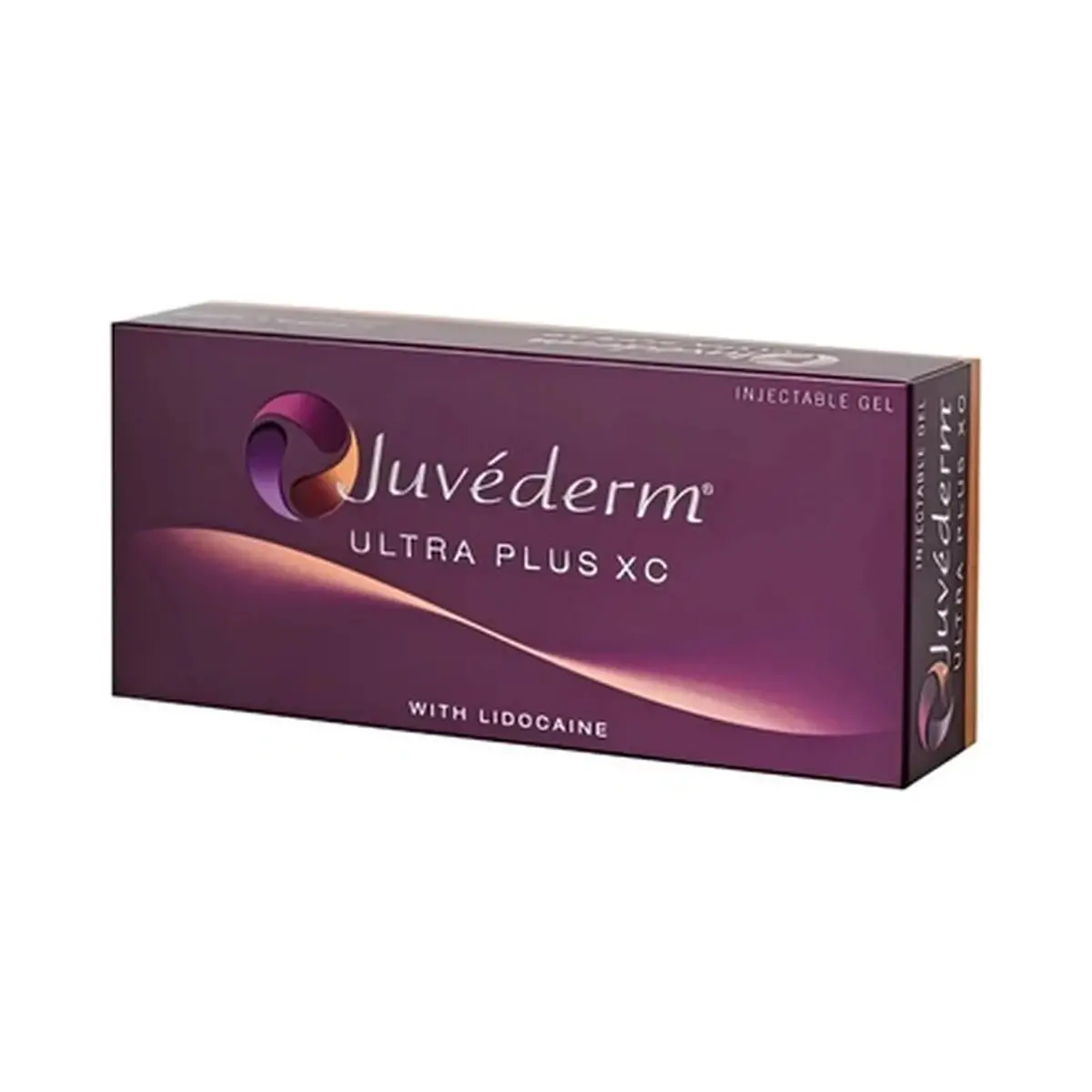
Description
Juvéderm Ultra Plus XC
Juvéderm Ultra Plus XC is a hyaluronic acid-based injectable dermal filler that also contains lidocaine. It is a sterile, cross-linked gel designed for aesthetic soft-tissue augmentation, with a higher-viscosity formulation intended for deeper facial folds and volume correction. In U.S. regulatory labeling, Juvéderm Ultra Plus XC is part of the JUVÉDERM injectable gel family.
Active Ingredient and Medicine Class
The verified active ingredients are hyaluronic acid 24 mg/mL and lidocaine 3 mg/mL. Hyaluronic acid is a naturally occurring polysaccharide used here as a biodegradable dermal filler. Lidocaine is a local anaesthetic added to reduce injection-related discomfort. This product is classified as an injectable dermal filler for aesthetic use.
Established Medical Uses
Regulatory information identifies Juvéderm Ultra Plus XC for correction of moderate to severe facial wrinkles and folds, including nasolabial folds. The product family has also been associated with lip and perioral area use in adult patients in related U.S. labeling for JUVÉDERM XC products, but the specific labeled use for Ultra Plus XC should be taken from the current official product information supplied with the device.
This medicine is used for cosmetic soft-tissue augmentation rather than for treatment of disease. Its effect is temporary, and repeat treatment may be needed to maintain results.
How It Works
Hyaluronic acid fillers work by adding structure and volume beneath the skin. The cross-linked gel binds water and provides lift in areas where facial tissue has thinned or folded. Over time, the body gradually breaks down the material. Lidocaine acts locally to reduce pain during injection, but it does not change the filler’s volumising function.
Important Safety Information
Juvéderm Ultra Plus XC should not be used in people with severe allergies, a history of anaphylaxis, multiple severe allergies, known allergy to gram-positive bacterial proteins, or allergy to lidocaine. Treatment should be deferred in areas with active skin inflammation or infection. The product is intended for trained healthcare professionals who understand facial anatomy and the risks of soft-tissue injection.
Important warnings in official labeling include the risk of accidental injection into a blood vessel. Such events can cause vascular occlusion, skin necrosis, or serious eye and neurological complications, including vision loss or stroke. The product is also intended for single-patient use only.
Clinically significant interactions are mainly related to other local anaesthetics, known allergen exposures, and procedures or products that increase the chance of bleeding or bruising. Because this is an injectable implant, a careful medical history and risk assessment are important before use.
Possible Side Effects
Common adverse effects reported with hyaluronic acid fillers include temporary redness, swelling, tenderness, bruising, itching, firmness, and pain at the injection site. These effects are usually short lived.
More serious but less common reactions include infection, inflammatory nodules, allergic or hypersensitivity reactions, granuloma formation, tissue necrosis, and vascular complications. Rare reports have included vision abnormalities and other severe consequences related to inadvertent intravascular injection. Lidocaine-related reactions are also possible in sensitive individuals.
Scientific Evidence
Clinical studies and reviews support the use of hyaluronic acid dermal fillers for correction of nasolabial folds and other facial wrinkles, with the general finding that higher-viscosity hyaluronic acid gels can provide effective volume correction for deeper folds. Studies of Juvéderm Ultra Plus specifically have reported meaningful improvement in severe nasolabial folds, with some patients maintaining correction for extended periods.
Research on lidocaine-containing hyaluronic acid fillers suggests that adding lidocaine can reduce pain during injection and improve treatment comfort without clearly reducing filler effectiveness. These findings support the rationale for the XC formulation, although aesthetic outcomes remain dependent on patient anatomy, injector technique, and product selection.
Medical Information Notice
This page is an educational summary based on sources available at the time of review. It does not replace the official patient leaflet, the current device labeling, or individual assessment by a qualified healthcare professional.
Medical Sources
- U.S. Food and Drug Administration (FDA) JUVÉDERM Ultra XC Directions for Use. View official prescribing information
- U.S. Food and Drug Administration (FDA) Premarket Approval record for JUVÉDERM Ultra Plus XC and related JUVÉDERM products. View official FDA device record
- Mark A. Pinsky et al. Juvéderm injectable gel: a multicenter, double-blind, randomized study of safety and effectiveness. Aesthetic Surgery Journal, 2008. View scientific article
- Anthony S. Levine et al. Effectiveness of Juvéderm Ultra Plus dermal filler in the treatment of severe nasolabial folds. Plastic and Reconstructive Surgery, 2008. View scientific article
- Kimberly Cockerham et al. Hyaluronic acid dermal fillers: can adjunctive lidocaine improve patient satisfaction without decreasing efficacy or duration? Clinical, Cosmetic and Investigational Dermatology, 2011. View scientific article