Description
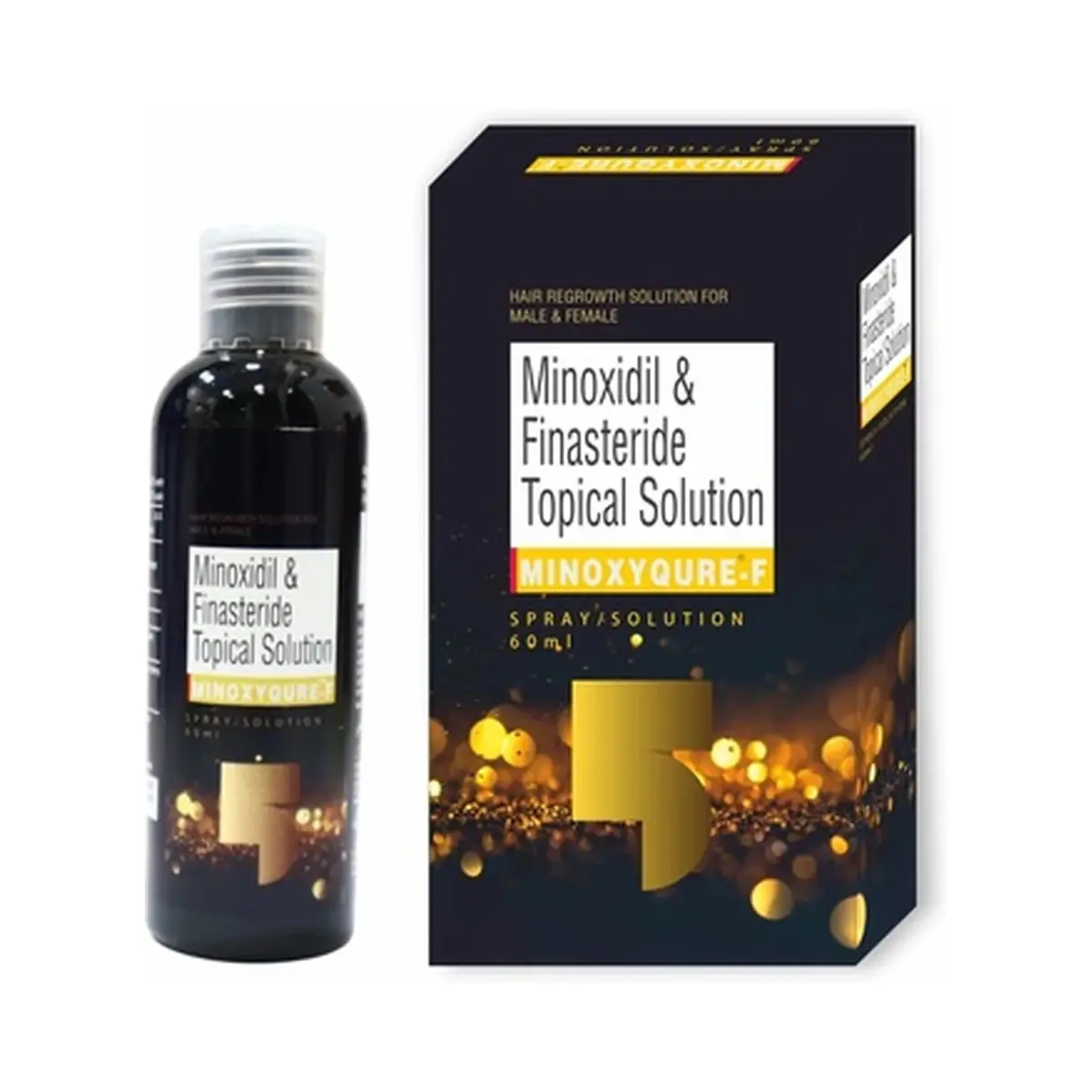
Minoxyqure-f
Minoxyqure-f is a topical hair-loss product identified here as a combination of minoxidil 5% and finasteride 0.1%. The combination is used in studies of androgenetic alopecia (pattern hair loss), but this specific trade name and strength combination were not verified in an official regulatory product label. Information below therefore describes the verified ingredients and their recognised medical use as published in regulatory and peer-reviewed sources.
Active Ingredient and Medicine Class
Minoxidil is a vasodilator that is also used topically as a hair-growth treatment. Finasteride is a 5-alpha-reductase inhibitor that reduces the conversion of testosterone to dihydrotestosterone (DHT). Both ingredients have been studied for androgenetic alopecia, with minoxidil being an established topical treatment and finasteride being an established anti-androgen used for pattern hair loss in approved oral form, with topical finasteride also authorised in some settings.
Established Medical Uses
Minoxidil is established for treatment of androgenetic alopecia and is marketed in topical formulations for hair regrowth. Finasteride is established for male pattern hair loss in approved oral formulations, and topical finasteride has also been authorised in certain jurisdictions for cutaneous use in early-stage male pattern hair loss. The fixed-dose topical combination has been investigated in clinical studies for male androgenetic alopecia, but regulatory status may vary by country.
How It Works
Minoxidil is thought to prolong the growth phase of hair follicles and may increase follicular activity in the scalp. Finasteride lowers DHT levels in the skin and scalp; because DHT contributes to follicle miniaturisation in androgenetic alopecia, reducing it may help slow further thinning. The two ingredients act through different mechanisms, which is the rationale for combining them in topical therapy.
Important Safety Information
Topical minoxidil is generally avoided in people who cannot use it because of hypersensitivity to the ingredients. Finasteride requires particular caution because systemic exposure, even from topical use, may occur; it is not appropriate in pregnancy, and contact with pregnancy should be avoided because finasteride can affect a male fetus. Finasteride-related safety concerns also include sexual adverse effects and mood-related warnings reported in regulatory reviews. Clinically significant interactions are better established for oral finasteride than for topical use, but caution is still warranted because systemic absorption may not be zero.
Possible Side Effects
Reported adverse effects with topical minoxidil-containing products include scalp irritation, itching, dryness, and local dermatitis. Finasteride-containing products may be associated with sexual adverse effects such as reduced libido or erectile dysfunction, and regulators have highlighted possible mood-related effects, including depressed mood and suicidal thoughts, in finasteride-containing medicines. Combination studies have reported generally mild side effects overall, but systemic effects can still occur.
Scientific Evidence
Clinical trials and reviews suggest that topical finasteride combined with topical minoxidil can improve hair-growth measures in men with androgenetic alopecia, although findings are not uniform across studies and the overall evidence base remains limited. A 2024 randomised study of 0.1% finasteride plus 5% minoxidil reported improvement from baseline, while a 2024 pilot trial and earlier randomised studies found combination therapy to be at least comparable to minoxidil alone and generally well tolerated. A 2020 meta-analysis concluded that available evidence did not show a consistent advantage across all outcomes, reflecting heterogeneity and small study sizes.
Medical Information Notice
This summary is educational and based on sources available at the time of review. It does not replace the official patient leaflet, product labelling, or assessment by a qualified healthcare professional.
Medical Sources
- Official source: European Medicines Agency, Annex II: Scientific conclusions.
- Official source: U.S. Food and Drug Administration, Men’s Rogaine Extra Strength 5% Minoxidil Topical Solution Hair Regrowth Treatment.
- Scientific publication: Rossi A, et al. “Efficacy of the association of topical minoxidil and topical finasteride compared to their use in monotherapy in men with androgenetic alopecia: A prospective, randomized, controlled, assessor blinded, 3-arm, pilot trial.” Journal of Cosmetic Dermatology (2024). PubMed.