Description
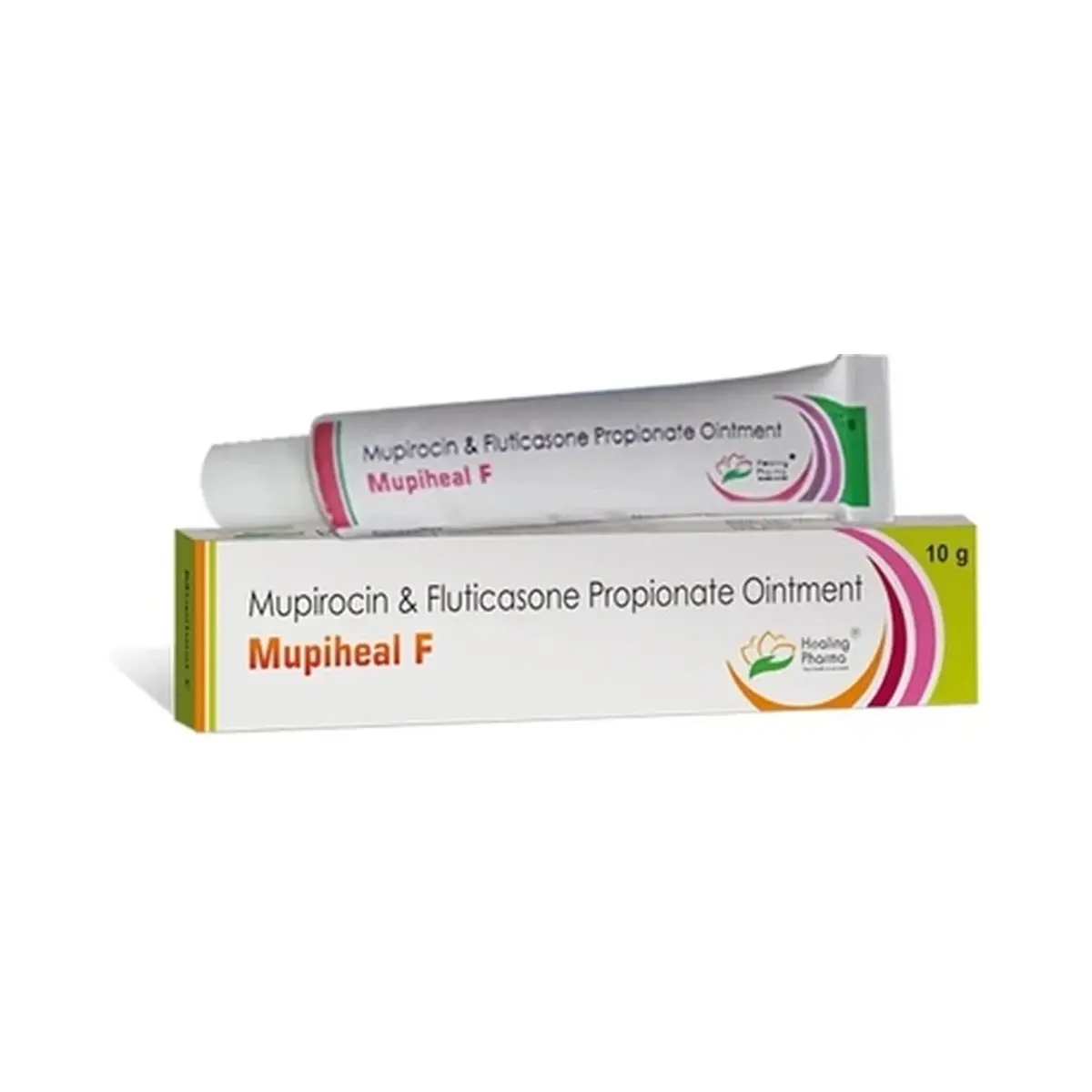
Mupiheal f ointment
Mupiheal f ointment is a topical dermatological medicine identified as a combination of mupirocin and fluticasone propionate. Based on the verified source information for these ingredients, it combines an antibacterial agent with a topical corticosteroid for use on the skin.
Active Ingredient and Medicine Class
Mupirocin is a topical antibiotic active against certain skin bacteria, including Staphylococcus aureus. Fluticasone propionate is a topical corticosteroid used to reduce inflammation and itching in corticosteroid-responsive skin conditions. Together, they represent an antibiotic–corticosteroid combination for dermatological use.
Established Medical Uses
Verified prescribing information supports mupirocin for superficial skin infections and fluticasone propionate for the relief of inflammatory and itchy manifestations of corticosteroid-responsive dermatoses in adults. The combination has been studied in atopic dermatitis with clinical suspicion of secondary bacterial infection. No broader approved indication for the fixed combination could be verified from the sources reviewed.
How It Works
Mupirocin inhibits bacterial protein synthesis by blocking isoleucyl-tRNA synthetase, which helps stop growth of susceptible bacteria. Fluticasone propionate acts locally on the skin to suppress inflammatory signals, which can reduce redness, swelling, and itching.
Important Safety Information
Important precautions for mupirocin include use only on the skin and avoidance of the eyes, nose, mouth, and other mucosal surfaces. Fluticasone propionate is contraindicated in patients with hypersensitivity to its components and should not be used on untreated skin infections without appropriate management. Topical corticosteroids can be absorbed through the skin, especially with prolonged use, large treatment areas, or occlusion, and may cause adrenal suppression; they may also increase the risk of cataracts or glaucoma with eye exposure or prolonged use near the eyes. Clinically significant interactions may occur with other corticosteroid-containing products.
Possible Side Effects
Reported adverse effects of mupirocin include burning, stinging, pain, and itching at the application site. Fluticasone propionate may cause local reactions such as itching, burning, redness, hives, and excessive hair growth. More serious corticosteroid-related reactions can include skin thinning, adrenal suppression, and vision problems such as glaucoma or cataracts.
Scientific Evidence
A PubMed-indexed open-label study in patients with atopic dermatitis and suspected secondary bacterial infection reported clinical improvement with a fluticasone propionate 0.005% plus mupirocin 2.0% ointment regimen over 2 weeks. This supports the biological rationale for combining anti-inflammatory and antibacterial topical treatment, but it was not a blinded randomized trial.
Medical Information Notice
This summary is for educational purposes only and is based on sources available at the time of review. It does not replace the official patient leaflet, prescribing information, or assessment by a qualified healthcare professional.
Medical Sources
- U.S. Food and Drug Administration / DailyMed: Mupirocin Ointment, Full Prescribing Information
- U.S. Food and Drug Administration / DailyMed: Fluticasone Propionate Ointment, Full Prescribing Information
- Khobragade KJ et al. “Efficacy and safety of combination ointment ‘fluticasone propionate 0.005% plus mupirocin 2.0%’ for the treatment of atopic dermatitis with clinical suspicion of secondary bacterial infection: an open label uncontrolled study.” Indian Journal of Dermatology, Venereology and Leprology, 2005. PubMed