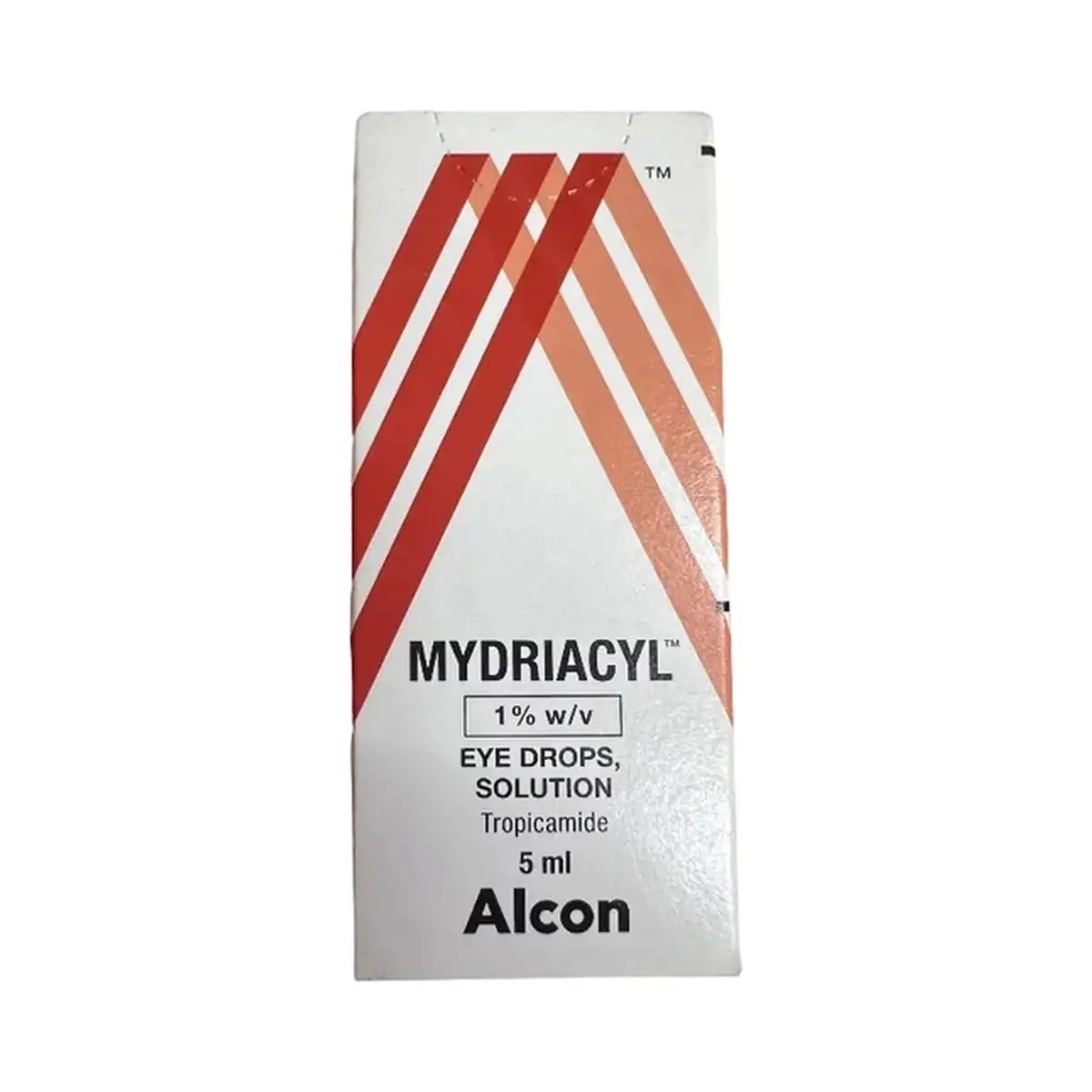
Description
Mytriacyl eye drops (tropicamide) 1%
Mytriacyl eye drops 1% is a topical ophthalmic medicine containing tropicamide. It is used to dilate the pupil and temporarily relax the eye’s focusing muscle to help eye-care professionals examine the retina and other internal structures of the eye. Tropicamide is a short-acting mydriatic and cycloplegic medicine.
Active Ingredient and Medicine Class
The verified active ingredient is tropicamide, an antimuscarinic (anticholinergic) ophthalmic agent. It is classified as a mydriatic and cycloplegic medicine.
Established Medical Uses
Approved and established uses include pupil dilation for diagnostic eye examination and temporary cycloplegia for ophthalmic assessment. Product information identifies tropicamide eye drops as a topical mydriatic and cycloplegic used in clinical eye care.
How It Works
Tropicamide blocks muscarinic receptors in the eye. This relaxes the iris sphincter muscle, causing pupil dilation, and reduces the action of the ciliary muscle, which temporarily impairs near focusing. These effects help improve visualization of the back of the eye during examination.
Important Safety Information
Tropicamide is contraindicated in people with hypersensitivity to tropicamide or any excipients. It is also contraindicated in narrow-angle glaucoma and in eyes with a narrow filtration angle, because it may precipitate acute angle-closure glaucoma. Caution is advised in inflamed eyes, where systemic absorption may be increased, and extra care is recommended in small children. Tropicamide may also interact with other antimuscarinic medicines and may interfere with the effect of pilocarpine or carbachol.
Possible Side Effects
Common adverse effects include temporary blurred vision, light sensitivity, stinging or irritation, and local eye discomfort. Less common but clinically important reactions can include allergic reactions, raised eye pressure, and systemic anticholinergic effects such as dry mouth, flushing, fast heart rate, or restlessness. Serious systemic effects are uncommon but can occur, especially in children or with increased absorption.
Scientific Evidence
Peer-reviewed literature supports tropicamide’s use as a practical mydriatic for routine eye examination, with a generally favourable safety profile when used appropriately. Reviews and clinical reports also note that adverse effects are usually mild but that systemic reactions and rare allergic responses can occur. Published reviews have additionally described non-medical misuse of tropicamide eye drops, underscoring that the medicine is not benign if used outside ophthalmic care.
Medical Information Notice
This page is an educational summary based on sources available at the time of review. It does not replace the official patient leaflet, prescribing information, or assessment by a qualified healthcare professional.
Medical Sources
- Medicines.org.uk (emc): Tropicamide 1% w/v eye drops, solution in single-dose container – Summary of Product Characteristics
- DailyMed: Mydriacyl (tropicamide ophthalmic solution, USP) prescribing information
- Hong D, Tripathy K, et al. “Tropicamide.” StatPearls (PubMed, 2023). PubMed article
- Bellman V, et al. “Abuse of tropicamide eye drops: review of clinical data.” Braz J Psychiatry (2022). PubMed article