Description
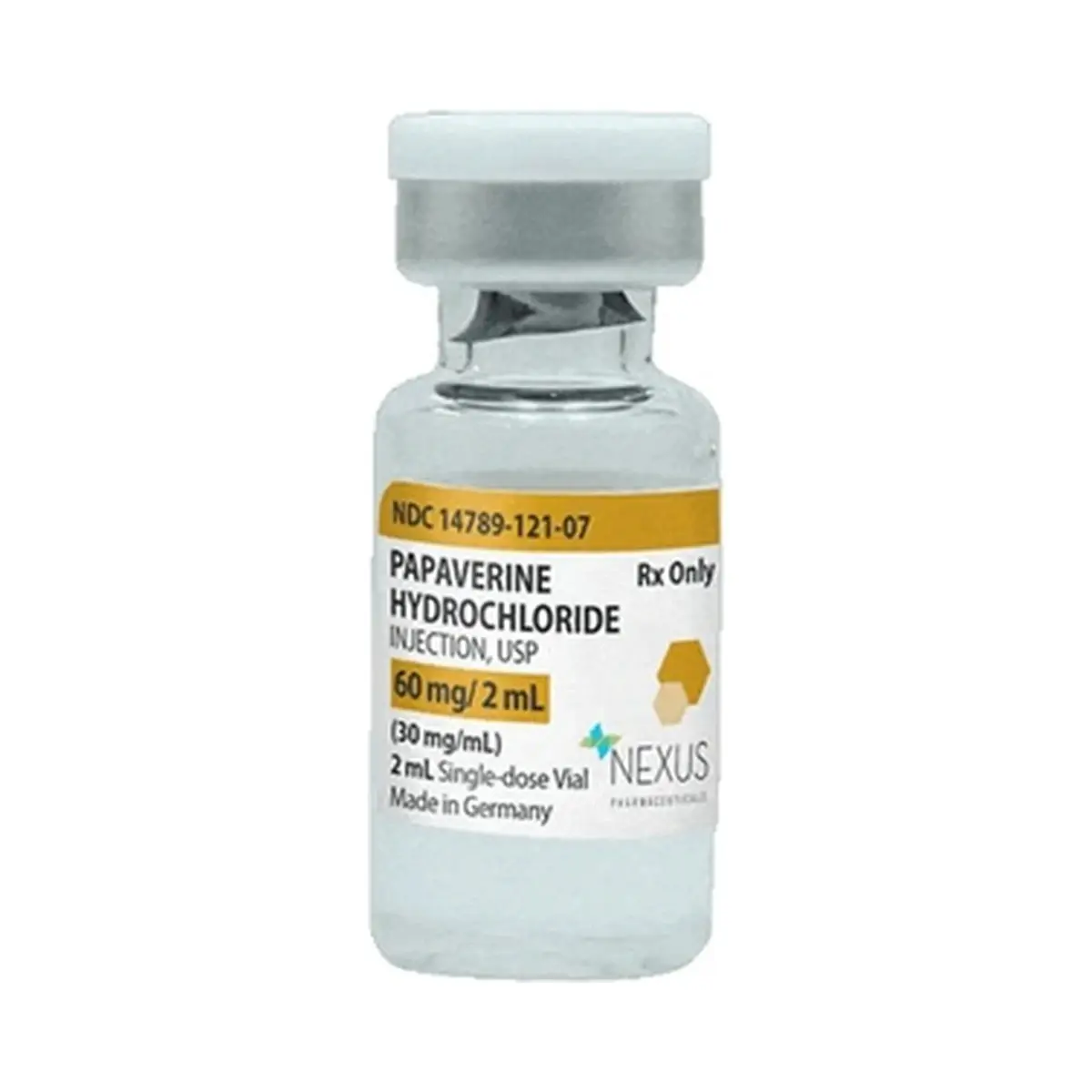
Papaverine HCl (Papaverine) 60 mg injection
Papaverine hydrochloride injection is a prescription medicine used as a smooth-muscle relaxant and vasodilator. It has been used in settings where spasm of blood vessels or other smooth muscle is clinically relevant. The product name supplied appears consistent with papaverine hydrochloride injection, but product presentations may vary by market and manufacturer.
Active Ingredient and Medicine Class
The verified active ingredient is papaverine hydrochloride. It is a benzylisoquinoline alkaloid and a smooth-muscle relaxant with vasodilating properties. It is not an opioid analgesic, despite its origin from opium alkaloids.
Established Medical Uses
Official labeling describes papaverine as being used for conditions accompanied by spasm of smooth muscle, including some vascular spasm states and visceral spasm such as ureteral, biliary, or gastrointestinal colic. The labeling also notes use in certain coronary, peripheral, pulmonary, and cerebral vasospastic conditions.
How It Works
Papaverine relaxes smooth muscle directly. In the vascular system, this can reduce spasm and widen blood vessels, which may improve blood flow in affected areas. Regulatory labeling describes its most characteristic effect as relaxation of smooth muscle, especially when it is spasmodically contracted.
Important Safety Information
Papaverine injection should be used with caution because it can affect cardiac conduction and rhythm. Official labeling states that intravenous papaverine is contraindicated in complete atrioventricular heart block, and that depressed conduction may be associated with ventricular ectopic rhythms. It should not be mixed with Lactated Ringer’s injection because precipitation may occur. Papaverine is not indicated for impotence by intracorporeal injection, and reports of persistent priapism have been associated with intracorporeal use.
Possible Side Effects
Recognised adverse effects include cardiovascular effects such as rhythm disturbances, blood pressure changes, and other circulatory reactions. Other reactions may include gastrointestinal upset, dizziness, and local or systemic intolerance. Serious complications have been reported with intracorporeal use, including priapism.
Scientific Evidence
PubMed-indexed literature supports papaverine’s role as a vasodilator and smooth-muscle relaxant, including historical and review evidence in cerebral vasospasm and intracavernosal therapy for erectile dysfunction. More recent reviews note that intracavernosal papaverine-based therapy can be effective, but adverse effects and patient monitoring remain important considerations.
Medical Information Notice
This summary is for educational purposes only and is based on sources available at the time of review. It does not replace the official patient leaflet, product label, or assessment by a qualified healthcare professional.
Medical Sources
- DailyMed / FDA labeling: PAPAVERINE HYDROCHLORIDE injection
- DailyMed / FDA labeling: PAPAVERINE HYDROCHLORIDE INJECTION, USP
- PubMed: Current status of intracavernosal injection therapy in erectile dysfunction
- PubMed: Technical considerations on intra-arterial papaverine hydrochloride for cerebral vasospasm