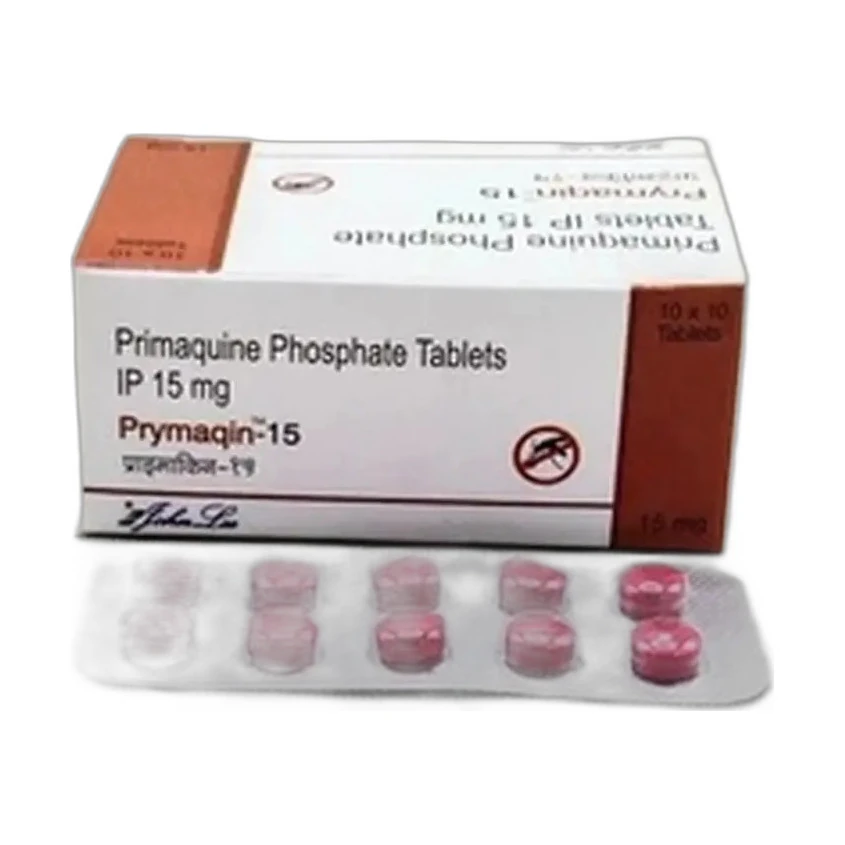
Description
Prymaqin (Primaquine) 15 mg
Prymaqin 15 mg is a branded product containing primaquine, an antimalarial medicine used to target liver-stage forms of malaria parasites and to help reduce relapse in certain infections. The verified reference product information identifies this strength as primaquine base 15 mg per tablet.
Active Ingredient and Medicine Class
The active ingredient is primaquine phosphate, an 8-aminoquinoline antimalarial. Primaquine is a prescription medicine with activity against dormant liver forms of Plasmodium vivax and Plasmodium ovale, and it also has gametocytocidal activity against malaria parasites.
Established Medical Uses
Official prescribing information and peer-reviewed reviews support primaquine for:
- radical cure of Plasmodium vivax malaria, to eliminate dormant liver forms and help prevent relapse;
- treatment of Plasmodium ovale infection in the same context;
- reduction of malaria transmission by clearing circulating gametocytes in certain settings.
How It Works
Primaquine acts on malaria parasites at stages that are not fully removed by many blood-stage antimalarials. Its main clinical value is against dormant parasite forms in the liver, which can later cause relapse. It also affects sexual-stage parasites, helping limit transmission. The exact mechanism is not fully defined, but its antimalarial activity is linked to metabolite formation and parasite damage.
Important Safety Information
Primaquine has important safety limitations. It is contraindicated in glucose-6-phosphate dehydrogenase (G6PD) deficiency because of the risk of haemolytic anaemia. Prescribing information also warns against use in pregnancy unless a compelling indication exists and appropriate G6PD status is considered, because fetal G6PD status is usually unknown. Caution is needed in people with a history of haemolytic reactions, significant anaemia, or severe hypersensitivity to quinoline drugs.
Clinically significant interactions and precautions include other medicines or conditions that increase the risk of haemolysis or blood dyscrasias. Pharmacogenomic evidence suggests that CYP2D6 activity may influence primaquine effectiveness, so reduced CYP2D6 function may be relevant to treatment response.
Possible Side Effects
Commonly reported adverse effects include nausea, vomiting, abdominal discomfort, and headache. More serious reactions can include haemolytic anaemia, methaemoglobinaemia, and other blood-related toxicity, especially in susceptible patients. Rare hypersensitivity reactions and liver-related abnormalities have also been reported.
Scientific Evidence
Peer-reviewed reviews and meta-analyses show that primaquine reduces relapse of P. vivax malaria and remains the main widely available option for radical cure. The evidence base also highlights the need to consider G6PD status and the balance between efficacy and haemolytic risk. Recent paediatric and regional analyses continue to support its role in relapse prevention, while noting variability in response and safety across dosing strategies.
Medical Information Notice
This educational summary is based on sources available at the time of review and does not replace the official patient leaflet, product information, or individual assessment by a qualified healthcare professional.
Medical Sources
- U.S. FDA / DailyMed: Primaquine Phosphate Tablets, USP
- Sanjeevi J et al.: Primaquine in vivax malaria: an update and review on management issues — PubMed, 2012