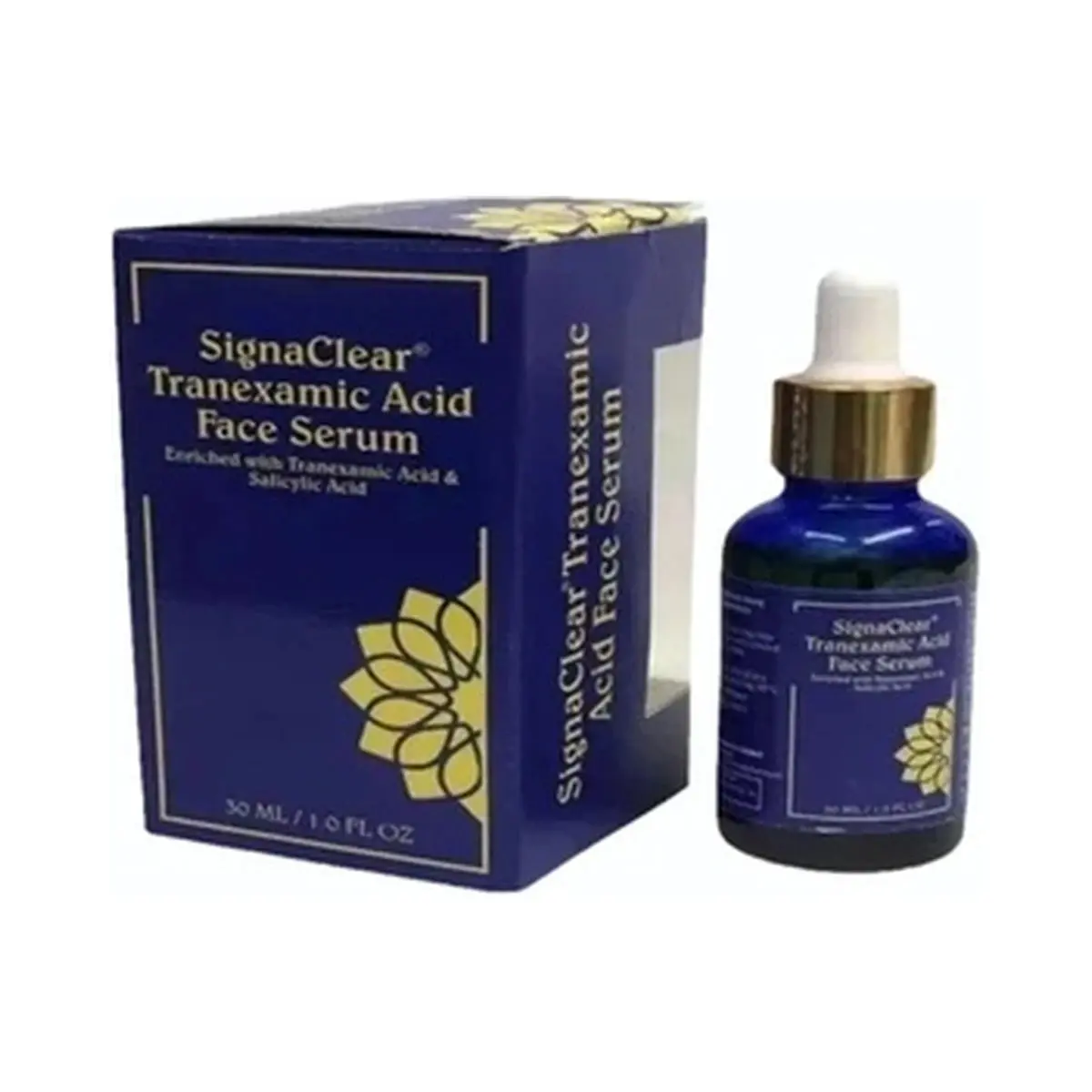
Description
Signaclear tranexamic acid face serum
Signaclear tranexamic acid face serum is a topical cosmetic serum identified by its use of tranexamic acid. Tranexamic acid is an established antifibrinolytic medicine, but its use in facial serums is off-label and product-specific claims should be interpreted cautiously. Clinical studies have examined topical tranexamic acid for melasma and other forms of facial hyperpigmentation, with mixed but generally promising results.
Active Ingredient and Medicine Class
The verified active ingredient is tranexamic acid. It belongs to the class of antifibrinolytic agents. In dermatology, topical tranexamic acid has been studied as a pigment-modulating ingredient rather than as a standard approved skin-lightening drug.
Established Medical Uses
Tranexamic acid is an approved medicine for non-skin indications such as reducing bleeding in specific medical settings. For skin use, the best-studied condition is melasma, a chronic facial hyperpigmentation disorder. Published studies and reviews suggest topical tranexamic acid may help improve pigmentation in some people, but it is not universally effective and is not a substitute for diagnosis of the cause of dark patches.
How It Works
Tranexamic acid blocks activation of plasminogen to plasmin. In skin research, this is thought to reduce pathways involved in inflammation, UV-related pigment signalling, and excess melanin production. This proposed mechanism may help explain why it has been investigated for uneven skin tone and hyperpigmentation.
Important Safety Information
Topical tranexamic acid is generally used on the skin, so the safety profile may differ from oral medicine. However, the ingredient itself is associated with clinically important precautions. People with a history of hypersensitivity to tranexamic acid should avoid products containing it. Oral tranexamic acid is contraindicated in patients with active or past thromboembolic disease or significant thrombotic risk, and it has important interactions with combined hormonal contraceptives, factor IX complex concentrates, anti-inhibitor coagulant concentrates, and oral tretinoin; these warnings come from the systemic medicine and may still be relevant when considering overall exposure and risk. Skin products can also cause local irritation.
Possible Side Effects
Reported effects with topical use include redness, irritation, dryness, and mild discomfort at the application site. In clinical studies, these reactions were usually mild. More serious reactions are uncommon with topical use, but any signs of allergy such as swelling, rash, or breathing difficulty require urgent medical attention.
Scientific Evidence
Human studies of topical tranexamic acid for melasma include small randomized trials and comparative studies. A double-blind randomized trial found topical 5% tranexamic acid reduced pigmentation scores, but it was not clearly superior to vehicle and caused erythema in some participants. Other studies and meta-analyses suggest topical or procedure-assisted tranexamic acid may improve melasma severity in selected patients, but the evidence base is still limited and heterogeneous.
Medical Information Notice
This page is an educational summary based on sources available at the time of review and does not replace the official product leaflet or individual assessment by a qualified healthcare professional.
Medical Sources
- DailyMed — Tranexamic Acid tablet
- Pinyapat Kanechorn Na Ayuthaya et al. — “Topical 5% tranexamic acid for the treatment of melasma in Asians: a double-blind randomized controlled clinical trial” — International Journal of Dermatology (2012) — PubMed