Description
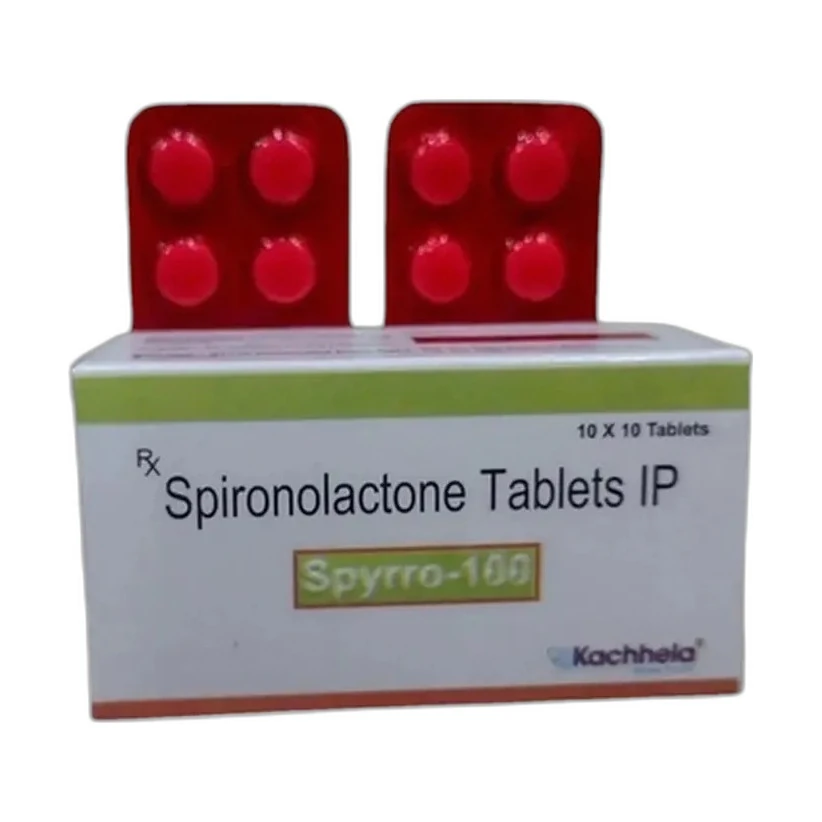
Spyrro (Spironolactone) 100 mg
Spyrro 100 mg contains spironolactone, a prescription diuretic and aldosterone antagonist. It is used for conditions in which the body retains too much sodium and water or produces excess aldosterone, and it also has clinically recognised anti-androgenic activity. The product name appears to identify a spironolactone tablet strength; the active ingredient is verified as spironolactone.
Active Ingredient and Medicine Class
Spironolactone is a potassium-sparing diuretic and a mineralocorticoid receptor antagonist. It blocks the effects of aldosterone in the kidney, helping the body excrete sodium and water while limiting potassium loss. It also binds androgen receptors, which explains some of its non-diuretic uses and adverse effects.
Established Medical Uses
Regulatory prescribing information lists spironolactone for heart failure with reduced ejection fraction, hypertension, edema associated with hepatic cirrhosis or nephrotic syndrome, and primary hyperaldosteronism. Published reviews also describe its use as a diuretic in cirrhosis and congestive heart failure, and as an anti-androgen in selected hormonal conditions.
How It Works
Spironolactone works by blocking aldosterone receptors in the distal nephron. Aldosterone normally promotes sodium and water retention and potassium loss; spironolactone reduces that effect. In tissues that respond to androgens, it can also interfere with androgen signalling, which contributes to its anti-androgenic properties.
Important Safety Information
Spironolactone is contraindicated in hyperkalemia, Addison’s disease, anuria, acute renal insufficiency, and significant renal impairment, and it should be avoided with other potassium-raising therapies when possible. Important interaction risks include potassium supplements, potassium-containing salt substitutes, ACE inhibitors, angiotensin receptor blockers, lithium, NSAIDs, and certain other medicines that increase potassium or reduce spironolactone’s effect. It should be avoided in pregnancy because of potential risk to a male fetus.
Possible Side Effects
Common or clinically important adverse effects include hyperkalemia, worsening renal function, hypotension, electrolyte disturbances, and endocrine effects such as gynecomastia. Other reported effects include gastrointestinal upset, dizziness, and menstrual irregularities. Hyperkalemia is the major serious safety concern.
Scientific Evidence
Clinical reviews and trial-based summaries support spironolactone’s role in heart failure, especially in reducing death and hospitalization in selected patients with reduced ejection fraction. Reviews and meta-analyses also support benefit in primary hyperaldosteronism and blood-pressure control, while highlighting the need to balance these benefits against hyperkalemia and endocrine adverse effects.
Medical Information Notice
This page is an educational summary based on sources available at the time of review and does not replace the official patient leaflet or assessment by a qualified healthcare professional.
Medical Sources
- DailyMed / FDA — Spironolactone tablet, film coated: Prescribing Information
- DailyMed / FDA — Spironolactone tablet: Prescribing Information
- H A Skluth et al. — “Spironolactone: a re-examination.” DICP, 1990. PubMed