Description
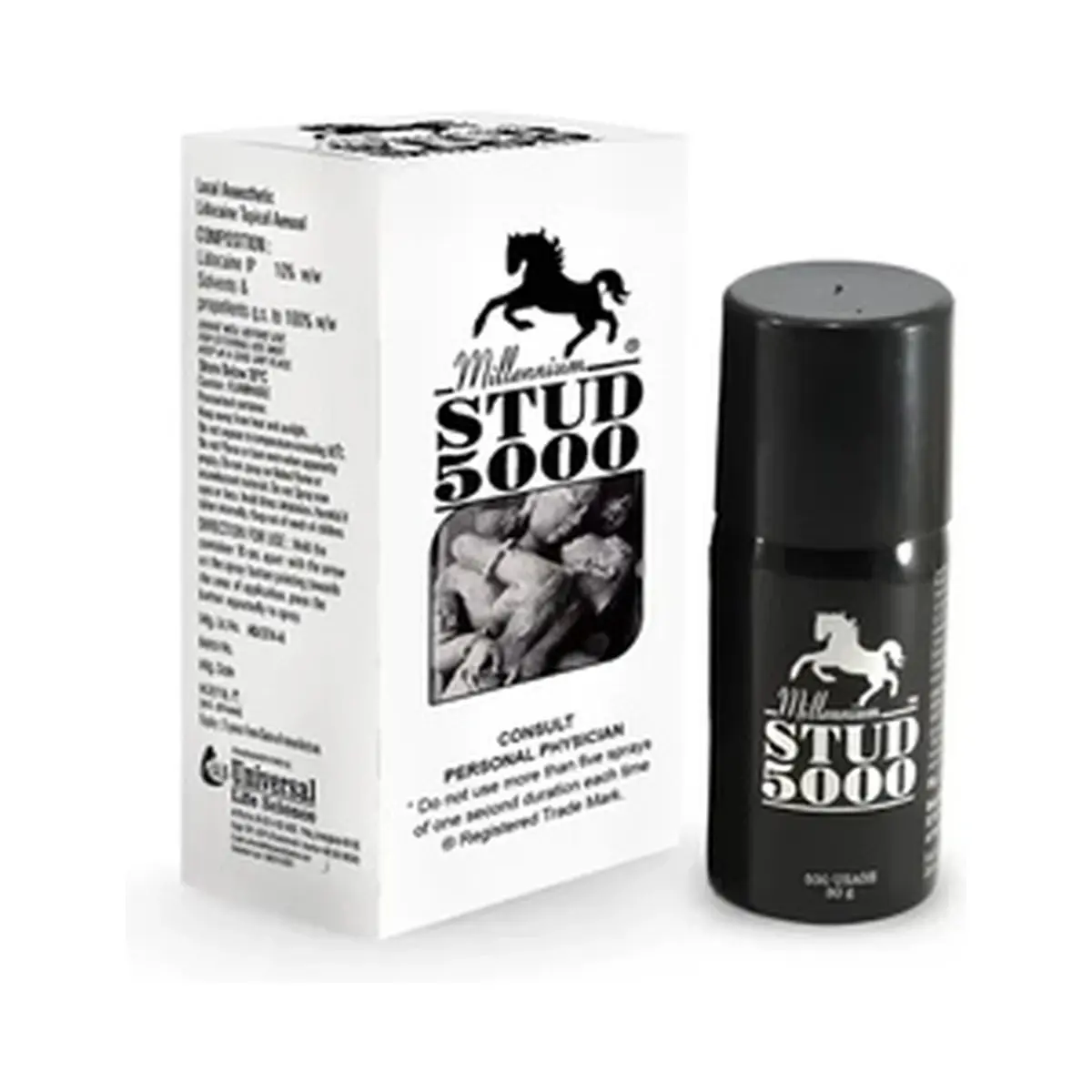
Stud (Lidocaine topical spray) 5000 spray (20 gm spray)
Stud 5000 spray is a topical lidocaine product used to produce temporary local numbness on the surface of the skin or mucous membranes. Lidocaine is a well-established local anaesthetic, and topical spray formulations are used for short-term surface anaesthesia in selected procedures and symptomatic relief. The exact trade name was not independently verified in official sources, so this description is based on the confirmed active ingredient, lidocaine.
Active Ingredient and Medicine Class
The verified active ingredient is lidocaine, an amide local anaesthetic. Lidocaine reduces sensation in the area where it is applied by blocking nerve conduction in peripheral nerves.
Established Medical Uses
Topical lidocaine is used for temporary local anaesthesia of accessible skin or mucosal surfaces. In official prescribing information for lidocaine spray products, topical use is described for short-term numbing before minor procedures and for other local surface anaesthetic uses, depending on the specific product and strength.
How It Works
Lidocaine works by blocking voltage-gated sodium channels in nerve membranes. This prevents nerves from generating and transmitting pain signals, which leads to temporary numbness in the treated area.
Important Safety Information
Lidocaine should be used cautiously because it can be absorbed through skin and mucosa. Absorption is more likely to increase on inflamed, broken, or highly vascular tissue, and excessive use can raise the risk of systemic toxicity. Important safety concerns include hypersensitivity to lidocaine or other amide local anaesthetics, and clinically significant interactions or additive effects with other local anaesthetics or medicines that may increase lidocaine exposure. Liver impairment and severe heart conduction problems are also relevant precautions because lidocaine is metabolised in the liver and can affect cardiac conduction at high systemic levels.
Possible Side Effects
Common adverse effects of topical lidocaine include local irritation, burning, stinging, redness, or numbness beyond the intended area. Less common but more serious reactions can include dizziness, drowsiness, ringing in the ears, confusion, tremor, seizures, low blood pressure, heart rhythm disturbances, or allergic reactions. Published reviews and case reports confirm that systemic toxicity is uncommon but can occur, particularly with larger exposures or enhanced absorption conditions.
Scientific Evidence
Peer-reviewed studies support that topical lidocaine sprays can provide useful local anaesthesia for certain procedures, although effectiveness varies by indication and technique. Reviews of topical lidocaine preparations describe it as a practical short-acting local anaesthetic, while safety literature highlights the importance of limiting cumulative exposure and avoiding use on compromised tissue when possible. Clinical studies have also shown that spray formulations may reduce pain in some procedural settings, but not all studies show benefit for every use case.
Medical Information Notice
This page is an educational summary based on sources available at the time of review and does not replace the official patient leaflet or individual assessment by a qualified healthcare professional.