Description
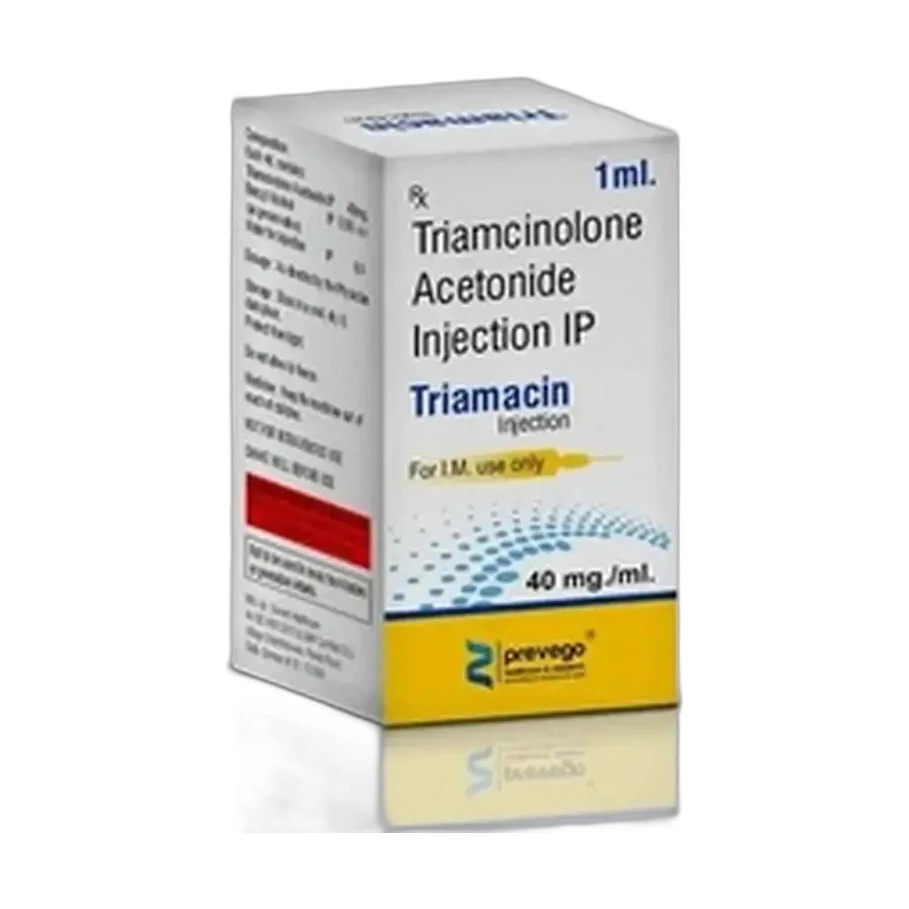
Triamacin injection
Triamacin injection is identified as triamcinolone acetonide injectable suspension, a corticosteroid medicine used for anti-inflammatory effects. Regulatory product information confirms the active ingredient as triamcinolone acetonide 40 mg/mL in a sterile suspension for intramuscular or intra-articular use.
Active Ingredient and Medicine Class
The verified active ingredient is triamcinolone acetonide, a synthetic glucocorticoid corticosteroid. Corticosteroids reduce inflammation by suppressing multiple inflammatory pathways and immune responses.
Established Medical Uses
Official labeling for triamcinolone acetonide injectable suspension describes use as adjunctive therapy for short-term relief in inflammatory joint and soft-tissue conditions such as acute gouty arthritis, bursitis, tenosynovitis, epicondylitis, rheumatoid arthritis, synovitis, and osteoarthritis. Labeling also describes systemic use in some allergic and inflammatory disorders, including hay fever or pollen asthma when other therapy is inadequate.
How It Works
Triamcinolone acetonide acts like other glucocorticoids by decreasing the release and activity of inflammatory mediators and dampening immune-cell activity. Published reviews note that the intramuscular formulation may have a prolonged clinical effect because of its suspension properties and slower absorption from the injection site.
Important Safety Information
Product labeling states that triamcinolone acetonide injectable suspension is contraindicated in patients with hypersensitivity to any component. It should not be given intravenously, and the label warns against use in certain settings such as idiopathic thrombocytopenic purpura for intramuscular corticosteroid preparations. Because it is a corticosteroid, important precautions include infection risk, adrenal suppression, and the need for caution in periods of major stress such as surgery or severe illness.
Clinically significant interactions are those typical of systemic corticosteroids, including additive immunosuppression with other immunosuppressive medicines and altered response to vaccines.
Possible Side Effects
Reported adverse effects of corticosteroid injections can include local pain or discomfort, flushing, fluid retention, mood or sleep changes, blood sugar elevation, and signs of adrenal suppression. Serious reactions may include severe allergic reactions, infection, and corticosteroid-related endocrine effects. Published literature also reports rare but important systemic effects after triamcinolone acetonide injections, including Cushing’s syndrome with intralesional use.
Scientific Evidence
Peer-reviewed reviews support the anti-inflammatory use of triamcinolone acetonide in selected clinical settings, especially dermatologic and musculoskeletal conditions. Available literature also indicates that the intramuscular formulation can produce prolonged anti-inflammatory activity, although the exact contribution of its pharmacokinetic properties is still being studied.
Medical Information Notice
This summary is based on sources available at the time of review and is for educational purposes only. It does not replace the official patient leaflet, prescribing information, or assessment by a qualified health professional.
Medical Sources
- Official source: DailyMed, Kenalog-40 Injection (triamcinolone acetonide injectable suspension, USP)
- Official source: DailyMed, Triamcinolone Acetonide Injectable Suspension, USP
- Scientific publication: Robins D, Vemugunta V. The Enigma of Intramuscular Triamcinolone and Its Versatility as a Safe and Effective Dermatologic Therapy. Journal of Drugs in Dermatology. 2026.