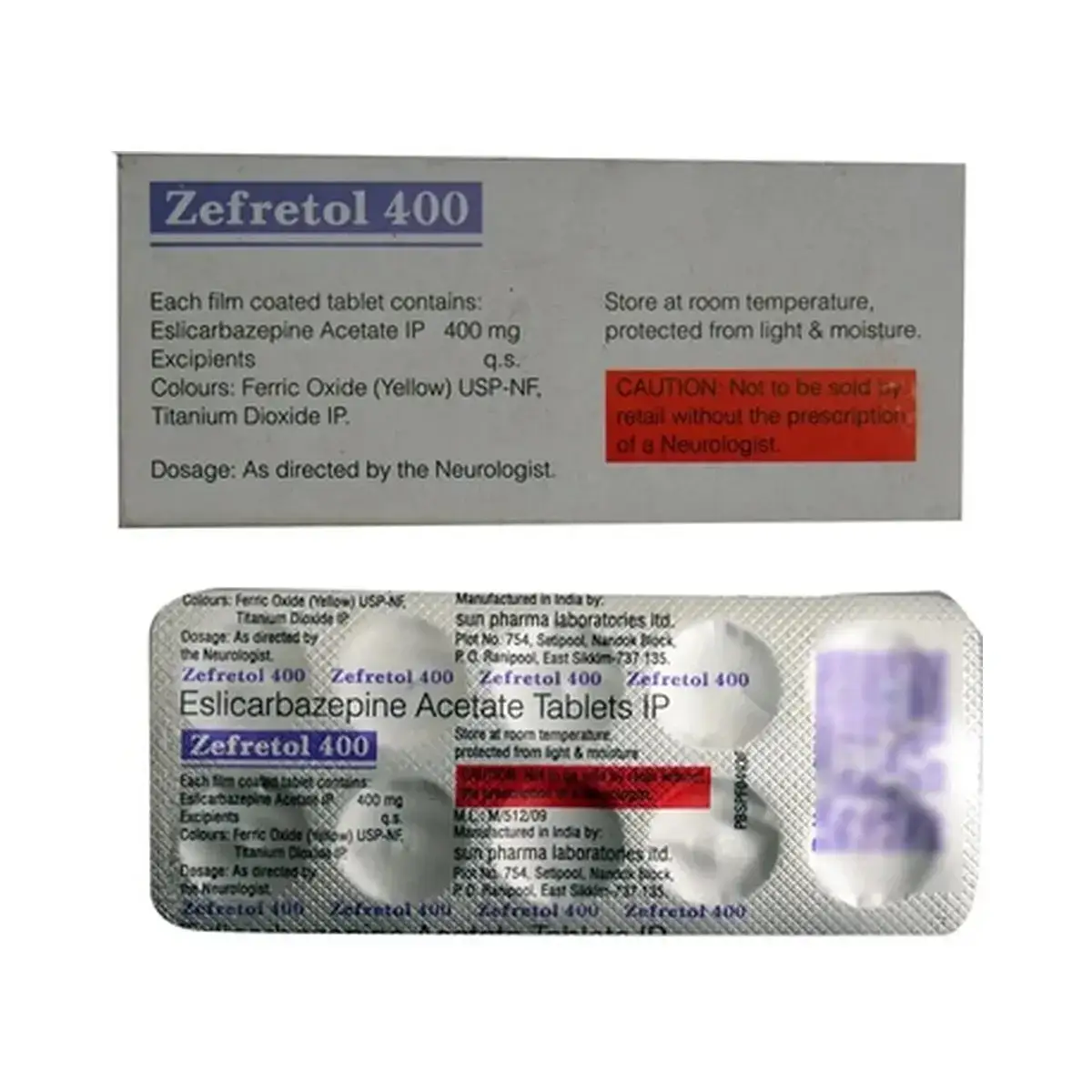
Description
Zefretol (Eslicarbazepine) 400 mg
Zefretol 400 mg is presented as a tablet containing eslicarbazepine acetate, an antiepileptic medicine used in the management of focal, also called partial-onset, seizures. Regulatory information for eslicarbazepine acetate tablets shows that this active ingredient is available in oral tablet form, and that the 400 mg strength is one of the established tablet strengths.
Active Ingredient and Medicine Class
The verified active ingredient is eslicarbazepine acetate. It belongs to the antiepileptic class and is chemically related to other dibenzazepine anticonvulsants. In the body, it is converted to eslicarbazepine, which is the main active metabolite responsible for the therapeutic effect.
Established Medical Uses
Eslicarbazepine acetate is an established treatment for partial-onset seizures in epilepsy. Official prescribing information supports its use in adults and in paediatric patients from 4 years of age and older in the U.S., while the European product information describes use for partial-onset seizures with or without secondary generalisation.
How It Works
Eslicarbazepine acetate is rapidly converted to eslicarbazepine after oral administration. The exact anticonvulsant mechanism is not fully known, but it is thought to work mainly by inhibiting voltage-gated sodium channels. By reducing excessive electrical activity in nerve cells, it can help lower the likelihood of seizure activity.
Important Safety Information
Eslicarbazepine acetate should not be used in people with hypersensitivity to eslicarbazepine acetate or oxcarbazepine. Official labels also warn about serious skin reactions, including Stevens-Johnson syndrome and toxic epidermal necrolysis, drug reaction with eosinophilia and systemic symptoms, anaphylaxis, angioedema, hyponatremia, suicidal thoughts or behaviour, liver injury, and blood dyscrasias such as leukopenia and agranulocytosis. Caution is warranted with a history of related anticonvulsant skin reactions.
Clinically important interactions include reduced eslicarbazepine exposure with enzyme-inducing antiepileptic drugs such as carbamazepine, phenytoin, phenobarbital and primidone; increased levels of some CYP2C19 substrates such as phenytoin, clobazam and omeprazole; reduced levels of CYP3A4 substrates such as simvastatin and lovastatin; and reduced effectiveness of hormonal oral contraceptives.
Pregnancy information in the prescribing data is limited, and animal studies showed developmental toxicity at clinically relevant exposures.
Possible Side Effects
Commonly reported adverse effects include dizziness, sleepiness, fatigue, nausea, headache, vomiting, double vision, blurred vision, ataxia, vertigo and tremor. Some effects are dose-related and may be more frequent during treatment initiation or dose adjustment. Serious reactions can include low sodium levels, severe rash, allergic reactions, liver injury and blood count abnormalities.
Scientific Evidence
Clinical trials and reviews support eslicarbazepine acetate as an effective antiepileptic option for focal-onset seizures, particularly as adjunctive therapy. Review articles report that it can reduce seizure frequency and is generally considered to have a tolerability profile comparable with other modern antiepileptic medicines, although adverse effects such as dizziness and somnolence remain important. Scientific literature also notes that its pharmacology and once-daily use may be advantageous in some patients.
Medical Information Notice
This page is an educational summary based on sources available at the time of review. It does not replace the official patient leaflet, the full prescribing information, or individual assessment by a qualified healthcare professional.
Medical Sources
- European Medicines Agency (EMA). Zebinix (eslicarbazepine acetate) EPAR and product information. View official EMA medicine page
- U.S. National Library of Medicine / DailyMed. Eslicarbazepine acetate tablets, full prescribing information. View official prescribing information
- Rodrigo Rocamora. A review of the efficacy and safety of eslicarbazepine acetate in the management of partial-onset seizures. Therapeutic Advances in Neurological Disorders, 2015. View scientific article
- Simona Lattanzi et al. Eslicarbazepine acetate in the treatment of adults with partial-onset epilepsy: an evidence-based review of efficacy, safety and place in therapy. Neuropsychiatric Disease and Treatment, 2018. View scientific article