Description
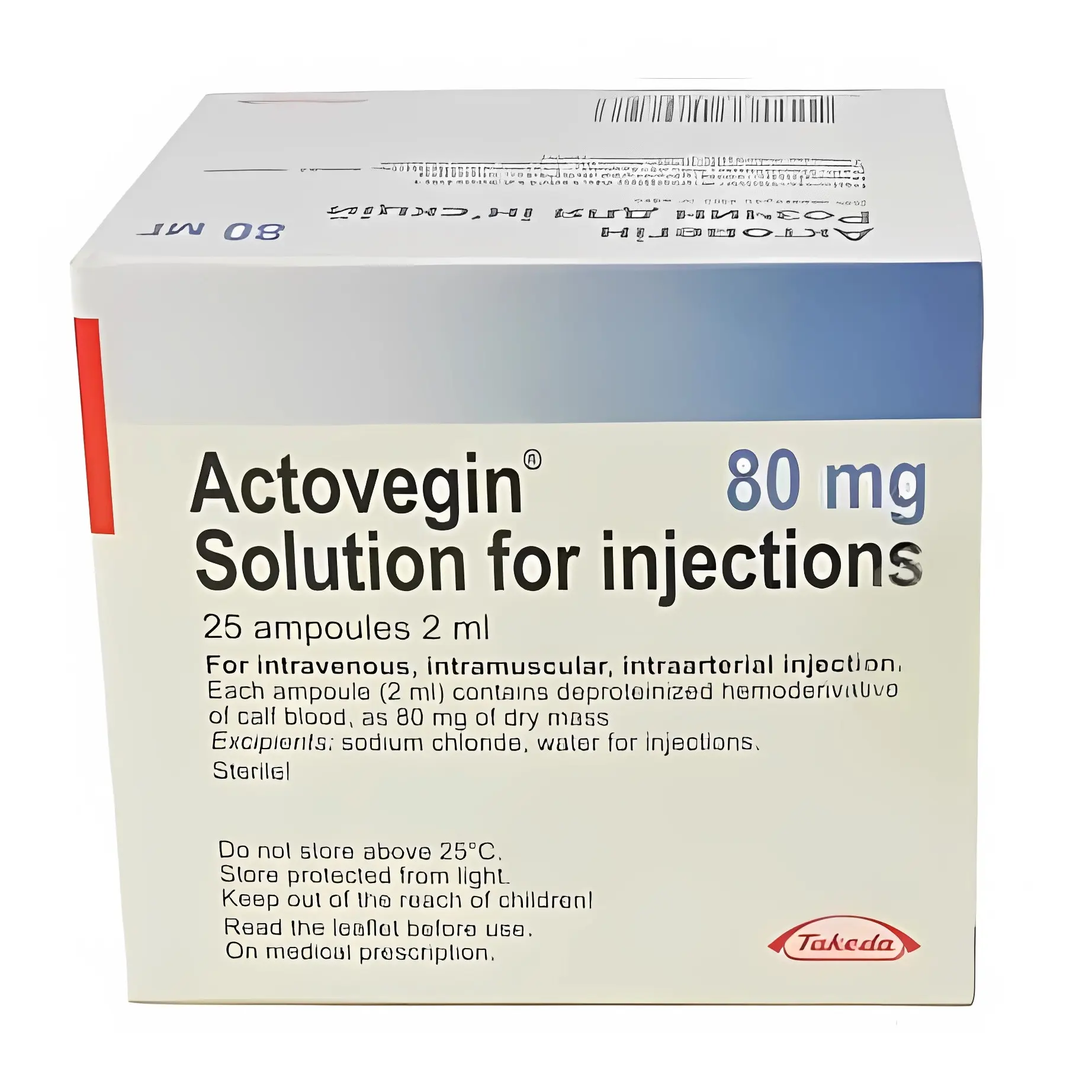
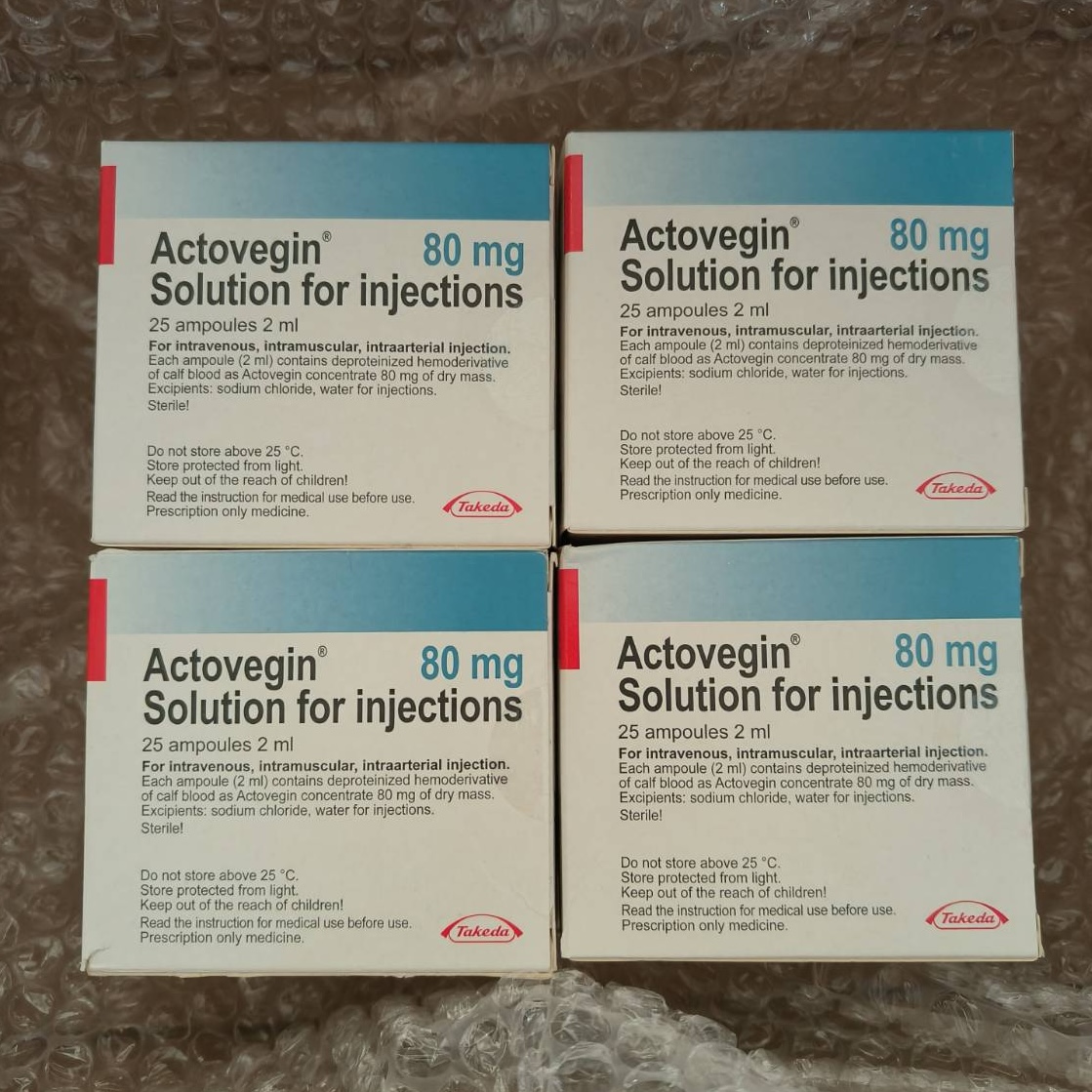
Actovegin 80 mg (2 ml, 25 Ampoules)
Injectable Metabolic Support for Circulation, Recovery and Athletic Performance
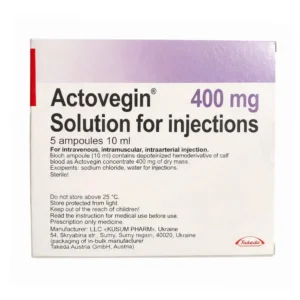
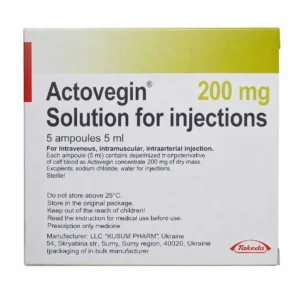
Actovegin 80 mg ampoules (2 ml, pack of 25) represent a well-established injectable metabolic therapy designed to support cellular energy production, oxygen utilization, and microcirculation. The formulation contains a deproteinized hemoderivative of calf blood, composed of low-molecular-weight biologically active compounds such as amino acids, peptides, nucleosides, and metabolic intermediates.
This injectable form is widely used in clinical practice as supportive therapy in conditions associated with impaired circulation, metabolic stress, and tissue hypoxia. Due to its rapid systemic availability, Actovegin injection provides a faster onset of action compared to oral formulations, making it particularly relevant in high-demand physiological states, including intensive physical activity and recovery phases.
In performance-oriented contexts, Actovegin is often discussed in relation to oxygen efficiency, energy metabolism, and tissue recovery. While not a stimulant, its mechanism of action targets fundamental cellular processes, which are critical for endurance, resilience, and recovery.
What is Actovegin?
Actovegin is a biological preparation obtained through ultrafiltration of calf blood. This process removes high-molecular proteins while preserving physiologically active low-molecular compounds that participate in cellular metabolism.
The resulting solution contains a complex mixture of substances naturally present in the human body, including amino acids, oligopeptides, nucleosides, and trace elements. These components contribute to metabolic regulation and support cellular function under stress conditions.
Scientific literature describes Actovegin as a metabolic modulator that enhances oxygen uptake, improves glucose transport, and supports mitochondrial energy production.
Scientific overview on Actovegin (ScienceDirect)
Composition and Active Components
- Deproteinized hemoderivative of calf blood
- Low-molecular peptides
- Amino acids
- Nucleosides and oligosaccharides
- Electrolytes
The biological complexity of Actovegin allows it to influence multiple metabolic pathways simultaneously, making it distinct from single-target pharmacological agents.
Mechanism of Action
Actovegin exerts its effects through a combination of metabolic mechanisms:
- Enhancement of oxygen uptake and intracellular utilization
- Improved glucose transport into cells
- Stimulation of ATP production within mitochondria
- Reduction of oxidative stress and lipid peroxidation
- Support of capillary microcirculation
These mechanisms contribute to improved cellular efficiency, particularly under hypoxic conditions where oxygen supply is limited.
Review on metabolic and oxidative stress mechanisms
Role in Oxygen Utilization and Cellular Energy
One of the key physiological effects associated with Actovegin is the improvement of oxygen utilization at the cellular level. Unlike agents that increase oxygen supply, Actovegin enhances the ability of cells to use available oxygen more efficiently.
This process is particularly relevant in tissues with high energy demand, such as skeletal muscle and the central nervous system. By improving mitochondrial function, Actovegin supports ATP synthesis, which is essential for muscle contraction, endurance, and recovery.
Improved oxygen utilization may contribute to better performance efficiency during prolonged physical exertion, where oxygen availability becomes a limiting factor.
Microcirculation and Nutrient Delivery
Microcirculation plays a critical role in delivering oxygen and nutrients to tissues while removing metabolic byproducts. Actovegin supports capillary blood flow, which enhances tissue perfusion.
Improved microcirculation is particularly important in conditions involving reduced blood flow or metabolic stress. In the context of physical activity, efficient microcirculation supports muscle performance and recovery.
By facilitating nutrient delivery and waste removal, Actovegin contributes to maintaining optimal cellular function during and after exertion.
Relevance in Sports and Physical Performance
In sports and high-performance environments, metabolic efficiency is a key factor influencing endurance, strength, and recovery. Actovegin is associated with improved cellular metabolism, which may support overall physiological performance.
Its effects are not based on stimulation but on optimization of metabolic processes. This makes it fundamentally different from substances that act on the central nervous system.
Actovegin has been explored in contexts where improved oxygen utilization, reduced fatigue, and enhanced recovery are relevant. These include endurance training, high-intensity exercise, and post-exertion recovery protocols.
Muscle Recovery and Regeneration
Intense physical activity leads to microtrauma in muscle fibers, oxidative stress, and accumulation of metabolic byproducts. Efficient recovery is essential for maintaining performance and preventing overtraining.
Actovegin supports recovery processes through:
- Improved oxygen delivery to muscle tissue
- Enhanced ATP production
- Reduction of oxidative stress
- Support of cellular repair mechanisms
These effects may contribute to faster recovery between training sessions and improved adaptation to physical stress.
Fatigue and Metabolic Stress
Fatigue is often associated with impaired energy metabolism and accumulation of metabolic byproducts. By improving cellular energy production and metabolic efficiency, Actovegin may contribute to reducing fatigue under certain conditions.
This is particularly relevant in prolonged physical activity where energy demand exceeds supply.
Clinical Applications
- Peripheral circulation disorders
- Cerebral metabolic insufficiency
- Post-ischemic conditions
- Diabetic complications
- Microcirculation dysfunction
Pharmacokinetics
Due to its biological composition, Actovegin consists of endogenous-like compounds that are naturally metabolized. Rapid distribution into tissues is observed after administration.
Traditional pharmacokinetic analysis is limited, but clinical data indicate effective cellular uptake and metabolic integration.
Dosage and Administration
- Dosage: 80 mg / 2 ml per ampoule
- Pack size: 25 ampoules
- Administration: intravenous, intramuscular, or intra-arterial
- Regimen depends on clinical context
Safety Profile
- Generally well tolerated
- Rare hypersensitivity reactions
- Possible mild injection site reactions
Advantages
- Rapid systemic availability
- Multi-target metabolic support
- Improved oxygen utilization
- Support for microcirculation
- Widely used in clinical practice
Limitations
- Complex biological composition
- Variability in clinical evidence
- Regulatory differences across regions
Conclusion
Actovegin 80 mg (2 ml, 25 ampoules) is a metabolic support therapy designed to enhance oxygen utilization, improve energy production, and support microcirculation. Its injectable form provides rapid delivery, making it suitable for conditions requiring immediate metabolic support and recovery optimization.
FAQ – Sports & Performance
Does Actovegin improve athletic endurance?
Actovegin supports oxygen utilization and cellular energy production, which are critical factors in endurance performance. Its effects are related to metabolic efficiency rather than stimulation.
Can Actovegin help with post-workout recovery?
It may support recovery by improving microcirculation, reducing oxidative stress, and enhancing cellular repair processes following intense physical activity.
Does Actovegin increase oxygen delivery to muscles?
It primarily improves how cells utilize oxygen rather than increasing oxygen supply, which can enhance efficiency under high physical demand.
Is Actovegin used for performance enhancement?
It is used in metabolic support contexts, particularly where improved energy metabolism and recovery are relevant, rather than acting as a stimulant.