Description
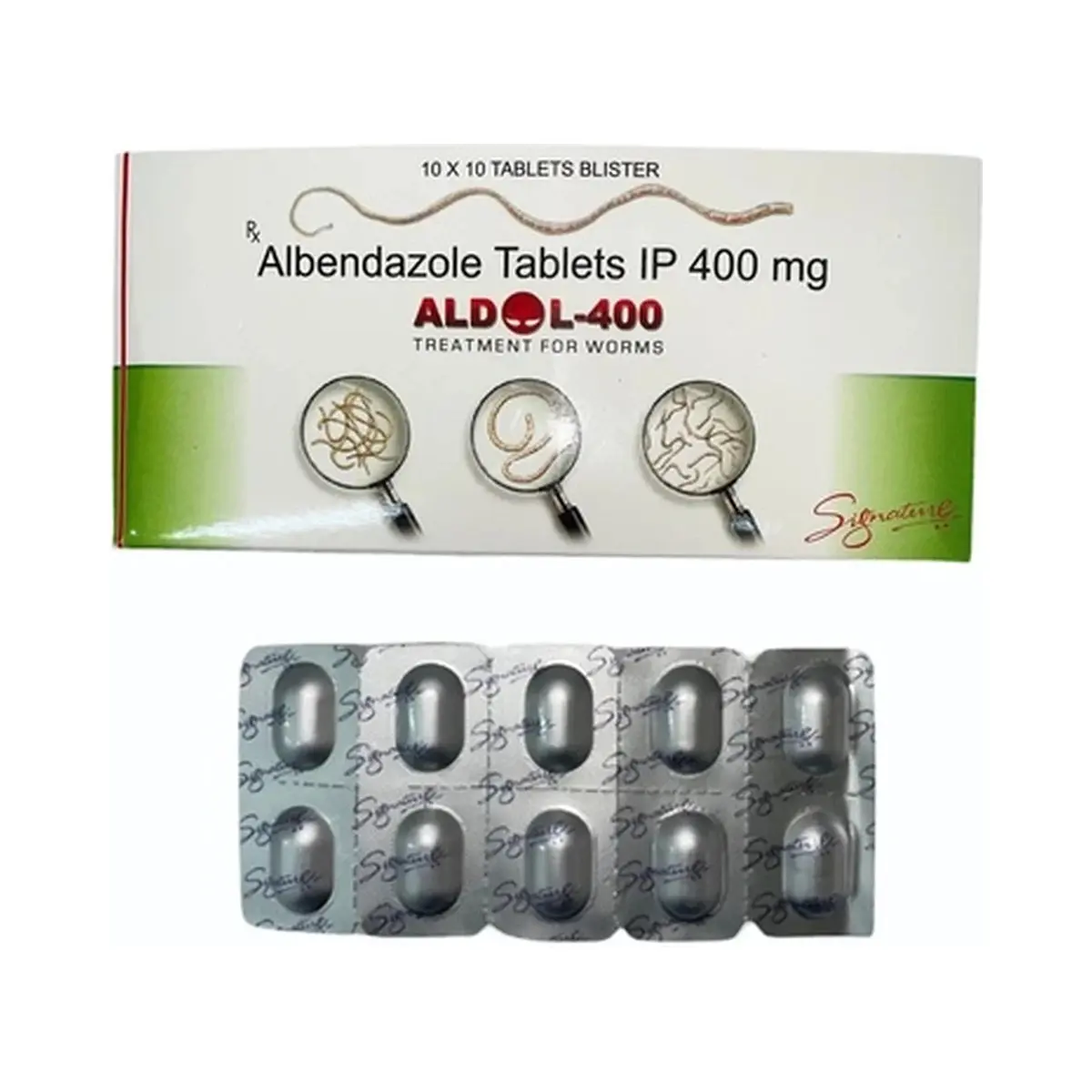
Aldol (Albendazole) 400 mg
Aldol is a brand name used for albendazole, an oral antiparasitic medicine in the benzimidazole anthelmintic class. The listed product strength, 400 mg, identifies the tablet presentation; it does not by itself determine a treatment regimen.
Active Ingredient and Medicine Class
The verified active ingredient is albendazole. It is a broad-spectrum anthelmintic used against certain helminth (worm) infections. Regulatory labeling describes albendazole as a synthetic anthelmintic drug of the benzimidazole class. ([dailymed.nlm.nih.gov](https://dailymed.nlm.nih.gov/dailymed/fda/fdaDrugXsl.cfm?setid=6c48fd89-cb40-477c-8a78-15cbe0df6faa&type=display))
Established Medical Uses
Official prescribing information for albendazole tablets in the United States lists two established uses:
- Parenchymal neurocysticercosis due to active lesions caused by larval forms of Taenia solium.
- Cystic hydatid disease of the liver, lung, and peritoneum caused by larval forms of Echinococcus granulosus. ([dailymed.nlm.nih.gov](https://dailymed.nlm.nih.gov/dailymed/fda/fdaDrugXsl.cfm?setid=6c48fd89-cb40-477c-8a78-15cbe0df6faa&type=display))
Scientific reviews also describe albendazole as an important component in the management of echinococcosis and as a recognized medical option in neurocysticercosis. ([pubmed.ncbi.nlm.nih.gov](https://pubmed.ncbi.nlm.nih.gov/12667231/?utm_source=openai))
How It Works
Albendazole acts by binding to parasite β-tubulin and interfering with microtubule formation. This reduces the parasite’s ability to absorb nutrients, especially glucose, depletes energy stores, and ultimately leads to parasite death. This mechanism is described in official prescribing information. ([dailymed.nlm.nih.gov](https://dailymed.nlm.nih.gov/dailymed/lookup.cfm?setid=6c48fd89-cb40-477c-8a78-15cbe0df6faa))
Important Safety Information
Albendazole is contraindicated in people with known hypersensitivity to the benzimidazole class or to any component of the product. Official labeling also warns about clinically important safety issues, including bone marrow suppression, embryo-fetal toxicity, and hepatic effects. ([dailymed.nlm.nih.gov](https://dailymed.nlm.nih.gov/dailymed/fda/fdaDrugXsl.cfm?setid=6c48fd89-cb40-477c-8a78-15cbe0df6faa&type=display))
Important interaction information in prescribing data includes:
- Dexamethasone, which can increase exposure to albendazole’s active metabolite.
- Praziquantel, which can increase albendazole sulfoxide exposure.
- Cimetidine, which can increase albendazole sulfoxide concentrations.
- Theophylline, for which monitoring is advised during and after treatment. ([dailymed.nlm.nih.gov](https://dailymed.nlm.nih.gov/dailymed/fda/fdaDrugXsl.cfm?setid=6c48fd89-cb40-477c-8a78-15cbe0df6faa&type=display))
For neurocysticercosis, labeling notes that corticosteroids and anticonvulsant therapy may be needed because inflammatory or neurologic reactions can occur during treatment. ([dailymed.nlm.nih.gov](https://dailymed.nlm.nih.gov/dailymed/fda/fdaDrugXsl.cfm?setid=6c48fd89-cb40-477c-8a78-15cbe0df6faa&type=display))
Possible Side Effects
In clinical trial data cited in official labeling, commonly reported adverse reactions included abnormal liver function tests, abdominal pain, nausea or vomiting, headache, dizziness or vertigo, fever, and reversible hair loss in hydatid disease. In neurocysticercosis, headache, nausea or vomiting, raised intracranial pressure, and meningeal signs were reported. ([dailymed.nlm.nih.gov](https://dailymed.nlm.nih.gov/dailymed/fda/fdaDrugXsl.cfm?setid=6c48fd89-cb40-477c-8a78-15cbe0df6faa&type=display))
Serious adverse effects emphasized in labeling include granulocytopenia, pancytopenia, aplastic anemia, agranulocytosis, and significant liver injury. ([dailymed.nlm.nih.gov](https://dailymed.nlm.nih.gov/dailymed/fda/fdaDrugXsl.cfm?setid=6c48fd89-cb40-477c-8a78-15cbe0df6faa&type=display))
Scientific Evidence
Published human evidence supports albendazole as an established treatment option in selected parasitic infections, particularly echinococcosis and neurocysticercosis. A review of comparative trials in cystic echinococcosis found benefit over placebo in an inoperable symptomatic setting and suggested usefulness as an adjunct to procedures such as surgery or PAIR. Reviews of neurocysticercosis report that short courses of albendazole can be part of effective management, usually alongside other supportive therapies when indicated. ([pubmed.ncbi.nlm.nih.gov](https://pubmed.ncbi.nlm.nih.gov/17873530/?utm_source=openai))
Medical Sources
- Official prescribing information: DailyMed, Albendazole Tablets / ALBENZA (albendazole) tablets. US prescribing information and safety labeling. ([dailymed.nlm.nih.gov](https://dailymed.nlm.nih.gov/dailymed/fda/fdaDrugXsl.cfm?setid=6c48fd89-cb40-477c-8a78-15cbe0df6faa&type=display))
- John Horton, Albendazole for the treatment of echinococcosis, Fundamental & Clinical Pharmacology, 2003. PubMed article. ([pubmed.ncbi.nlm.nih.gov](https://pubmed.ncbi.nlm.nih.gov/12667231/?utm_source=openai))
- Matthew E. Falagas and Ioannis A. Bliziotis, Albendazole for the treatment of human echinococcosis: a review of comparative clinical trials, American Journal of Medicine, 2007. PubMed article. ([pubmed.ncbi.nlm.nih.gov](https://pubmed.ncbi.nlm.nih.gov/17873530/?utm_source=openai))
Medical Information Notice
This page is an educational summary based on sources available at the time of review and does not replace the official patient leaflet, product labeling, or assessment by a qualified healthcare professional.