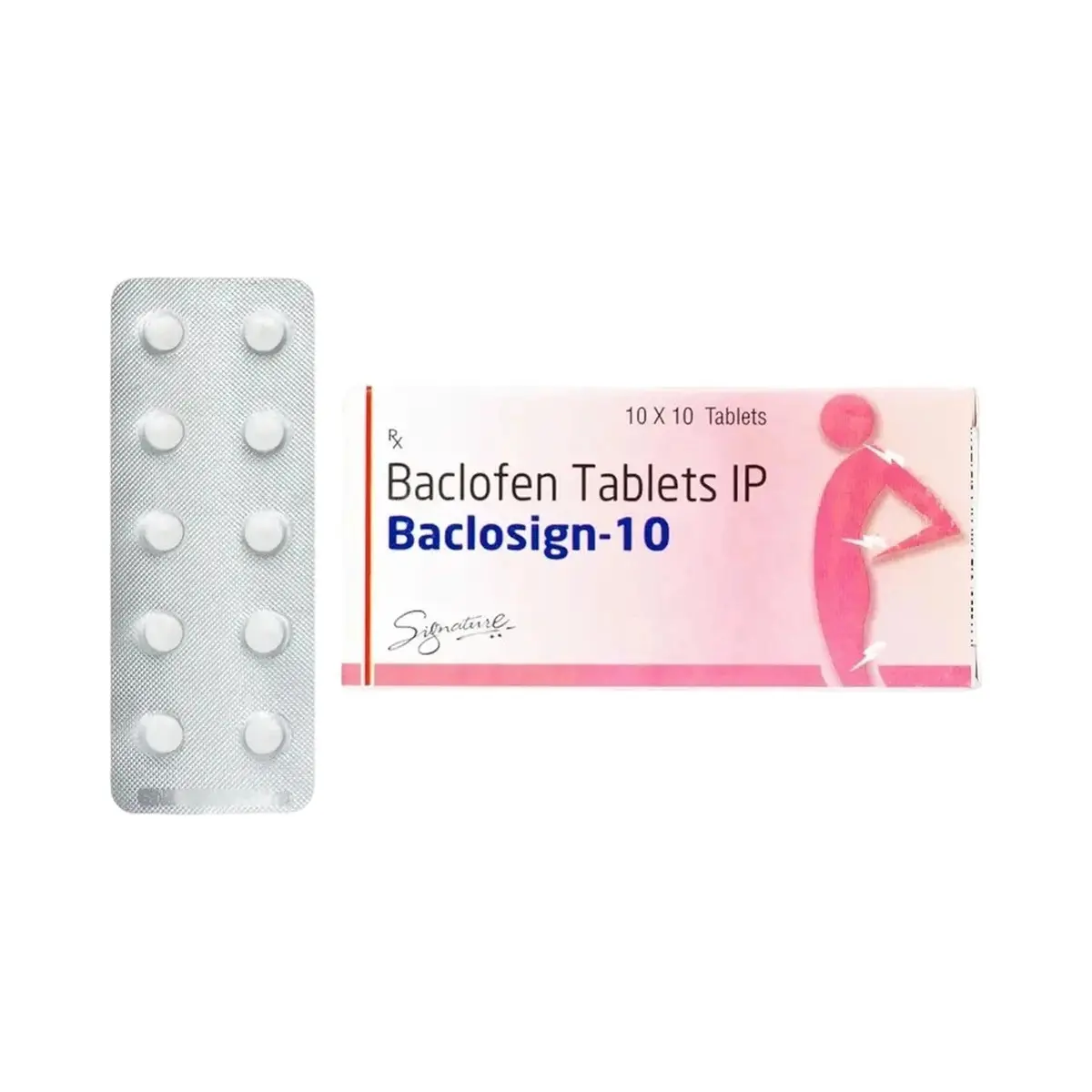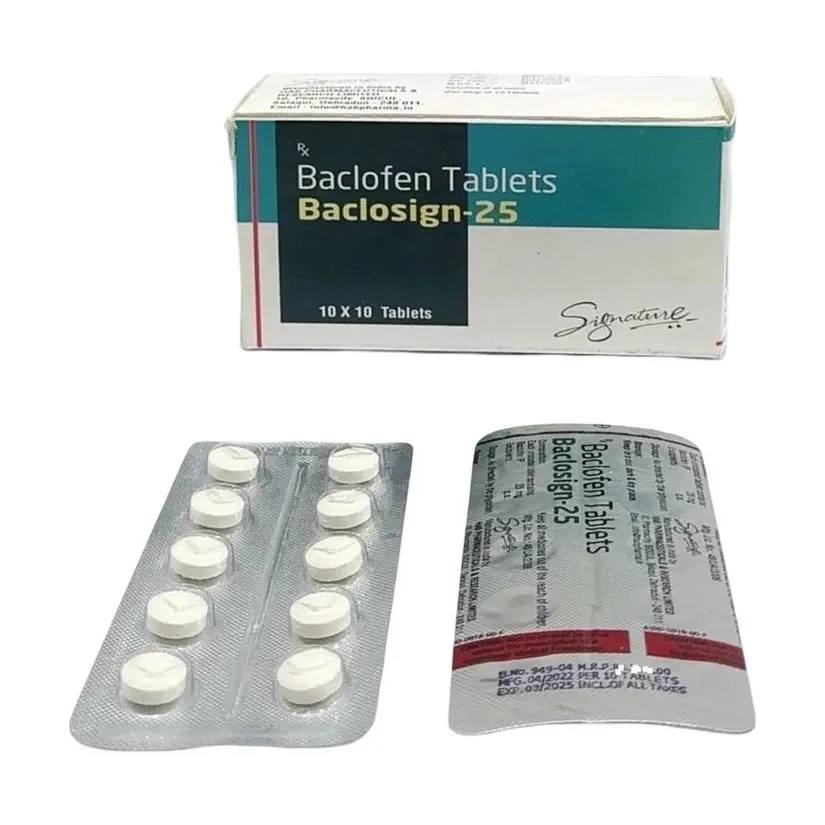
Description
Baclosign (Baclofen) 25 mg
Baclosign 25 mg is a baclofen tablet formulation. Baclofen is a centrally acting muscle relaxant used for the treatment of spasticity, particularly when increased muscle tone, spasms, and rigidity are related to neurological disease.
Active Ingredient and Medicine Class
The verified active ingredient is baclofen. It belongs to the class of centrally acting skeletal muscle relaxants and is also described as a GABA-B receptor agonist. Its effects are primarily mediated within the central nervous system rather than directly on skeletal muscle.
Established Medical Uses
Oral baclofen is established for the treatment of spasticity resulting from multiple sclerosis, especially when symptoms include flexor spasms, pain linked to spasms, clonus, and muscular rigidity. It may also be useful in some patients with spinal cord injury and other spinal cord diseases.
Baclofen is not indicated for skeletal muscle spasm caused by rheumatic disorders. Its use in some other neurological conditions has been less clearly established, so official prescribing information remains the most reliable guide to approved or recognised use.
How It Works
Baclofen acts in the spinal cord and other parts of the central nervous system to reduce the transmission of signals that contribute to excessive muscle tone and reflex spasms. By dampening excitatory reflex activity, it can lessen stiffness, spasms, and related discomfort. The exact mechanism is not fully understood, but its GABA-B agonist activity is central to its antispastic effect.
Important Safety Information
Baclofen should not be used in people with a known hypersensitivity to baclofen. Important precautions include the risk of abrupt withdrawal, which has been associated with serious reactions such as hallucinations, seizures, fever, altered mental status, rebound spasticity, and muscle rigidity.
The medicine is primarily eliminated by the kidneys, so renal impairment is an important caution because accumulation and toxicity may be more likely. Baclofen can also cause sedation, and its central nervous system effects may be additive with alcohol and other CNS depressants. Caution is also advised in patients with epilepsy, psychotic disorders, confusional states, autonomic dysreflexia, or in situations where some degree of spasticity is needed for posture or walking.
In pregnancy, official information advises that baclofen should be used only when the expected benefit justifies potential risk. Neonatal withdrawal symptoms have been reported when exposure continued through pregnancy.
Possible Side Effects
The most commonly reported adverse effects include drowsiness, dizziness, weakness, and fatigue. Other recognised effects include confusion, headache, insomnia, nausea, constipation, and low blood pressure.
Less common but more serious reactions can include hallucinations, seizures, breathing difficulties in overdose, urinary retention, and severe CNS depression. Because baclofen can affect alertness and balance, it may also increase the risk of falls or impairment in activities requiring concentration.
Scientific Evidence
Human clinical literature supports baclofen as a long-standing option for spasticity management, with the strongest established role in neurological spasticity rather than nonspecific muscle pain. Reviews of oral baclofen suggest it can reduce spasticity in many patients, although adverse effects often limit tolerability. In spinal cord injury, a systematic review found improvement in spasticity measures, but also noted that much of the evidence comes from relatively small studies, and adverse effects such as weakness and fatigue are common.
Overall, the scientific literature is consistent with official prescribing information: baclofen can be effective for spasticity, but its benefits must be balanced against sedation, weakness, and withdrawal risk.
Medical Information Notice
This page is an educational summary based on sources available at the time of review. It does not replace the official patient leaflet, the full prescribing information, or individual assessment by a qualified healthcare professional.
Medical Sources
- DailyMed. Baclofen tablet, official prescribing information. View official prescribing information
- Per Ertzgaard et al. Efficacy and safety of oral baclofen in the management of spasticity: A rationale for intrathecal baclofen. Journal of Rehabilitation Medicine, 2017. View scientific article
- Nicholas Dietz et al. Intrathecal and Oral Baclofen Use in Adults With Spinal Cord Injury: A Systematic Review of Efficacy in Spasticity Reduction, Functional Changes, Dosing, and Adverse Events. Archives of Physical Medicine and Rehabilitation, 2023. View scientific article