Description
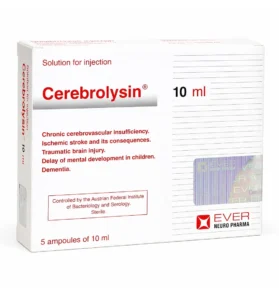
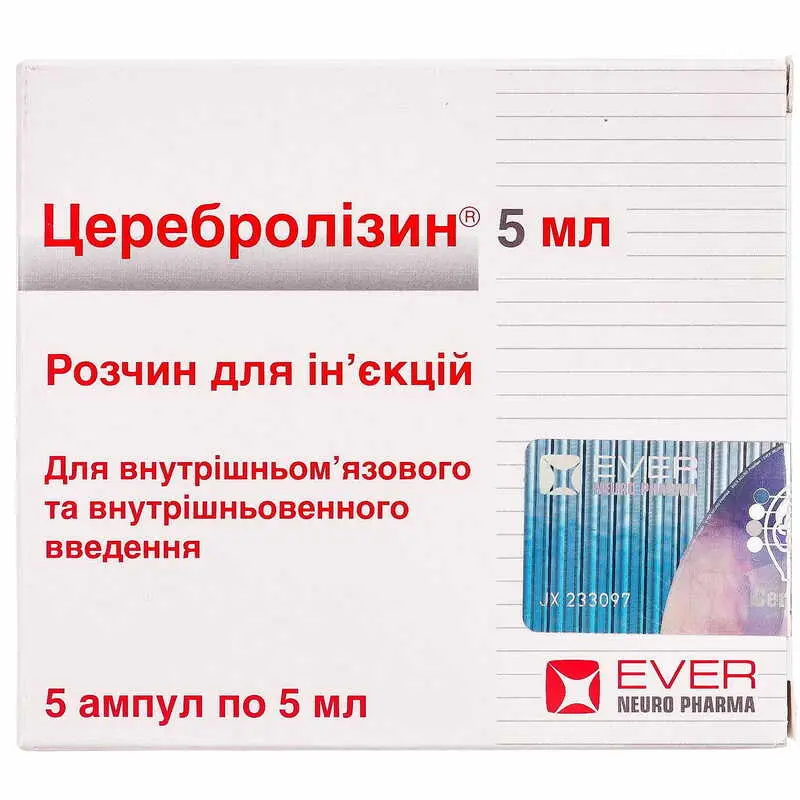
Cerebrolysin 215.2 mg / 5 ml (5 Ampoules)
Cerebrolysin 5 ml ampoules (215.2 mg/ml neuropeptide preparation) is a widely used injectable neurotrophic medication designed to support brain function, enhance neuronal recovery, and improve cognitive performance. This formulation is commonly used in neurological practice for conditions associated with brain injury, neurodegeneration, and impaired cognitive function.
The product is supplied as a sterile injectable solution in ampoules, typically packaged in sets of 5 ampoules, each containing 5 ml of solution. Cerebrolysin belongs to the category of neuroprotective and nootropic agents, with a mechanism of action that mimics endogenous neurotrophic factors.
Composition and Formulation
Each ampoule contains:
- Active substance: Cerebrolysin concentrate – 215.2 mg per ml
- Volume per ampoule: 5 ml
- Total per ampoule: approximately 1076 mg of neuropeptides
- Form: Injectable solution
- Packaging: 5 ampoules per box
Cerebrolysin is derived from enzymatic breakdown of porcine brain proteins and contains low-molecular-weight peptides and amino acids that are biologically active and capable of crossing the blood-brain barrier.
Mechanism of Action
Cerebrolysin exhibits a multimodal mechanism of action that distinguishes it from conventional nootropic drugs. It acts as a neurotrophic agent, supporting neuronal survival, differentiation, and regeneration.
The preparation contains peptide fragments that resemble naturally occurring neurotrophic factors such as nerve growth factor (NGF) and brain-derived neurotrophic factor (BDNF). These compounds are involved in maintaining neuronal integrity and facilitating synaptic plasticity.
Experimental and clinical research suggests that Cerebrolysin:
- Promotes neuroplasticity and synaptic repair
- Enhances neuronal metabolism
- Reduces oxidative stress
- Protects neurons from ischemic damage
- Supports cognitive function and memory processes
Studies indicate that its multimodal activity may target multiple steps in the ischemic cascade and recovery process, making it distinct from single-target neuroprotective agents. https://pmc.ncbi.nlm.nih.gov/articles/PMC5652261/
Pharmacological Properties
Neuroprotective Effects
Cerebrolysin has been shown to reduce neuronal damage under conditions of hypoxia and ischemia. Its protective effects are particularly relevant in conditions such as stroke and traumatic brain injury.
Neurotrophic Activity
The peptide composition allows it to mimic endogenous neurotrophic signaling pathways, contributing to neuronal survival and regeneration.
Metabolic Regulation
The drug improves neuronal metabolism by enhancing protein synthesis and glucose utilization in brain tissue.
Cognitive Enhancement
Clinical observations suggest improvements in cognitive performance, particularly in patients with neurodegenerative conditions and post-stroke recovery.
Clinical Applications
Cerebrolysin 5 ml injection is used in a variety of neurological conditions, including:
Stroke Rehabilitation
It is widely used in post-stroke recovery protocols to enhance functional outcomes and neurological recovery. A randomized controlled trial demonstrated that Cerebrolysin significantly improved neurological and functional outcomes compared to placebo during early stroke recovery. https://pmc.ncbi.nlm.nih.gov/articles/PMC5652261/
Cognitive Disorders
The drug is used in patients with cognitive impairment, including vascular dementia and age-related cognitive decline.
Neurodegenerative Diseases
Studies suggest potential benefits in conditions such as Alzheimer’s disease and other neurodegenerative disorders, although further research is ongoing.
Traumatic Brain Injury
Cerebrolysin may support neurorecovery after traumatic brain injury by enhancing neuronal repair mechanisms.
Other Neurological Conditions
- Chronic cerebral ischemia
- Attention and memory disorders
- Post-operative neurological recovery
Clinical Evidence and Research
Cerebrolysin has been extensively studied in clinical trials and meta-analyses. A large meta-analysis of randomized controlled trials involving nearly 2,900 patients evaluated its efficacy in acute ischemic stroke and demonstrated improvements in neurological and functional outcomes, although results varied depending on study design and patient population.
https://pubmed.ncbi.nlm.nih.gov/41018475/
Additional studies have shown that combining Cerebrolysin with standard therapy may enhance recovery rates and functional independence in stroke patients.
While many studies report positive outcomes, the overall evidence remains mixed, and ongoing research continues to evaluate its long-term effectiveness and clinical indications.
Dosage and Administration
Cerebrolysin is administered parenterally:
- Route: Intravenous infusion or intramuscular injection
- Typical dose: 5–30 ml per day depending on indication
- Treatment duration: 10–20 days (may be repeated in cycles)
The 5 ml ampoule format is commonly used for mild to moderate conditions or as part of combined therapy.
Safety and Tolerability
Cerebrolysin is generally well tolerated when administered under medical supervision.
Common Side Effects
- Dizziness
- Headache
- Nausea
- Sweating
Less Common Effects
- Allergic reactions
- Injection site reactions
- Restlessness
Clinical studies indicate that the safety profile of Cerebrolysin is comparable to placebo in many cases, with no significant increase in serious adverse events.
Contraindications
- Hypersensitivity to components
- Severe renal impairment
- Epilepsy (use with caution)
Storage Conditions
- Store below 25°C
- Protect from light
- Do not freeze
- Keep out of reach of children
Frequently Asked Questions (FAQ)
What is Cerebrolysin 5 ml used for?
It is used for neurological conditions such as stroke recovery, cognitive impairment, and neurodegenerative diseases.
How quickly does Cerebrolysin work?
Effects may begin within days, but noticeable improvements usually occur over several weeks of treatment.
Is Cerebrolysin safe?
It is generally well tolerated when used under medical supervision, with a safety profile comparable to placebo in clinical studies.
Can Cerebrolysin improve memory?
Some studies suggest improvement in cognitive function and memory, particularly in patients with neurological disorders.
How is Cerebrolysin administered?
It is given via intramuscular injection or intravenous infusion, depending on the treatment protocol.
Is Cerebrolysin approved worldwide?
It is used in many countries, particularly in Europe and Asia, although regulatory approval varies by region.
Conclusion
Cerebrolysin 215.2 mg / 5 ml ampoules represent a widely used neurotrophic therapy with a unique multimodal mechanism of action. Its ability to support neuronal recovery, enhance cognitive function, and improve neurological outcomes makes it a valuable option in clinical neurology.