Description
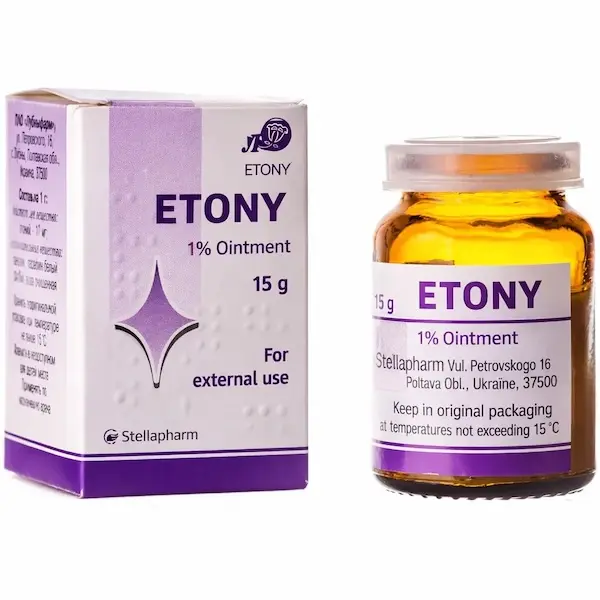
Etonium Ointment 1% 15 g
Etonium Ointment 1% is a topical medicinal preparation based on etonium, a quaternary ammonium compound used in local dermatological and wound-care practice. It is intended for external application and is commonly described as a topical antiseptic and protective agent that helps support local tissue recovery and maintain a cleaner environment on the skin surface.
This formulation is supplied as a 1% ointment in a 15 g tube, which makes it suitable for targeted application to affected areas. The ointment base allows prolonged contact with the skin, which is important for local medicines designed to act directly at the site of use rather than through systemic absorption.
Etonium ointment is typically discussed in relation to superficial skin damage, ulcerative lesions, cracks, burns, and other local conditions where antiseptic and protective support may be useful. It is a medicinal product for external use, not a cosmetic product.
The Quantitative Determination of Etonium by the Enzymatic Kinetic-Spectrophotometric Method
Composition and Dosage Form
- Active substance: Etonium
- Concentration: 1%
- Dosage form: Ointment for external use
- Package size: 15 g tube
The ointment form is designed to keep the active substance in close contact with the affected skin area for an extended period. This can be useful when the goal is local cleansing support, protection of damaged tissue, and maintenance of a more favorable healing environment.
Pharmacological Classification
- Pharmacological group: Topical antiseptic / local antimicrobial agent
- Class: Quaternary ammonium compound
- Mechanism type: Local antimicrobial and protective action
Etonium belongs to a class of cationic compounds with surface-active properties. In topical medicine, such agents are valued for their local action on microorganisms and their ability to help maintain hygiene in damaged or vulnerable areas of the skin.
Mechanism of Action
Etonium ointment acts locally at the site of application. Its effect is associated with antimicrobial activity on the skin surface and with the creation of conditions that are less favorable for microbial growth. This makes the ointment useful in situations where local antiseptic support is needed.
Key actions commonly associated with etonium-based topical preparations include:
- Local antimicrobial activity
- Reduction of surface microbial burden
- Support of tissue cleansing and repair
- Protection of irritated or damaged skin
- Improvement of local healing conditions
Because it is used externally, the effect is primarily localized. This is one of the reasons why ointment formulations remain relevant in dermatology and wound care.
Indications for Use
Etonium ointment is used in local dermatological and wound-care situations where antiseptic support is needed.
Commonly mentioned applications include:
- Trophic skin ulcers
- Cracks of the nipples
- Cracks of the rectum and perineum
- Vaginitis
- Burns
- X-ray dermatitis
- Other localized skin lesions requiring topical antiseptic care
In practice, the medicine is selected when a clinician wants a local preparation that can help protect the affected area and support tissue recovery under controlled conditions.
Clinical Relevance
Topical antiseptic ointments remain important because damaged skin and mucosal surfaces are more vulnerable to irritation and microbial contamination. Etonium ointment is relevant in these settings because it combines local therapeutic action with a formulation that remains on the affected area.
Clinical and practical relevance may include:
- Support of wound hygiene
- Reduction of contamination risk
- Local care for surface lesions
- Support in prolonged skin recovery
This medicine is best described as a focused topical agent rather than a universal treatment for all dermatological conditions. Its role is strongest where antiseptic and protective action are specifically needed.
Dosage and Administration
Administration should follow the official instructions and medical guidance.
- Route: External application only
- Method: Apply a thin layer to the affected area
- Frequency: Based on the treatment protocol or physician recommendation
The skin is usually cleaned and dried before application unless a healthcare professional advises otherwise. As with other topical medicines, correct use is important for both effectiveness and tolerability.
Storage Conditions
- Store in a dry place
- Protect from excessive heat
- Keep away from direct light
- Keep out of reach of children
Proper storage helps preserve the quality of the ointment base and the stability of the active substance. The tube should be closed tightly after use to reduce contamination and drying.
Safety and Side Effects
Etonium ointment is generally intended for local use and is usually well tolerated when used as directed. However, any active medicine can cause unwanted reactions in sensitive individuals.
Possible Effects
- Mild local irritation
- Burning or stinging sensation at the application site
- Redness or temporary discomfort
- Rare hypersensitivity reactions
If irritation becomes strong or persistent, use should be stopped and a medical professional consulted.
Contraindications
- Individual intolerance to etonium or other components of the ointment
- Use on extensive, severe, or unusual lesions without medical supervision
- Use during pregnancy or breastfeeding only after professional advice
As with all medicinal products, the safest approach is to follow the official leaflet and a healthcare provider’s recommendation.
Advantages of Etonium Ointment
- Designed for direct local action
- Suitable for skin areas requiring antiseptic support
- Ointment base allows longer contact with the affected surface
- Useful in wound-care and protective topical protocols
- Compact 15 g packaging is practical for targeted use
Etonium is valued mainly for its topical practicality. It is not a substitute for comprehensive medical treatment when deeper infection, major injury, or systemic disease is present.
Scientific Background
Etonium has been discussed in pharmaceutical and analytical literature as a defined quaternary ammonium compound with medicinal significance. Scientific interest includes its topical application and analytical determination in dosage forms, which confirms its relevance as a recognized active pharmaceutical ingredient.
For scientific reading, this article is useful:
The Quantitative Determination of Etonium by the Enzymatic Kinetic-Spectrophotometric Method
The presence of analytical research supports the fact that etonium is a real pharmaceutical substance with a clear chemical identity and measurable dosage-form behavior.
Conclusion
Etonium Ointment 1% 15 g is a topical medicinal preparation intended for external use in situations where local antiseptic and protective support is needed. Its etonium-based formulation makes it relevant for trophic ulcers, cracks, burns, dermatitis, and other localized skin or mucosal lesions where a controlled topical approach is appropriate.
The 1% ointment form and 15 g packaging make it a practical medicine for localized care. Its main value lies in local antimicrobial action, surface protection, and support of the healing environment. For informational and SEO purposes, Etonium should be described as a focused topical medicine with a defined place in wound care and dermatological support protocols.