Description
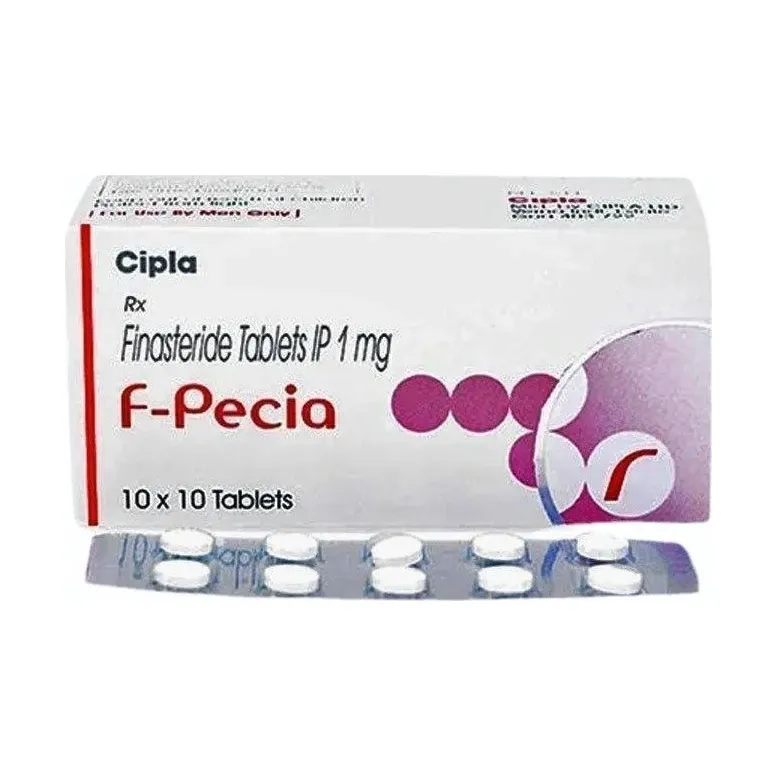
F-pecia (Finasteride) 1 mg
F-pecia 1 mg is a finasteride tablet. Finasteride is a prescription medicine used for male pattern hair loss, also called androgenetic alopecia, in adult men. It is a member of the 5-alpha-reductase inhibitor class and is used to reduce the hormonal signal that contributes to scalp hair follicle miniaturisation.
Active Ingredient and Medicine Class
The verified active ingredient is finasteride at a strength of 1 mg per tablet. Finasteride is a type II 5-alpha-reductase inhibitor. This class of medicine lowers the conversion of testosterone into dihydrotestosterone, or DHT, a hormone involved in androgenetic alopecia.
Established Medical Uses
Finasteride 1 mg is established for the treatment of male pattern hair loss in men only. Regulatory labeling does not support use in women or pediatric patients for this indication. Efficacy in bitemporal recession has not been established.
For hair loss, the medicine is intended to help slow progression and may improve scalp hair coverage in some men over time. Benefits are not immediate, and continued use is generally needed to maintain any effect.
How It Works
In men with androgenetic alopecia, the scalp contains hair follicles that gradually become smaller under the influence of DHT. Finasteride blocks the enzyme that helps form DHT, which lowers DHT levels in blood and scalp. By reducing this androgen-driven effect, the medicine can help slow further hair loss and support regrowth in susceptible hair follicles.
Important Safety Information
Finasteride is contraindicated in pregnancy and in people with hypersensitivity to any component of the product. It is not indicated for use in women. Regulatory labeling also warns that women who are pregnant or may become pregnant should not handle crushed or broken tablets because of the potential risk to a male fetus.
Finasteride can lower serum prostate-specific antigen, or PSA, which may affect interpretation of PSA test results. Any confirmed rise in PSA while taking finasteride should be medically evaluated. Regulatory labeling also notes that 5-alpha-reductase inhibitors may increase the risk of high-grade prostate cancer, although the clinical significance of this finding is not fully established.
No clinically important drug interactions have been identified in the approved labeling, and finasteride does not appear to affect the cytochrome P450 drug-metabolizing system. Nevertheless, all concomitant medicines should be reviewed by a healthcare professional.
Possible Side Effects
The most commonly reported adverse reactions in clinical studies include decreased libido, erectile dysfunction, and ejaculation disorder. These effects were reported more often than with placebo in the approved prescribing information.
Other reported reactions have included breast tenderness or enlargement, testicular pain, depression, rash, and hypersensitivity reactions. Most patients do not experience serious problems, but any new or persistent symptoms should be reviewed clinically.
Scientific Evidence
Randomised clinical trials in men with male pattern hair loss found that finasteride 1 mg improved scalp hair outcomes versus placebo and that 1 mg performed similarly to higher doses for this indication. Longer-term follow-up over five years reported durable hair benefits and no new major safety concerns. A systematic review of randomised trials also found that oral finasteride improved hair appearance and hair counts, while sexual adverse effects occurred more often than with placebo.
Medical Information Notice
This page is an educational summary based on sources available at the time of review. It does not replace the official patient leaflet, product labeling, or an individual assessment by a qualified healthcare professional.
Medical Sources
- FDA. PROPECIA (finasteride) tablets for oral use. Official prescribing information. View official label
- DailyMed. Finasteride tablets, film coated. Official U.S. prescribing information. View official prescribing information
- Finasteride Male Pattern Hair Loss Study Group. Finasteride in the treatment of men with androgenetic alopecia. Journal of the American Academy of Dermatology, 1998. View scientific article
- J L Roberts et al. Clinical dose ranging studies with finasteride, a type 2 5alpha-reductase inhibitor, in men with male pattern hair loss. Journal of the American Academy of Dermatology, 1999. View scientific article
- Finasteride Male Pattern Hair Loss Study Group. Long-term (5-year) multinational experience with finasteride 1 mg in the treatment of men with androgenetic alopecia. European Journal of Dermatology, 2002. View scientific article
- A Tosti et al. Evaluation of sexual function in subjects taking finasteride for the treatment of androgenetic alopecia. Journal of the European Academy of Dermatology and Venereology, 2001. View scientific article