Description
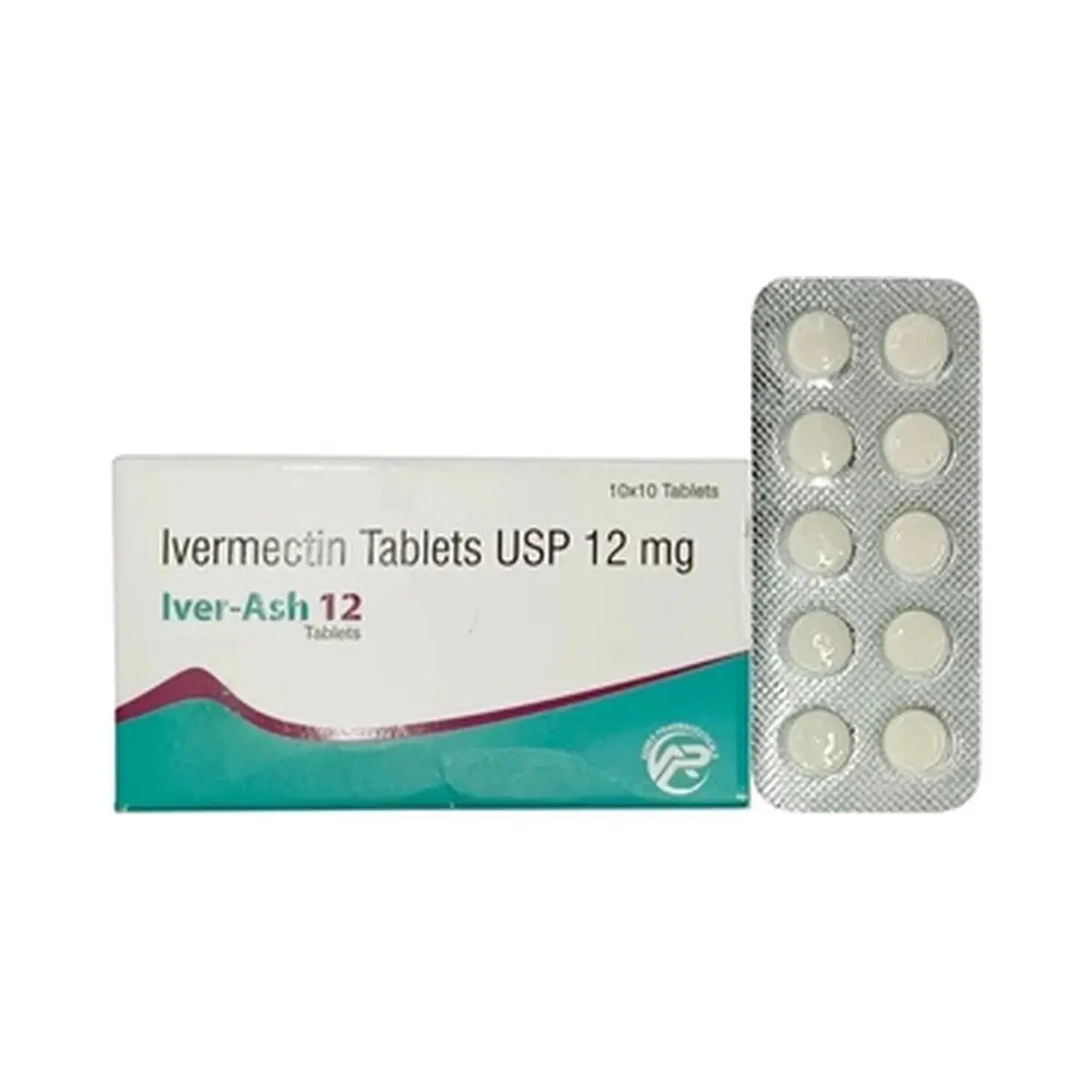
Iver-ash (Ivermectin) 12 mg
Iver-ash appears to be a brand name for ivermectin, an oral antiparasitic medicine. The product name and strength are treated here as identification clues only. Verified regulatory sources describe ivermectin as a semisynthetic anthelmintic used for specific parasitic infections.
Active Ingredient and Medicine Class
Active ingredient: ivermectin.
Medicine class: anthelmintic / antiparasitic agent from the avermectin class. It is used systemically and is distinct from veterinary ivermectin products.
Established Medical Uses
Official U.S. prescribing information lists ivermectin tablets for intestinal strongyloidiasis caused by Strongyloides stercoralis and onchocerciasis caused by Onchocerca volvulus. WHO sources also identify ivermectin as an established medicine for several parasitic diseases, and WHO guidance notes that use for other conditions, such as COVID-19, is not recommended outside research settings.
How It Works
Ivermectin acts on parasite nerve and muscle function. It increases the activity of parasite-specific chloride channels, leading to paralysis and death of susceptible parasites. This mechanism explains its activity against certain nematodes and some ectoparasites.
Important Safety Information
Ivermectin is contraindicated in people with hypersensitivity to the product or its components. Regulatory labeling warns that patients with onchocerciasis may experience inflammatory reactions related to parasite death, including skin, eye, and systemic reactions. Caution is also warranted because serious reactions have been reported rarely, including severe skin reactions and hepatitis.
Clinically significant interactions and precautions are reported in prescribing information, including the need to consider other medicines that may increase adverse effects or complicate treatment in parasitic co-infections. Official labeling should be checked for the full interaction profile before use.
Possible Side Effects
Reported adverse effects include dizziness, gastrointestinal symptoms, rash, pruritus, edema, low blood pressure, and tachycardia. In patients treated for onchocerciasis, eye and skin reactions may occur as part of treatment-related inflammatory responses. Rare but serious events include severe cutaneous adverse reactions and liver injury.
Scientific Evidence
Clinical studies summarized in regulatory labeling support ivermectin’s use for strongyloidiasis and onchocerciasis, with cure rates reported in trials for intestinal strongyloidiasis and substantial antiparasitic activity in endemic populations. A PubMed-indexed review by Campsi-Azevedo et al., “Ivermectin in human medicine,” discusses its established human antiparasitic role and broader parasitologic use.
Medical Information Notice
This page is an educational summary based on sources available at the time of review and does not replace the official patient leaflet, product labeling, or assessment by a qualified healthcare professional.
Medical Sources
- DailyMed / FDA label: Ivermectin Tablets, USP — official prescribing information
- FDA label: STROMECTOL (ivermectin) Tablets — official prescribing information
- Campsi-Azevedo et al. “Ivermectin in human medicine.” PubMed, 1994 — PubMed article page