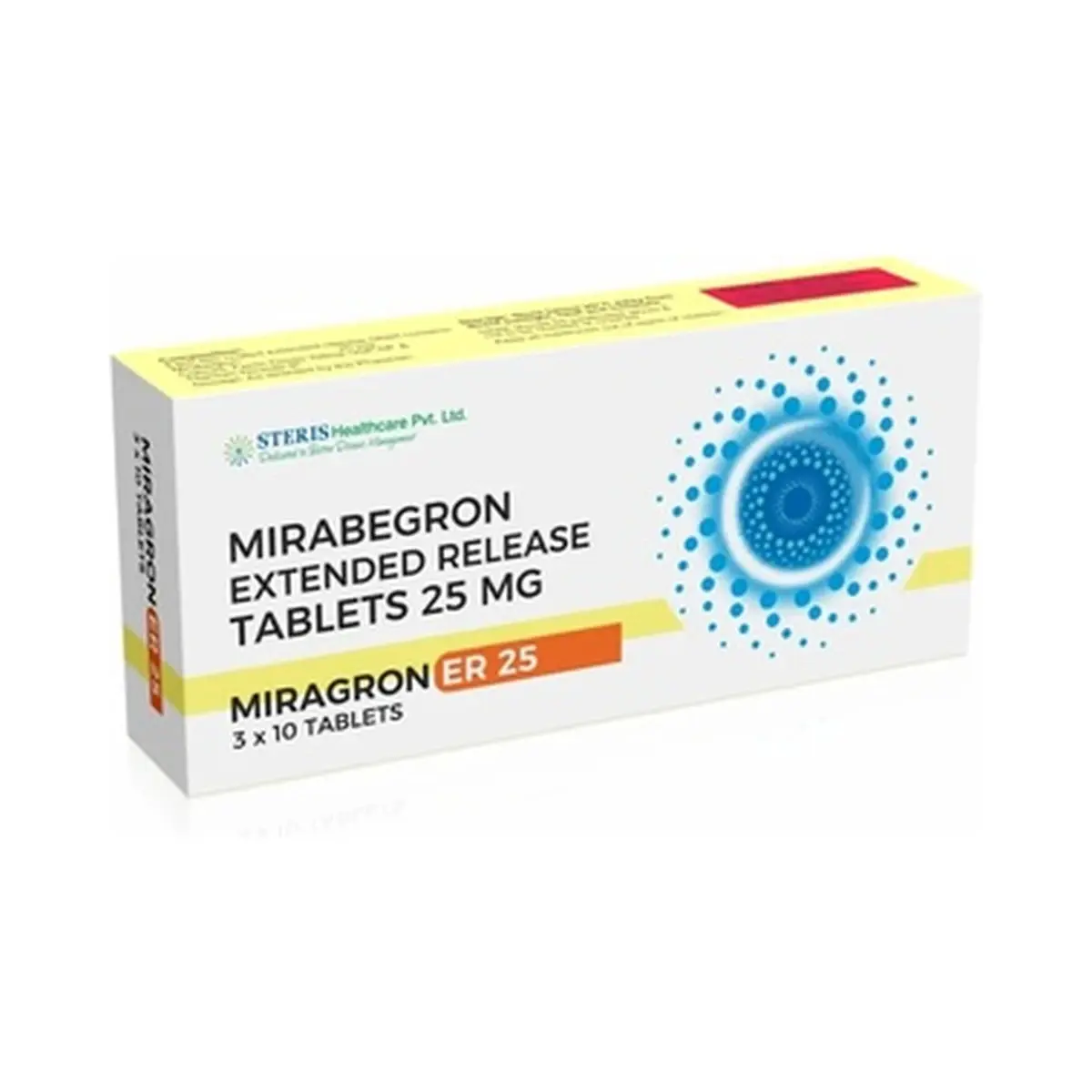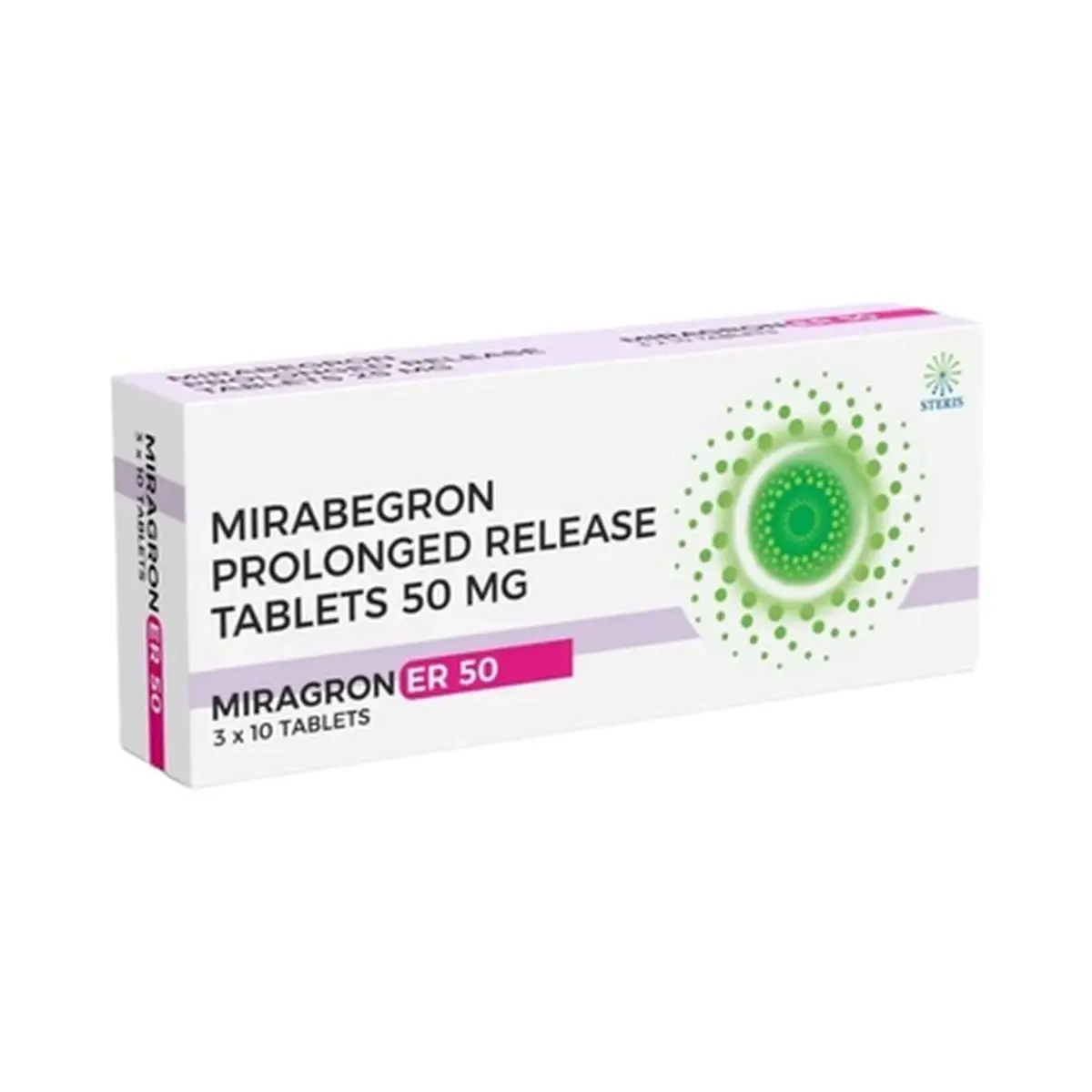
Description
Miragron ER (Mirabegron) 50 mg
Miragron ER 50 mg is an extended-release tablet containing mirabegron, a beta-3 adrenergic agonist used for the treatment of overactive bladder symptoms in adults. The product name and strength are consistent with mirabegron extended-release tablets marketed for this indication.
Active Ingredient and Medicine Class
Active ingredient: mirabegron.
Medicine class: beta-3 adrenergic agonist; urinary antispasmodic/overactive bladder medicine. Regulatory labeling identifies mirabegron extended-release tablets as a beta-3 adrenergic agonist.
Established Medical Uses
Official prescribing information identifies mirabegron extended-release tablets for the treatment of overactive bladder (OAB) in adults, including symptoms such as urge urinary incontinence, urgency, and urinary frequency. In some regulatory labels, mirabegron is also used in combination regimens for certain bladder conditions, but the standard tablet label primarily supports OAB use.
How It Works
Mirabegron activates beta-3 adrenergic receptors in the bladder. This relaxes the detrusor muscle during the storage phase, which helps increase bladder capacity and reduce urgency-related symptoms. Clinical trial data support this mechanism through improvements in incontinence episodes and urination frequency.
Important Safety Information
Mirabegron should not be used in people with a known hypersensitivity to the medicine or its ingredients. Prescribing information also warns about blood pressure increases, and it is not recommended in patients with severe uncontrolled hypertension. Caution is needed in patients with bladder outlet obstruction or when urinary retention is a concern. Mirabegron is a CYP2D6 inhibitor and may increase exposure to medicines metabolised by this pathway, so clinically significant interactions can occur with some antidepressants, beta-blockers, and other narrow-therapeutic-index drugs.
Possible Side Effects
Common adverse effects reported in clinical studies and labeling include hypertension, urinary tract infection, headache, nasopharyngitis, constipation, and dizziness. Less common but important serious reactions can include severe allergy, urinary retention, and clinically relevant increases in blood pressure or heart rate.
Scientific Evidence
Randomized phase III studies found that mirabegron 50 mg improved key overactive bladder outcomes versus placebo, including reductions in incontinence episodes and micturitions per 24 hours. Longer-term study data also supported sustained tolerability over 12 months, with blood pressure monitoring remaining an important safety consideration.
Medical Information Notice
This educational summary is based on sources available at the time of review and does not replace the official patient leaflet, prescribing information, or assessment by a qualified healthcare professional.
Medical Sources
- DailyMed / FDA label: Mirabegron tablet, film coated, extended release. View source
- FDA label: MYRBETRIQ (mirabegron) extended-release tablets, for oral use. View source
- Yu A, et al. Results of a randomized phase III trial of mirabegron in patients with overactive bladder. The Journal of Urology. 2012. PubMed