Description
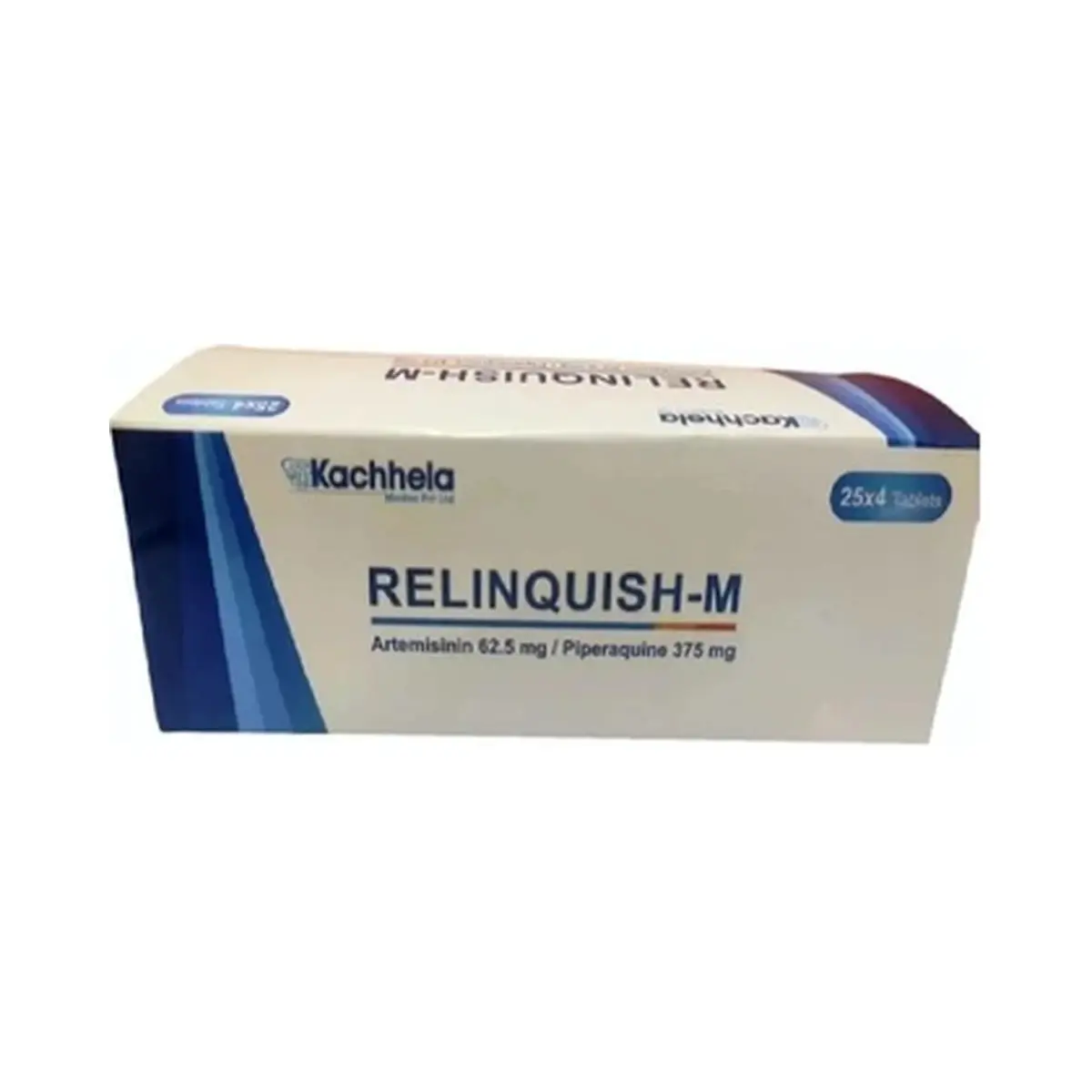
Relinquish-m (Artemisinin) 62.5 mg + 375 mg
Relinquish-m 62.5 mg + 375 mg appears to be a fixed-dose antimalarial combination containing artemisinin and piperaquine. The available evidence for this ingredient pairing supports its use as an artemisinin-based combination therapy for malaria, especially uncomplicated Plasmodium falciparum infection. Because trade-name information is limited, this summary focuses on the verified ingredient combination rather than assumptions about brand-specific registration status.
Active Ingredient and Medicine Class
Artemisinin is an antimalarial compound related to the artemisinin class, and piperaquine is a long-acting quinoline antimalarial partner drug. Together, they belong to the broader class of artemisinin-based combination therapies used to treat malaria and help reduce the chance that resistant parasites survive treatment.
Established Medical Uses
This ingredient combination is used for the treatment of uncomplicated malaria, particularly malaria caused by Plasmodium falciparum. International malaria guidance recognises artemisinin-based combination therapy as the preferred approach for uncomplicated disease, and includes dihydroartemisinin-piperaquine among recommended options. The specific artemisinin-piperaquine formulation represented by this product name has been studied for uncomplicated malaria in clinical trials.
It is not a substitute for urgent management of severe malaria, which requires different treatment approaches and clinical supervision.
How It Works
Artemisinin derivatives act rapidly against blood-stage malaria parasites, helping lower the parasite count quickly. Piperaquine stays in the body longer and continues to suppress surviving parasites after the artemisinin component has acted. This two-drug approach improves antimalarial activity and helps reduce the likelihood that partially resistant parasites will persist.
Important Safety Information
Important precautions for artemisinin-piperaquine combinations include a history of allergy or hypersensitivity to artemisinin-related medicines or piperaquine-related compounds. Because piperaquine can affect cardiac repolarisation, clinicians pay particular attention to patients with QT prolongation, a history of rhythm disorders, or concurrent use of other medicines that can also prolong the QT interval.
Caution is also warranted in patients with severe illness, vomiting, dehydration, electrolyte abnormalities, or conditions that may increase the risk of abnormal heart rhythm. As with all antimalarial medicines, treatment decisions should be based on confirmed malaria diagnosis and local resistance patterns.
Possible Side Effects
Reported side effects with artemisinin-piperaquine combinations include nausea, vomiting, abdominal discomfort, headache, dizziness, and weakness. Temporary changes on electrocardiogram, including QT interval prolongation, have been observed in some studies.
Less common but more serious reactions may include clinically significant heart rhythm disturbances, allergic reactions, or worsening symptoms if malaria is not correctly diagnosed or if treatment fails because of resistance.
Scientific Evidence
Clinical studies of artemisinin-piperaquine and related dihydroartemisinin-piperaquine regimens show good antimalarial efficacy in uncomplicated malaria, including areas where malaria drug resistance is a concern. Trial data also indicate that the combination can cause measurable QT prolongation, although serious arrhythmias were uncommon in the published studies. Systematic reviews and pooled analyses support the effectiveness of piperaquine-containing artemisinin combinations, while emphasising the need for cardiac safety awareness and appropriate malaria diagnosis.
Medical Information Notice
This page is an educational summary based on sources available at the time of review. It does not replace the official patient leaflet, local prescribing information, or individual assessment by a qualified health professional.
Medical Sources
- World Health Organization (WHO). WHO guidelines for malaria. Official guidance on artemisinin-based combination therapies and uncomplicated malaria management. View official WHO guidance
- World Health Organization (WHO). Global Malaria Programme: treatment. Overview of WHO-recommended antimalarial treatment principles and ACT use. View official WHO treatment information
- Wong RP et al. Electrocardiographic safety evaluation of dihydroartemisinin piperaquine in the treatment of uncomplicated falciparum malaria. American Journal of Tropical Medicine and Hygiene, 2007. View scientific article
- Zongo I et al. Pyronaridine-artesunate or dihydroartemisinin-piperaquine versus current first-line therapies for repeated treatment of uncomplicated malaria: a randomised, multicentre, open-label, longitudinal, controlled, phase 3b/4 trial. The Lancet Infectious Diseases, 2018. View scientific article