Description
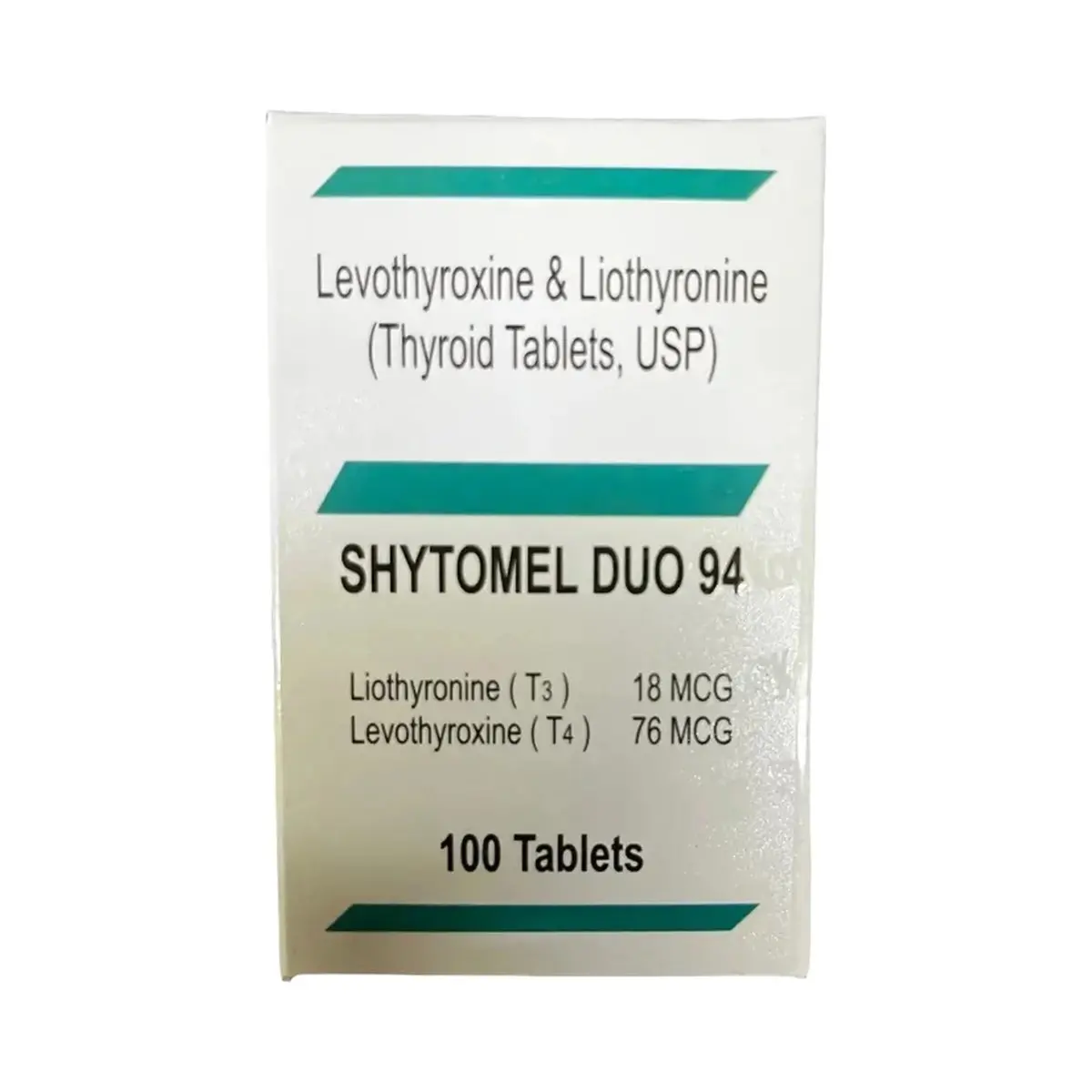
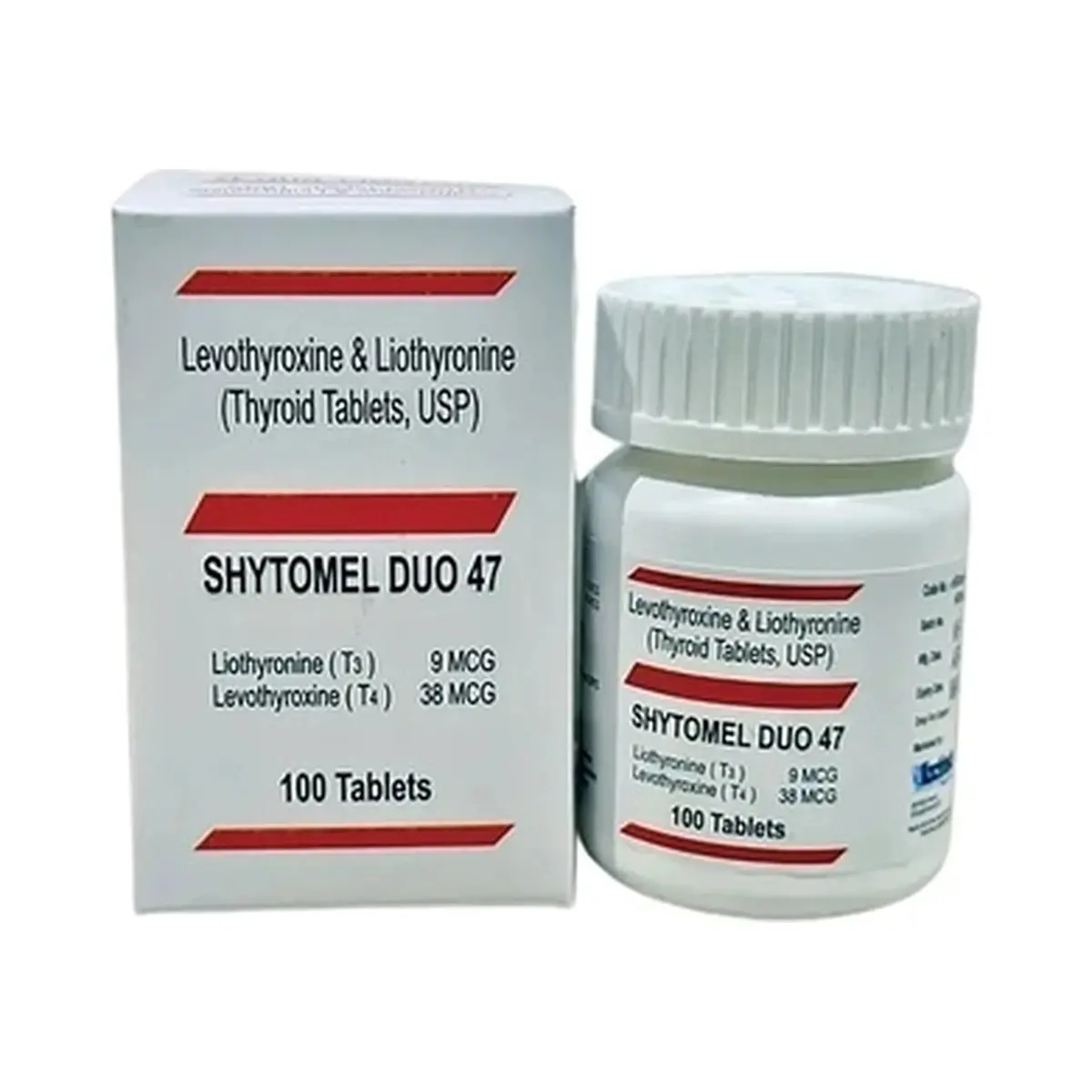
Shytomel duo
Shytomel duo is a thyroid hormone replacement medicine containing levothyroxine and liothyronine. This combination is used to replace or supplement thyroid hormones in people with hypothyroidism. The product name and strength supplied here are used for identification; the active ingredients are supported by regulatory and prescribing-information sources for levothyroxine/liothyronine combination therapy.
Active Ingredient and Medicine Class
Levothyroxine is synthetic thyroxine (T4), and liothyronine is synthetic triiodothyronine (T3). They are thyroid hormone medicines that act as hormone replacement therapy. Levothyroxine is the standard long-acting thyroid hormone replacement, while liothyronine is the more rapidly acting active hormone.
Established Medical Uses
Thyroid hormone replacement is established for hypothyroidism. Combination therapy with levothyroxine plus liothyronine has been studied for patients who remain symptomatic on levothyroxine alone, but major guidelines and reviews do not show consistent overall superiority over levothyroxine monotherapy. Its use is therefore more selective than routine.
How It Works
These hormones replace thyroid hormone that the body is not making enough of. Levothyroxine provides T4, which the body can convert into the active hormone T3. Liothyronine supplies T3 directly. Together, they help restore thyroid hormone activity in tissues and support normal regulation of metabolism.
Important Safety Information
Thyroid hormones should not be used to treat myxedema coma with oral products, and they are not appropriate for uncontrolled over-replacement. Prescribing information for liothyronine highlights important concerns in people with cardiovascular disease, adrenal insufficiency, and in older adults, because excess thyroid hormone can provoke cardiac adverse reactions. Important interactions include medicines that affect thyroid hormone absorption or metabolism, and drugs such as amiodarone, which can alter T4-to-T3 conversion.
Possible Side Effects
Adverse effects are mainly those of too much thyroid hormone. Reported effects include palpitations or arrhythmias, chest discomfort or myocardial infarction in susceptible patients, nervousness, irritability, insomnia, tremor, headache, muscle weakness, heat intolerance, diarrhea, weight loss, increased appetite, menstrual changes, and skin rash.
Scientific Evidence
Clinical trials and reviews have generally found no consistent improvement in weight, lipid levels, symptoms, or cognitive outcomes when levothyroxine plus liothyronine is compared with levothyroxine alone in primary hypothyroidism. More recent consensus documents suggest that a carefully selected subgroup of patients with persistent symptoms may be considered for individualized combination therapy, but the evidence base remains mixed.
Medical Information Notice
This page is an educational summary based on sources available at the time of review and does not replace the official patient leaflet, prescribing information, or assessment by a qualified healthcare professional.
Medical Sources
- DailyMed / FDA: Liothyronine Sodium Tablets, prescribing information
- U.S. Food and Drug Administration: CYTOMEL (liothyronine sodium) tablets, prescribing information
- ATA/BTA/ETA Consensus Document: Jonklaas et al. Evidence-Based Use of Levothyroxine/Liothyronine Combinations in Treating Hypothyroidism: A Consensus Document. Thyroid. 2021