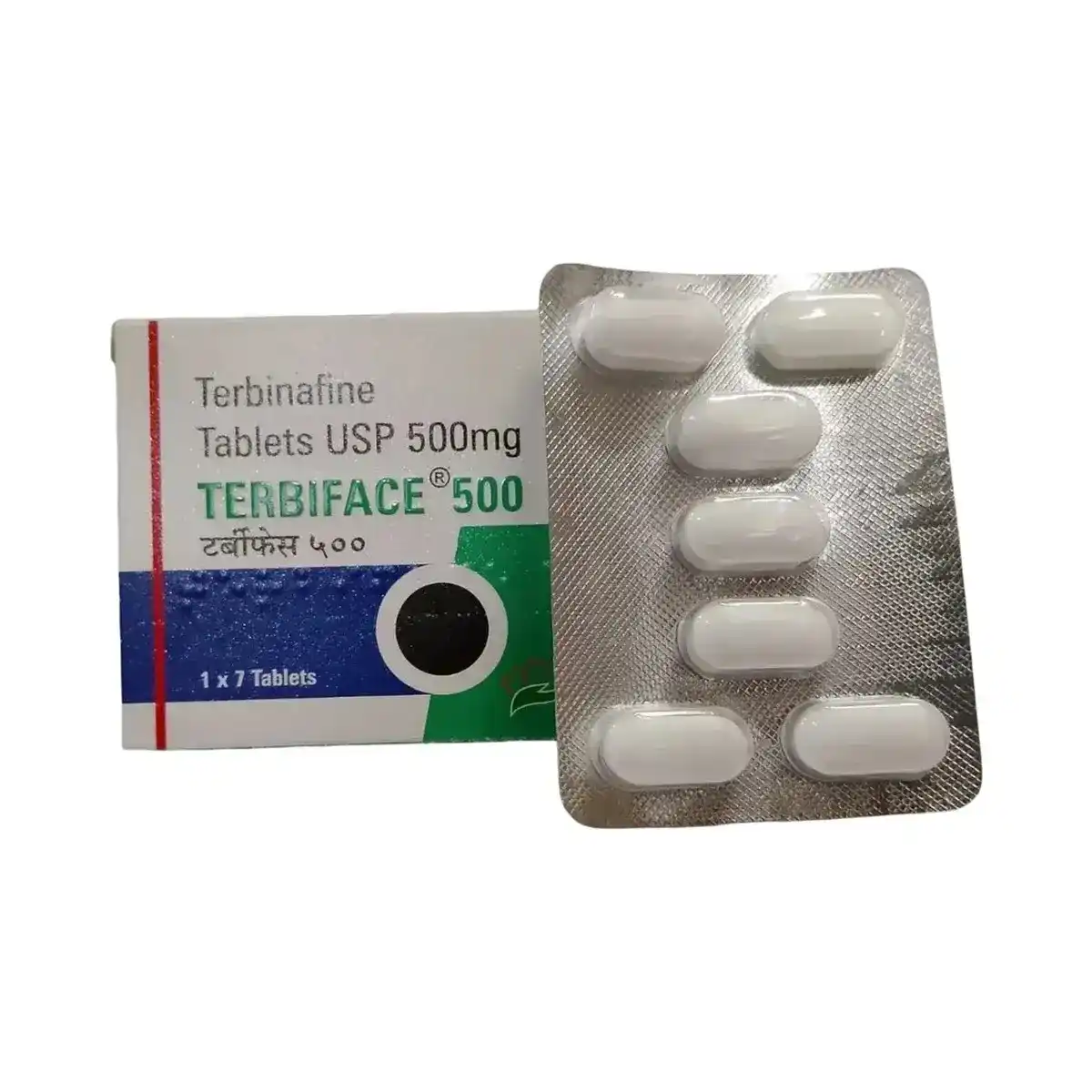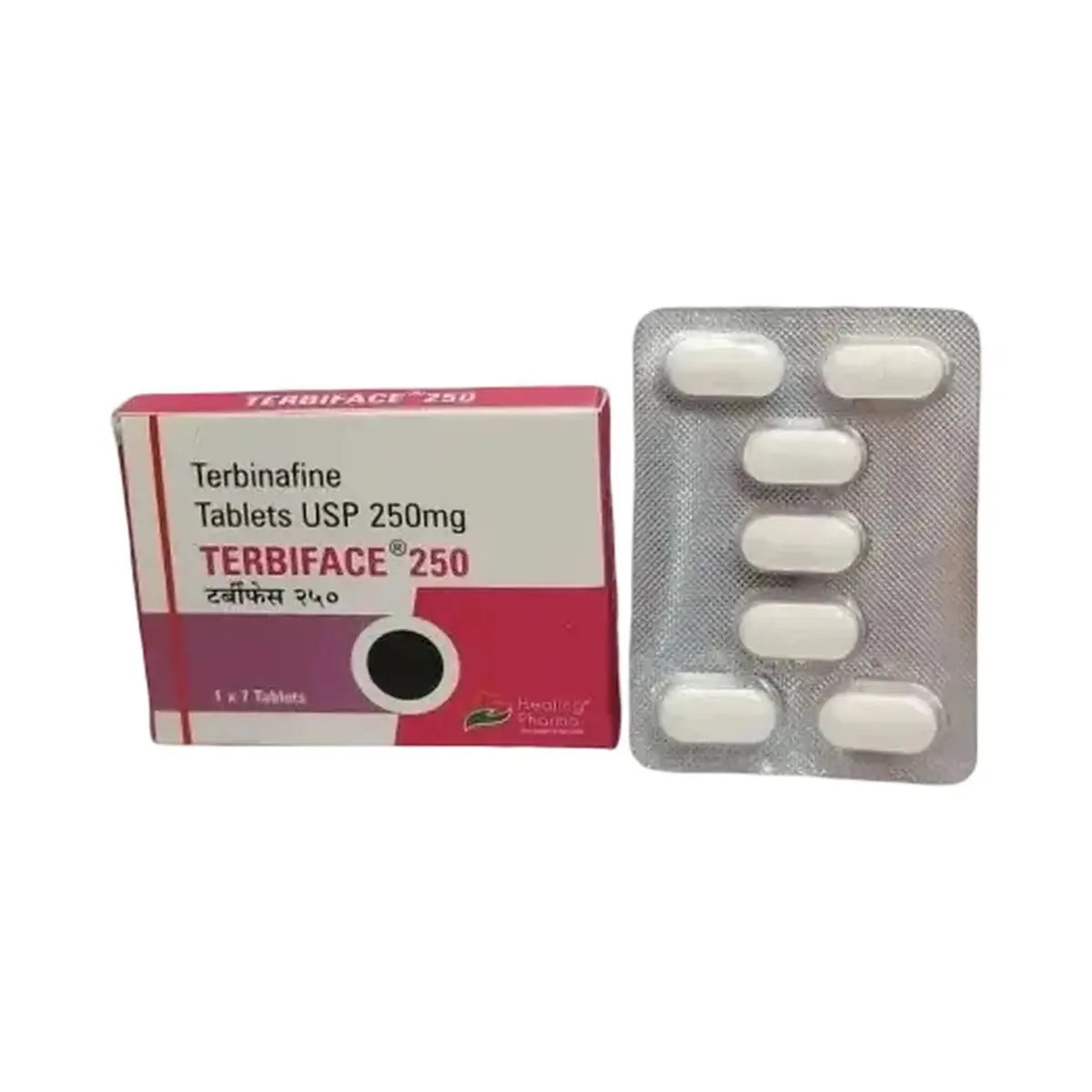
Description
Terbiface (Terbinafine) 250 mg
Terbiface 250 mg is an oral antifungal medicine containing terbinafine hydrochloride. It belongs to the allylamine class and is used for fungal infections caused by susceptible dermatophytes, including skin infections and certain nail infections. The product name and strength are used here for identification only.
Active Ingredient and Medicine Class
The verified active ingredient is terbinafine, an allylamine antifungal. Oral terbinafine is a systemic medicine that concentrates in keratinised tissues such as skin, hair and nails.
Established Medical Uses
Official prescribing information for oral terbinafine includes treatment of onychomycosis of the toenail or fingernail caused by dermatophytes. It is also used for some dermatophyte skin infections, such as tinea infections. Reviews in PubMed describe terbinafine as a standard systemic option for dermatophyte nail disease.
How It Works
Terbinafine blocks an enzyme needed for fungal sterol production, leading to depletion of ergosterol and accumulation of toxic sterol intermediates. This disrupts the fungal cell membrane and helps stop fungal growth.
Important Safety Information
Oral terbinafine should not be used in people with a known hypersensitivity to oral terbinafine. Prescribing information also warns against use in active liver disease because serious liver injury has been reported. Terbinafine is a clinically important CYP2D6 inhibitor and may interact with medicines metabolised through this pathway, including some antidepressants, beta-blockers and antiarrhythmics. Rifampin can reduce terbinafine exposure, while cimetidine can increase it.
Possible Side Effects
Reported adverse effects include gastrointestinal symptoms, headache, taste disturbance, rash and abnormal liver tests. More serious reactions can include severe skin reactions, allergic reactions, liver injury and, rarely, liver failure.
Scientific Evidence
PubMed-indexed reviews and clinical studies support terbinafine as an effective systemic treatment for dermatophyte onychomycosis, with long-term follow-up studies showing sustained mycological and clinical responses in many patients. Comparative reviews also describe terbinafine as a preferred oral option for dermatophyte nail disease because of its efficacy and relatively limited interaction profile compared with some alternatives.
Medical Information Notice
This page is an educational summary based on sources available at the time of review and does not replace the official patient leaflet or assessment by a qualified healthcare professional.