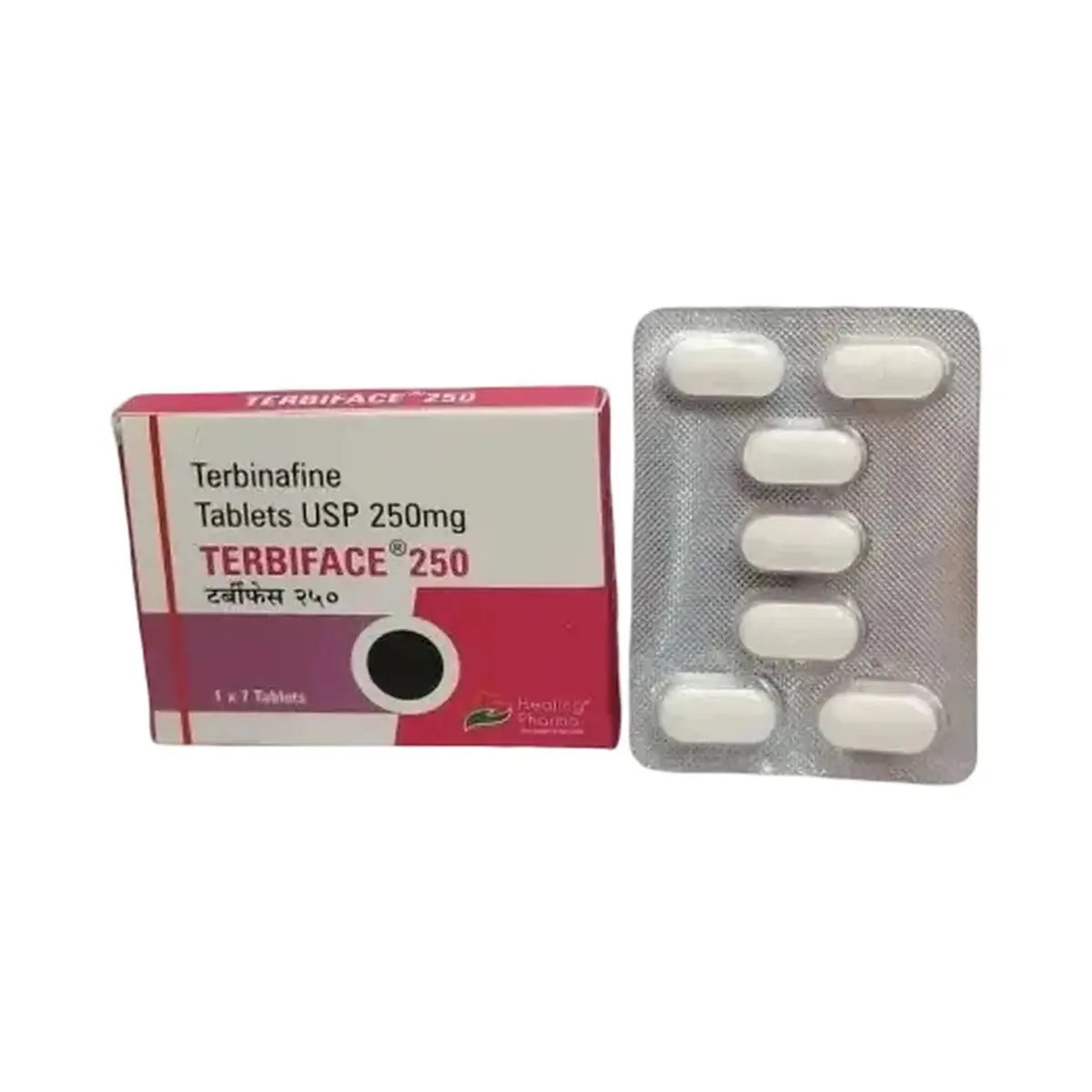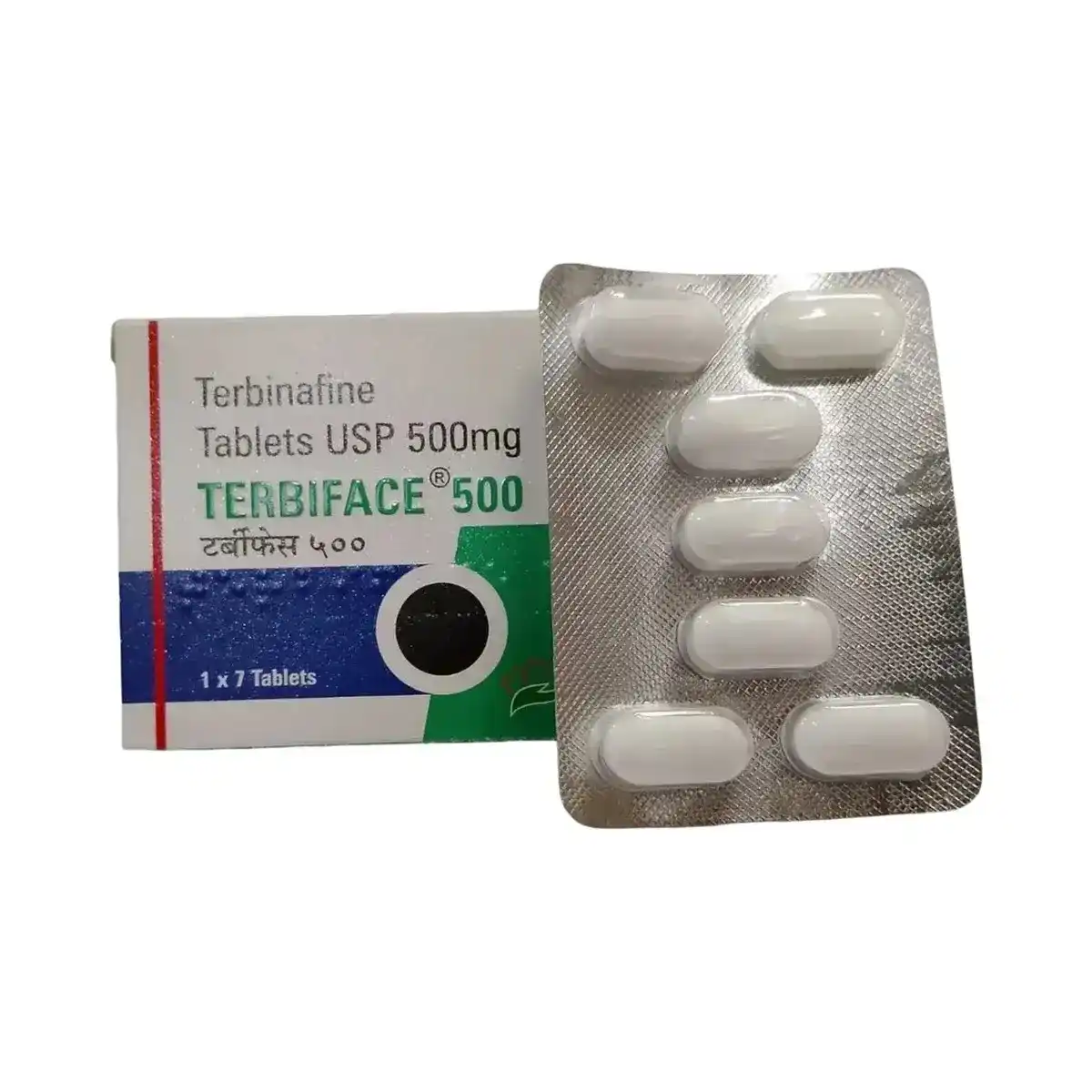
Description
Terbiface (Terbinafine) 500 mg
Terbiface 500 mg is an oral terbinafine product. Terbinafine is a prescription antifungal medicine used systemically for certain fungal infections, especially infections caused by dermatophytes. The supplied product name and strength are treated here as identification clues; the verified active ingredient is terbinafine.
Active Ingredient and Medicine Class
The active ingredient is terbinafine, an allylamine antifungal. It has fungicidal activity against many dermatophytes and works by inhibiting fungal squalene epoxidase, an early step in ergosterol synthesis.
Established Medical Uses
Oral terbinafine is established for several fungal infections, including onychomycosis (fungal nail infection) and some dermatophyte skin infections such as tinea corporis, tinea cruris and tinea pedis when systemic treatment is appropriate. Regulatory labeling also supports use for fungal nail disease.
How It Works
Terbinafine blocks fungal squalene epoxidase. This reduces ergosterol production, which fungi need for normal cell membranes, and leads to toxic squalene buildup inside the organism. This dual effect helps explain its fungicidal activity against dermatophytes.
Important Safety Information
Oral terbinafine should not be used in people with chronic or active liver disease, and labeling warns that serious liver injury, including liver failure, has occurred. It is also contraindicated in people with a history of allergic reaction to oral terbinafine. Terbinafine is a clinically important CYP2D6 inhibitor and may increase exposure to some antidepressants, beta-blockers, antiarrhythmics and other CYP2D6-metabolized medicines; rifampin can reduce terbinafine exposure.
Possible Side Effects
Commonly reported adverse effects include headache, diarrhea, rash, dyspepsia, nausea, abdominal pain, pruritus, taste disturbance and liver enzyme abnormalities. Serious reactions have included severe skin reactions, hypersensitivity reactions and clinically significant liver injury.
Scientific Evidence
PubMed-indexed reviews and meta-analyses support oral terbinafine as an effective treatment for dermatophyte nail disease, with comparative evidence showing better mycological cure than itraconazole in toenail onychomycosis. Reviews of tinea infections also describe terbinafine as a first-line oral option for selected dermatophyte infections.
Medical Information Notice
This educational summary is based on sources available at the time of review and does not replace the official patient leaflet, prescribing information or assessment by a qualified healthcare professional.
Medical Sources
- DailyMed / FDA label: TERBINAFINE tablets, oral use. https://dailymed.nlm.nih.gov/dailymed/drugInfo.cfm?setid=0a54cc4f-0789-46ce-875f-df759aa95d9c
- Ryder NS. “Terbinafine: mode of action and properties of the squalene epoxidase inhibition.” British Journal of Dermatology (1992). https://pubmed.ncbi.nlm.nih.gov/1543672/