Description
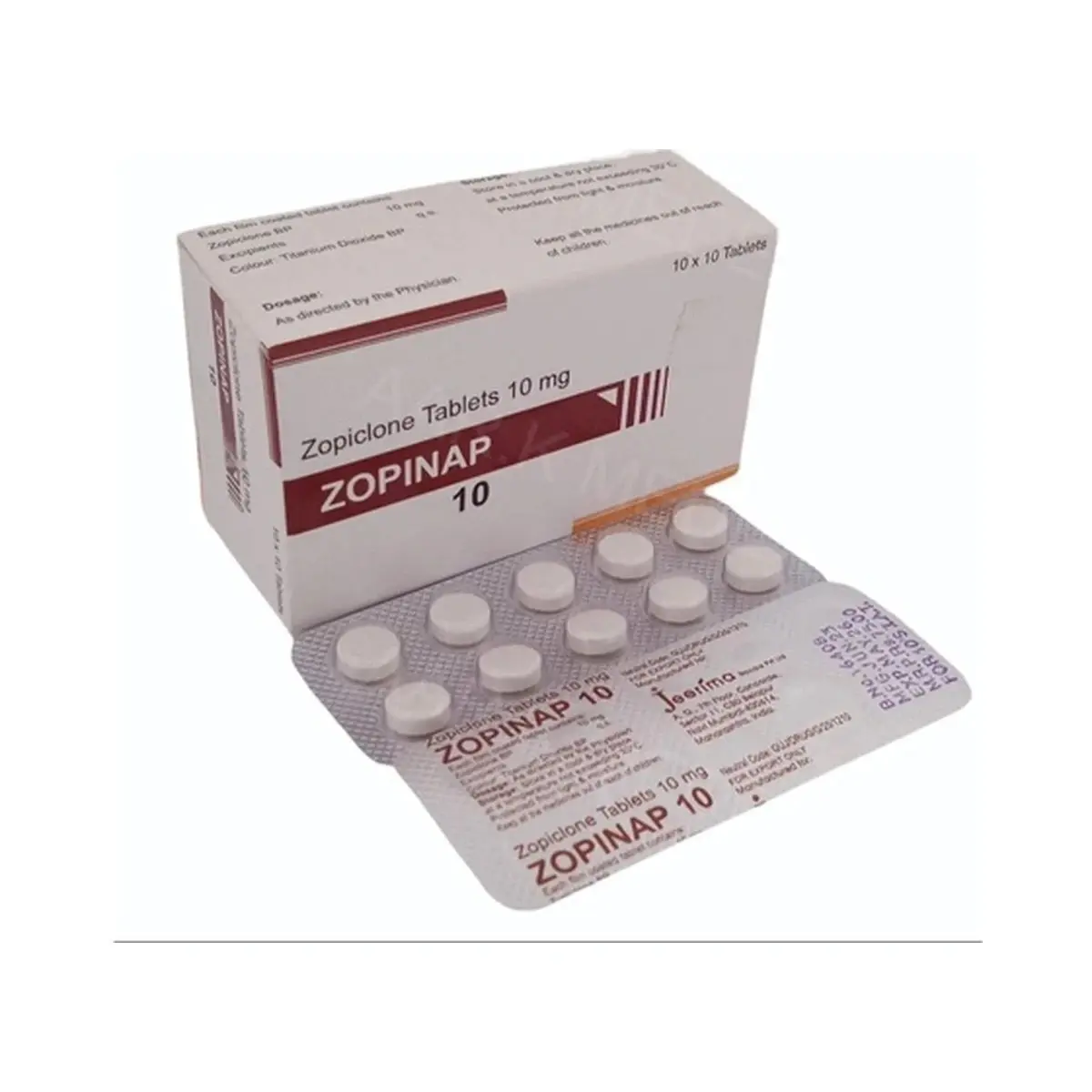
Zopinap (Zopiclone) 10 mg
Zopinap 10 mg is identified as a zopiclone-containing hypnotic medicine. Zopiclone is a sedative-hypnotic used for short-term treatment of insomnia. The brand name and strength should be treated as product-identification clues; the verified active ingredient here is zopiclone.
Active Ingredient and Medicine Class
Active ingredient: zopiclone.
Medicine class: hypnotic and sedative, a benzodiazepine-related “Z-drug”/cyclopyrrolone. Regulatory product information classifies zopiclone as a hypnotic agent with central nervous system depressant activity.
Established Medical Uses
Zopiclone is established for the short-term treatment of insomnia in adults, including difficulty falling asleep and nighttime or early-morning awakening. Official product information also describes use in transient, situational and chronic insomnia when symptoms are severe or distressing. Long-term continuous use is not recommended.
How It Works
Zopiclone acts on the central GABA receptor complex and enhances inhibitory signalling in the brain, which helps induce and maintain sleep. It is described as rapidly initiating sleep, with sedative effects related to modulation of chloride channel opening.
Important Safety Information
Zopiclone should be used with caution because it can cause dependence, tolerance and withdrawal symptoms, especially with prolonged use, higher doses, alcohol, other psychotropics, or a history of substance misuse. It may worsen depression or mask its symptoms. It can also impair alertness and psychomotor performance, increasing risk when driving or operating machinery.
Important interactions include alcohol, opioids and other central nervous system depressants, which can increase sedation and respiratory depression. CYP3A4 inhibitors may increase zopiclone exposure, while CYP3A4 inducers may reduce its effect. Use is not recommended in pregnancy or breastfeeding in the cited product information, and it should not be used in children and adolescents under 18 years in that SmPC.
Possible Side Effects
Common adverse effects include bitter taste, dry mouth and residual drowsiness. Other reported effects include dizziness, headache, nausea, fatigue and impaired coordination. More serious reactions can include confusion, memory impairment, hallucinations, abnormal behaviour, sleep-walking, respiratory depression, falls, allergic reactions and withdrawal symptoms after stopping treatment.
Scientific Evidence
Peer-reviewed evidence supports zopiclone’s short-term hypnotic effect, with reductions in sleep latency and nocturnal awakenings and increases in total sleep time. However, the quality of long-term evidence is limited, and systematic review data in older adults note that safety and tolerability findings are based on relatively low- or unclear-quality studies.
Medical Information Notice
This summary is educational and based on sources available at the time of review. It does not replace the official patient leaflet, prescribing information, or assessment by a qualified health professional.
Medical Sources
- Medicines.org.uk (emc) — Zopiclone 7.5mg film-coated tablets, Summary of Product Characteristics
- Nóbrega OT et al. — “Zopiclone to treat insomnia in older adults: A systematic review,” European Neuropsychopharmacology (2021) — PubMed