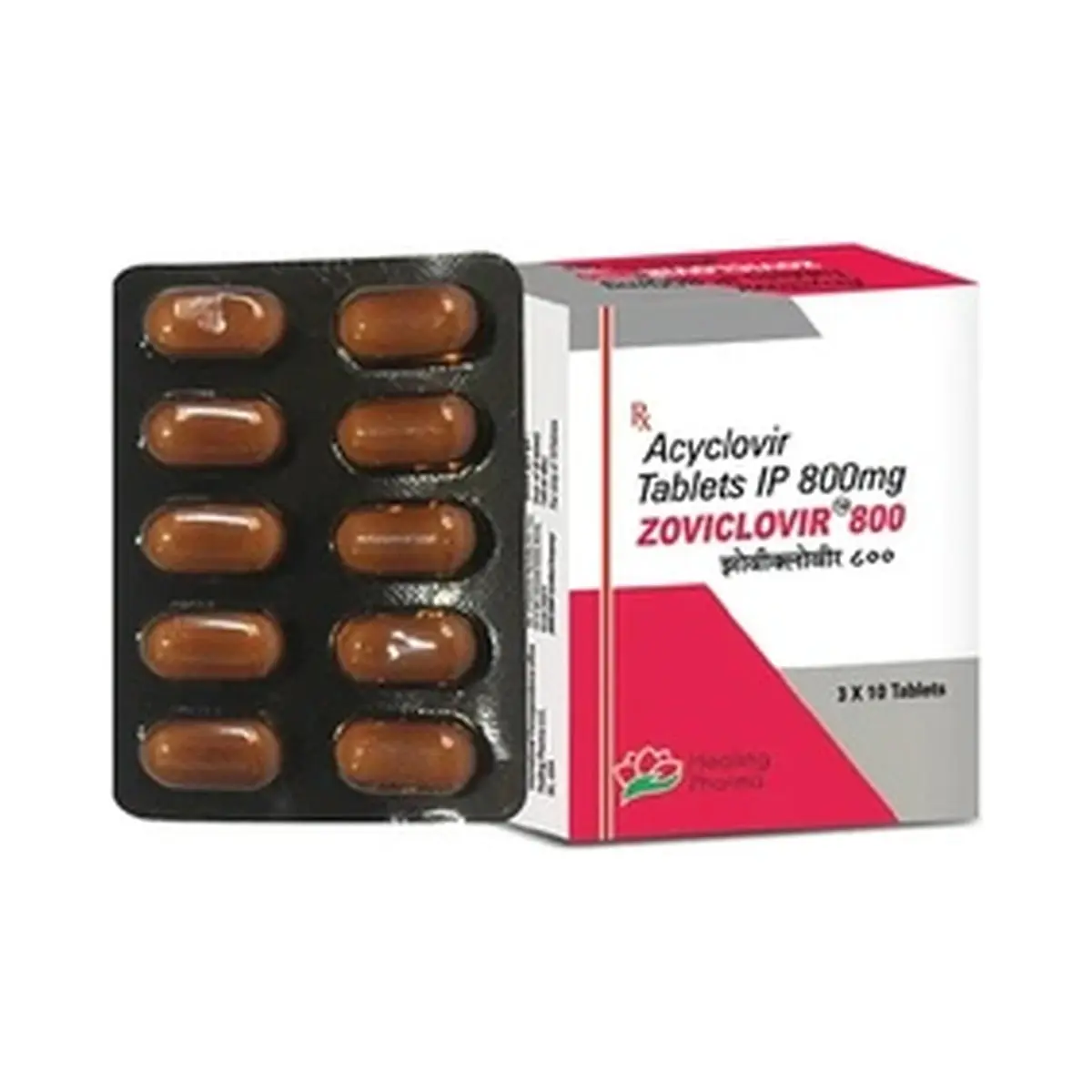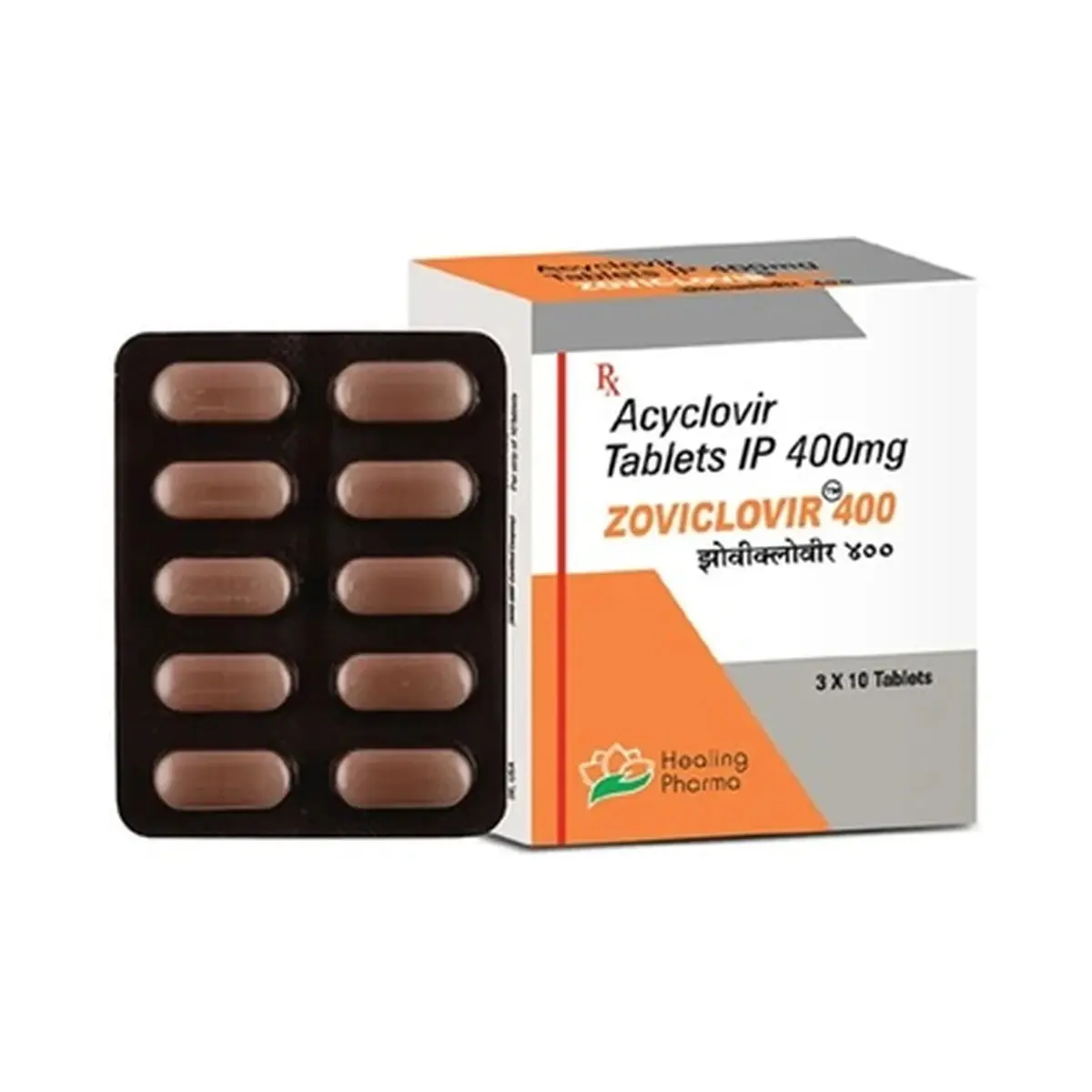
Description
Zoviclovir (Acyclovir) 400 mg
Zoviclovir 400 mg is listed here as an oral acyclovir tablet. Acyclovir is a prescription antiviral medicine used against selected herpesvirus infections. It does not eliminate latent herpes virus from the body, and its clinical role is to reduce viral replication during active infection or suppress recurrences in some settings.
Active Ingredient and Medicine Class
The verified active ingredient is acyclovir. Acyclovir is a synthetic purine nucleoside analogue and an anti-herpes antiviral. Regulatory labeling identifies acyclovir tablets as oral formulations and describes acyclovir as active against herpesviruses, including herpes simplex virus types 1 and 2 and varicella-zoster virus. ([accessdata.fda.gov](https://www.accessdata.fda.gov/drugsatfda_docs/label/2025/020089s021%2C019909s028%2C018828s033lbl.pdf))
Established Medical Uses
Official prescribing information for oral acyclovir tablets includes treatment of herpes zoster (shingles), initial and recurrent genital herpes, and chickenpox (varicella). The same labeling also describes chronic suppressive therapy for recurrent genital herpes as an established use for oral acyclovir tablets in the branded reference product. ([accessdata.fda.gov](https://www.accessdata.fda.gov/drugsatfda_docs/label/2025/020089s021%2C019909s028%2C018828s033lbl.pdf))
These are established indications from prescribing information. They should not be interpreted as a recommendation for any specific person or situation.
How It Works
Acyclovir works by entering infected cells and being activated by a viral enzyme, thymidine kinase. After further conversion inside the cell, the active form interferes with viral DNA synthesis. This selective activation helps acyclovir inhibit herpesvirus replication more than human cell replication. ([accessdata.fda.gov](https://www.accessdata.fda.gov/drugsatfda_docs/label/2025/020089s021%2C019909s028%2C018828s033lbl.pdf))
In practical terms, the medicine can reduce the ability of herpes viruses to multiply, which is why it is used for outbreaks and, in some cases, to reduce recurrences. It does not cure the underlying infection or remove dormant virus from the body. ([accessdata.fda.gov](https://www.accessdata.fda.gov/drugsatfda_docs/label/2025/020089s021%2C019909s028%2C018828s033lbl.pdf))
Important Safety Information
Acyclovir is contraindicated in people with a clinically significant hypersensitivity reaction to acyclovir, valacyclovir, or any component of the formulation. Prescribing information also warns about serious skin reactions, including Stevens-Johnson syndrome, toxic epidermal necrolysis, DRESS, AGEP, and erythema multiforme. ([accessdata.fda.gov](https://www.accessdata.fda.gov/drugsatfda_docs/label/2025/020089s021%2C019909s028%2C018828s033lbl.pdf))
Important precautions include renal impairment, because dose adjustment is recommended in patients with reduced kidney function. The label also advises caution with potentially nephrotoxic medicines, since combined use may increase the risk of renal dysfunction and reversible central nervous system effects. Adequate hydration is advised in the official labeling. ([accessdata.fda.gov](https://www.accessdata.fda.gov/drugsatfda_docs/label/2025/020089s021%2C019909s028%2C018828s033lbl.pdf))
For genital herpes, prescribing information states that acyclovir is not a cure and that evidence is insufficient to show that it prevents transmission to others. ([accessdata.fda.gov](https://www.accessdata.fda.gov/drugsatfda_docs/label/2025/020089s021%2C019909s028%2C018828s033lbl.pdf))
Possible Side Effects
Common adverse effects reported in clinical studies and post-marketing use include nausea, vomiting, diarrhea, headache, malaise, dizziness, and abdominal or gastrointestinal discomfort. ([accessdata.fda.gov](https://www.accessdata.fda.gov/drugsatfda_docs/label/2025/020089s021%2C019909s028%2C018828s033lbl.pdf))
Less common but clinically important adverse effects include confusion, hallucinations, somnolence, agitation, tremor, seizure, and other central nervous system effects, especially in older adults and in patients with renal impairment. The label also reports rare but serious events such as renal failure, blood dyscrasias, and severe cutaneous reactions. ([accessdata.fda.gov](https://www.accessdata.fda.gov/drugsatfda_docs/label/2025/020089s021%2C019909s028%2C018828s033lbl.pdf))
Scientific Evidence
Human clinical evidence supports acyclovir as an effective anti-herpes agent. Review literature indexed in PubMed describes meaningful clinical benefit in herpes simplex infections and confirms its long-standing role in treatment and suppression of outbreaks. A separate review explains the mechanism, pharmacokinetics, safety profile, and clinical applications of acyclovir across herpesvirus diseases. ([pubmed.ncbi.nlm.nih.gov](https://pubmed.ncbi.nlm.nih.gov/10945375/?utm_source=openai))
Evidence summaries also note that acyclovir reduces lesion duration, pain, and viral shedding in selected herpesvirus infections, while not eradicating latent virus. ([pubmed.ncbi.nlm.nih.gov](https://pubmed.ncbi.nlm.nih.gov/10945375/?utm_source=openai))
Medical Sources
- FDA Prescribing Information: ZOVIRAX (acyclovir) Tablets/Capsules/Suspension, AccessData FDA. View PubMed/Regulatory Source
- FDA Prescribing Information: Acyclovir Tablet, DailyMed. View official label
- O’Brien JJ, Campoli-Richards DM. Acyclovir. An updated review of its antiviral activity, pharmacokinetic properties and therapeutic efficacy. Drugs. 1989. PubMed
- Kłysik K, Pietraszek A, Karewicz A, Nowakowska M. Acyclovir in the Treatment of Herpes Viruses – A Review. Current Medicinal Chemistry. 2020. PubMed
Medical Information Notice
This educational summary is based on sources available at the time of review and does not replace the official patient leaflet, product label, or assessment by a qualified healthcare professional.