Description
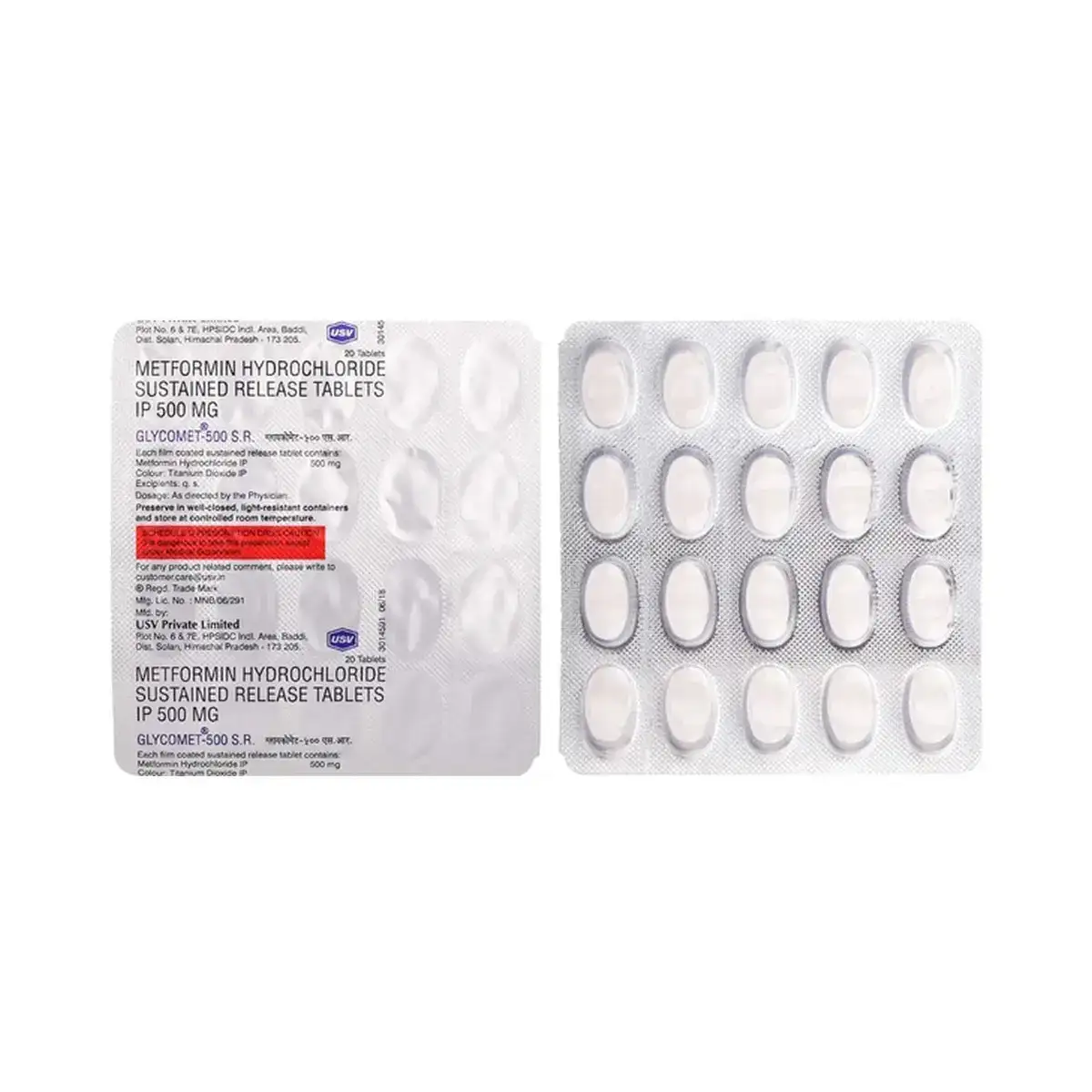
Glycomet (Metformin) 500 SR mg
Glycomet 500 SR is a sustained-release metformin medicine used to help improve blood sugar control in type 2 diabetes. The product name and strength suggest an extended-release metformin tablet; the active ingredient metformin hydrochloride is consistent with regulatory prescribing information for metformin extended-release products.
Active Ingredient and Medicine Class
Active ingredient: metformin hydrochloride.
Medicine class: biguanide antidiabetic medicine. Metformin is an oral glucose-lowering drug that does not belong to insulin or sulfonylurea classes.
Established Medical Uses
Metformin extended-release is indicated as an adjunct to diet and exercise to improve glycaemic control in adults with type 2 diabetes mellitus. It is not used for type 1 diabetes or diabetic ketoacidosis.
How It Works
Metformin lowers blood glucose mainly by reducing glucose production in the liver. It also improves insulin sensitivity and may reduce intestinal glucose absorption. Unlike medicines that stimulate insulin release, it generally does not increase insulin secretion.
Important Safety Information
Metformin carries a boxed warning for lactic acidosis, a rare but serious complication. Risk is higher in people with significant renal impairment, severe illness, hypoxia, dehydration, or other conditions that reduce kidney function or tissue oxygenation.
It is contraindicated in patients with severe renal dysfunction and in situations where metformin would be ineffective or unsafe, including type 1 diabetes and diabetic ketoacidosis. Caution is also needed with iodinated contrast studies and with medicines that may affect renal function or compete for renal tubular secretion.
Long-term metformin use may lower vitamin B12 levels, so deficiency is a recognised safety consideration.
Possible Side Effects
Common adverse effects of metformin extended-release include diarrhoea, nausea, vomiting, abdominal discomfort, indigestion, flatulence, headache and asthenia. Hypoglycaemia is less typical with metformin alone than with insulin or insulin secretagogues, but it can occur when used with other glucose-lowering medicines.
Serious reactions include lactic acidosis and clinically important vitamin B12 deficiency.
Scientific Evidence
PubMed-indexed reviews consistently describe metformin as a well-established first-line glucose-lowering option for many adults with type 2 diabetes because it improves glycaemic control, has a long clinical track record, and is generally weight-neutral. Reviews also support its main hepatic and insulin-sensitising effects and document the recognised association with reduced vitamin B12 status during treatment.
Medical Information Notice
This educational summary is based on sources available at the time of review and does not replace the official patient leaflet, prescribing information, or individual assessment by a qualified healthcare professional.
Medical Sources
- DailyMed / FDA label: Metformin Hydrochloride Extended-Release Tablets, prescribing information
- Sanchez-Rangel E, Inzucchi SE et al. Metformin: clinical use in type 2 diabetes. Diabetes Spectrum / Diabetologia review, 2017