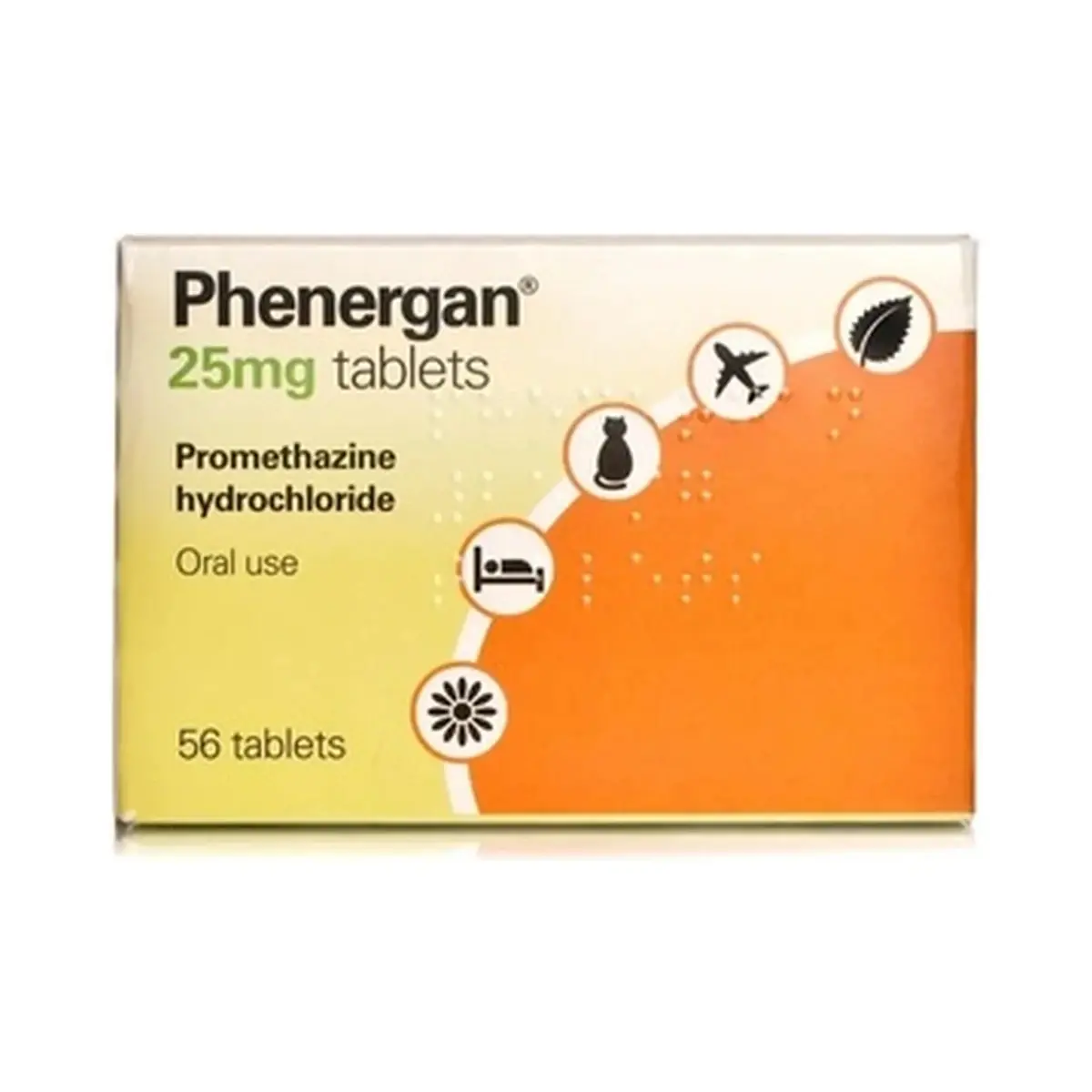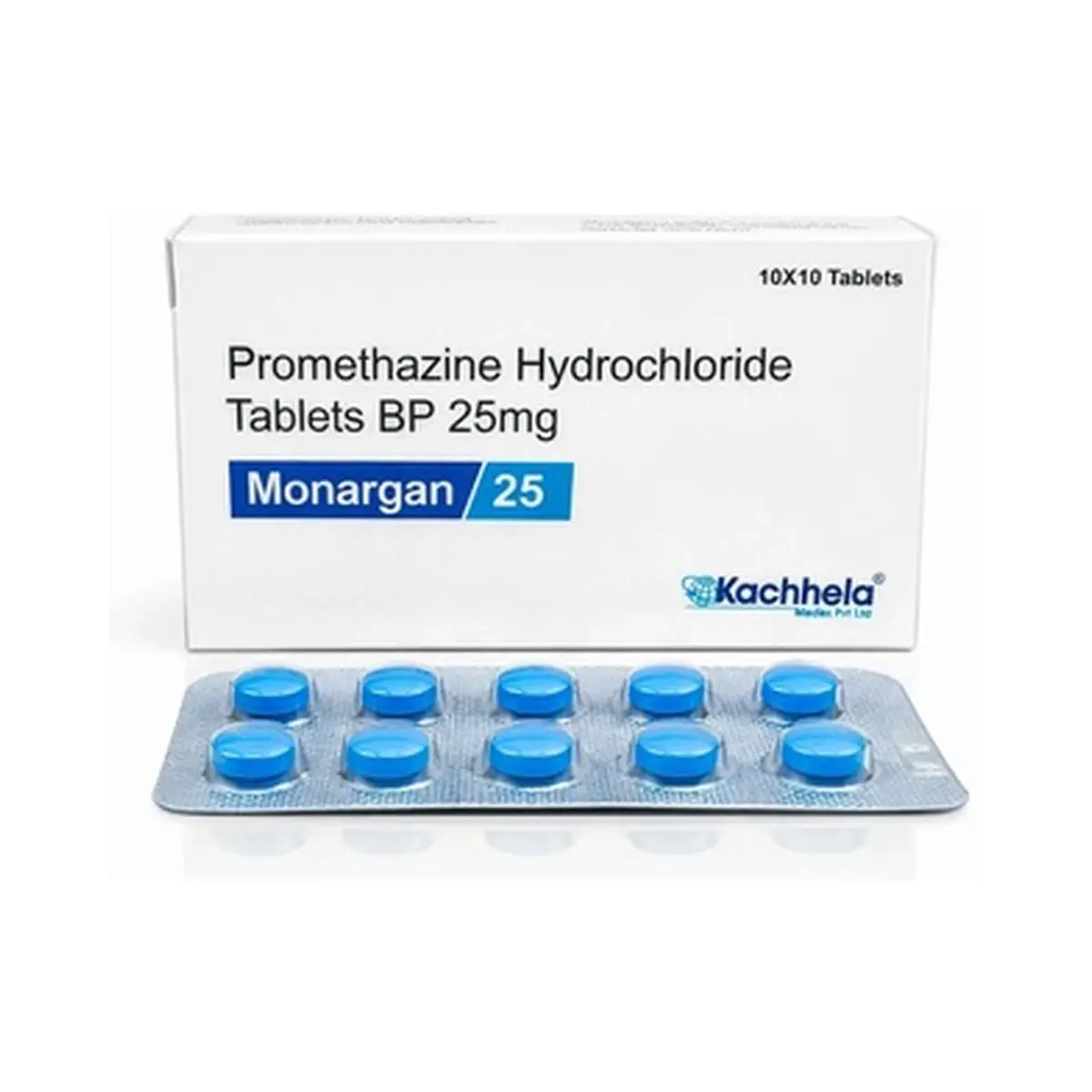
Description
Monargan (Promethazine) 25 mg
Monargan 25 mg is a branded oral tablet product identified with promethazine hydrochloride, a first-generation antihistamine in the phenothiazine class. Promethazine has sedative, antiemetic, antimuscarinic and anti-motion-sickness properties. The product strength shown here is for identification only.
Active Ingredient and Medicine Class
Promethazine hydrochloride is a first-generation H1 antihistamine and phenothiazine derivative. It is known for central nervous system depression, anticholinergic effects and antiemetic activity.
Established Medical Uses
Official prescribing information for promethazine tablets supports use for allergic conditions, nausea and vomiting, motion sickness, and sedation in appropriate clinical settings. The label also describes use as a sedative and adjunct in perioperative care.
How It Works
Promethazine mainly blocks histamine H1 receptors. It also has antimuscarinic and central sedative actions, which help explain its effects on allergy symptoms, nausea, motion sickness and sleepiness.
Important Safety Information
Promethazine can cause marked drowsiness and impaired alertness. Important cautions include use with other central nervous system depressants, alcohol, anticholinergic medicines, monoamine oxidase inhibitors, and epinephrine. Official labeling warns against use in children under 2 years because of the risk of severe respiratory depression, and it notes extra caution in older children and in patients with breathing problems, seizures, or other conditions that may increase sensitivity to sedation or anticholinergic effects.
Promethazine has also been associated with QT prolongation in experimental and clinical discussion, so patients with risk factors for arrhythmia require caution.
Possible Side Effects
Common adverse effects include drowsiness, dizziness, dry mouth, blurred vision, constipation and other anticholinergic effects. More serious reactions can include respiratory depression, confusion, agitation, extrapyramidal symptoms, seizures, severe allergic reactions and cardiac rhythm disturbances.
Scientific Evidence
Peer-reviewed evidence and reviews describe promethazine as an effective option for nausea, vomiting and motion sickness, but also confirm that sedation and psychomotor impairment are important limitations. A randomized, double-blind study in healthy volunteers found that promethazine significantly impaired psychomotor function compared with second-generation antihistamines. Review evidence on motion sickness similarly recognizes antihistamines as useful, while highlighting adverse effects such as sedation and impaired cognition.
Medical Information Notice
This educational summary is based on sources available at the time of review and does not replace the official patient leaflet, prescribing information or individual assessment by a qualified healthcare professional.
Medical Sources
- Official source: DailyMed, Promethazine Hydrochloride Tablets USP, 25 mg
- Official source: DailyMed, Promethazine Hydrochloride Tablets USP
- Scientific publication: Southard BT et al., “Promethazine”, StatPearls, 2024. PubMed article
- Scientific publication: Nasser et al., “Antihistamines for motion sickness”, Cochrane Database of Systematic Reviews, 2022. PubMed article