Description
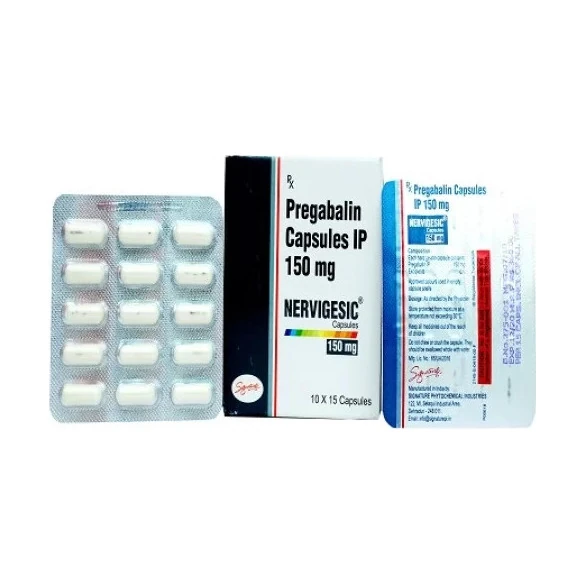
Nervigesic (Pregabalin) 150 mg
Nervigesic 150 mg contains pregabalin, a prescription medicine used for several nervous-system conditions. The verified information below describes pregabalin as the active ingredient; the brand name may vary by market.
Active Ingredient and Medicine Class
Pregabalin is a gabapentinoid and an anticonvulsant medicine. It is also described as an α2-δ ligand that binds to the auxiliary subunit of voltage-gated calcium channels in the central nervous system.
Established Medical Uses
Regulatory prescribing information for pregabalin includes treatment of neuropathic pain associated with diabetic peripheral neuropathy, postherpetic neuralgia, adjunctive therapy for partial-onset seizures, fibromyalgia, and neuropathic pain associated with spinal cord injury. Some non-US product information also includes use in peripheral and central neuropathic pain.
How It Works
Pregabalin does not act like classic GABA medicines. Instead, it binds to the α2-δ subunit of voltage-gated calcium channels and appears to reduce the release of several excitatory neurotransmitters. This is thought to calm overactive nerve signalling involved in pain and seizures.
Important Safety Information
Pregabalin is not suitable for everyone. Prescribing information lists hypersensitivity as a contraindication and warns about angioedema, suicidal behaviour and ideation, respiratory depression, peripheral edema, and impairment of driving or machinery use because of dizziness and somnolence. Caution is also advised with other medicines that can depress the central nervous system, and with thiazolidinedione antidiabetic agents because of edema risk. Pregabalin is a controlled substance in the United States and has recognised abuse and dependence potential.
Possible Side Effects
Common adverse effects include dizziness, somnolence, dry mouth, blurred vision, weight gain, edema, and difficulty with concentration or attention. Important serious reactions can include hypersensitivity, angioedema, respiratory depression, and mood changes.
Scientific Evidence
PubMed-indexed reviews describe pregabalin as effective for several forms of neuropathic pain and as adjunctive treatment for partial seizures. The published literature also supports its central mechanism at the α2-δ calcium-channel subunit, while noting that adverse effects and misuse risk are clinically relevant considerations.
Medical Information Notice
This summary is based on sources available at the time of review and is for educational purposes only. It does not replace the official patient leaflet, prescribing information, or assessment by a qualified healthcare professional.
Medical Sources
- DailyMed / FDA — Pregabalin capsules, prescribing information
- Stephen M Stahl et al. — “The diverse therapeutic actions of pregabalin: is a single mechanism responsible for several pharmacological activities?” Trends in Pharmacological Sciences (2013). PubMed article