Description
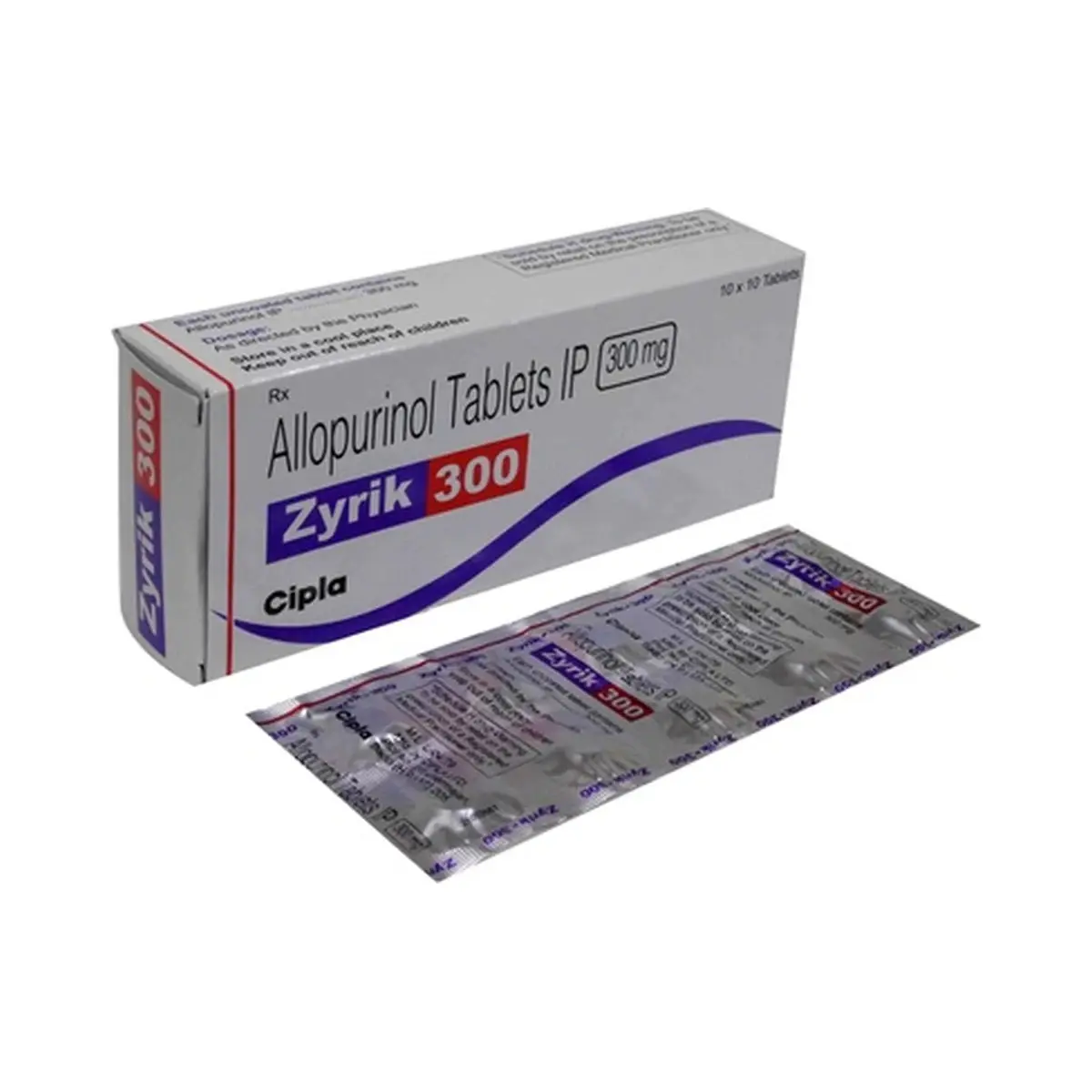
Zyrik (Allopurinol) 300 mg
Zyrik 300 mg contains allopurinol, a prescription urate-lowering medicine used in the long-term management of conditions linked to excess uric acid. The active ingredient is well established as a xanthine oxidase inhibitor, and the 300 mg tablet strength is one of the standard marketed oral forms of allopurinol.
Active Ingredient and Medicine Class
Allopurinol is a xanthine oxidase inhibitor. This class reduces the body’s production of uric acid by blocking an enzyme involved in purine breakdown. It is considered a urate-lowering therapy rather than a pain-relief medicine.
Established Medical Uses
Allopurinol is used to reduce elevated uric acid levels in people with gout, uric acid deposition, and hyperuricemia. Official prescribing information also includes prevention of hyperuricemia associated with cancer therapy and prevention of certain uric-acid related kidney complications in appropriate patients. It is not recommended for the treatment of asymptomatic hyperuricemia.
How It Works
Allopurinol lowers uric acid production by inhibiting xanthine oxidase. This decreases the conversion of purine breakdown products into uric acid and can gradually reduce urate crystal formation and urate burden over time. Its therapeutic effect is based on long-term uric acid control, not immediate symptom relief.
Important Safety Information
Allopurinol has several important safety considerations. It is contraindicated in people with a known hypersensitivity to the medicine. Serious and sometimes fatal skin reactions and hypersensitivity syndromes have been reported, including Stevens-Johnson syndrome, toxic epidermal necrolysis, and DRESS. Clinically important interactions are reported with medicines such as amoxicillin, ampicillin, bendamustine, and some thiazide diuretics, which may increase the risk of severe skin reactions. Caution is also advised in people with reduced kidney function and in those taking medicines that may affect renal function.
Possible Side Effects
Common or clinically recognised adverse effects include skin rash, gastrointestinal upset, and laboratory abnormalities. More serious reactions may involve severe cutaneous adverse reactions, liver problems, blood disorders such as leukopenia or thrombocytopenia, and hypersensitivity reactions affecting multiple organs. Because skin rash can be an early warning sign of a serious reaction, official labeling treats it as an important safety concern.
Scientific Evidence
Clinical evidence supports allopurinol as an effective urate-lowering therapy for chronic gout. A Cochrane review found that allopurinol increased the likelihood of achieving target serum urate compared with placebo, while evidence for effects on gout attacks, pain, and tophus regression was more limited and often based on small studies. A separate systematic review found overall adverse-event rates broadly similar to other urate-lowering drugs in available trials, although the evidence base for rare serious harms remains limited because such events are uncommon.
Medical Information Notice
This page is an educational summary based on sources available at the time of review. It does not replace the official patient leaflet, product labeling, or assessment by a qualified healthcare professional.
Medical Sources
- FDA / DailyMed. Allopurinol Tablets prescribing information
- FDA. Allopurinol Tablets label
- Rakhi Seth et al. Allopurinol for chronic gout. Cochrane Database Syst Rev, 2014. View scientific article
- Isabel Castrejón et al. Safety of allopurinol compared with other urate-lowering drugs in patients with gout: a systematic review and meta-analysis. Seminars in Arthritis and Rheumatism, 2015. View scientific article