Description
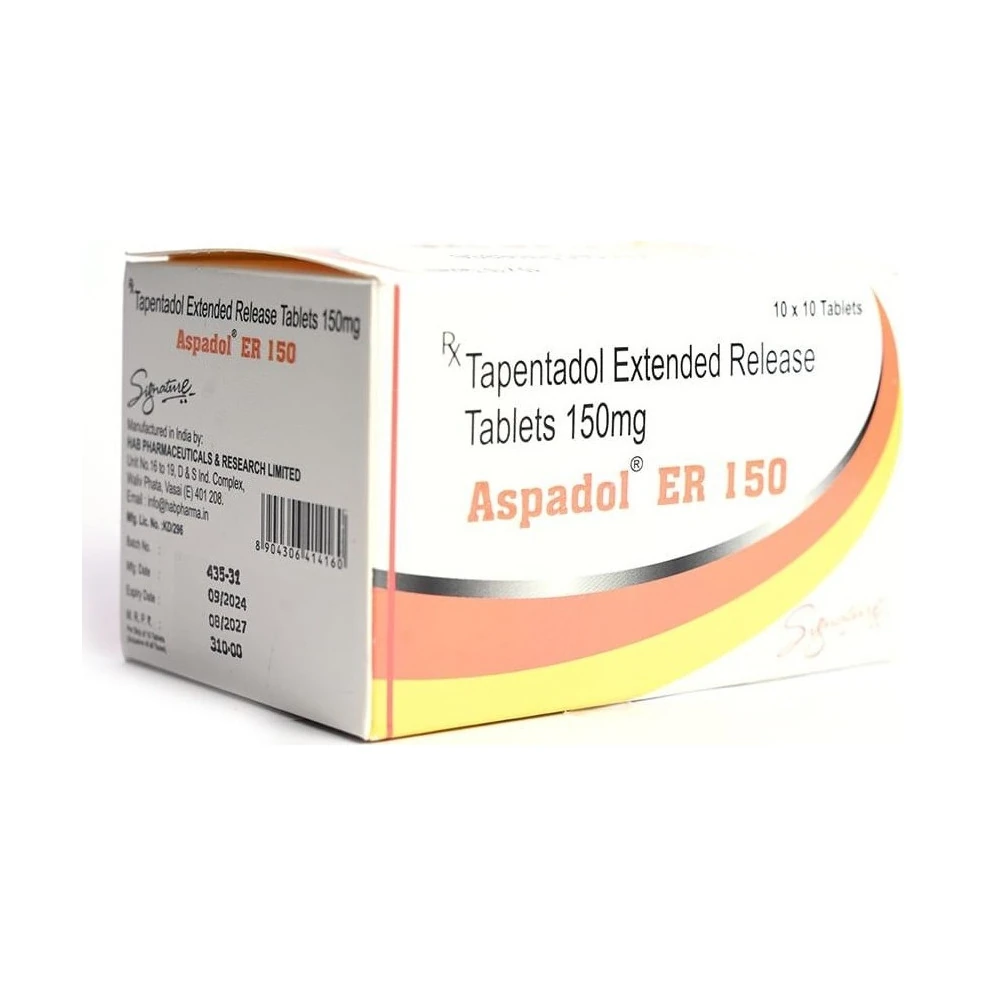
Aspadol ER (Tapentadol) 150 mg
Aspadol ER is a brand name used for an extended-release tapentadol medicine. Tapentadol is an opioid analgesic used for the management of pain that requires around-the-clock, long-term treatment. Extended-release tapentadol products are prescription medicines with important safety restrictions.
Active Ingredient and Medicine Class
The verified active ingredient is tapentadol. It is a centrally acting analgesic and an opioid medicine. Tapentadol has dual pharmacological activity: it acts as a mu-opioid receptor agonist and also inhibits noradrenaline reuptake.
Established Medical Uses
Official U.S. prescribing information for tapentadol extended-release tablets states that the medicine is indicated for the management of pain severe enough to require daily, continuous, long-term opioid treatment and for which alternative treatment options are inadequate. Tapentadol extended-release products are not intended for acute pain or as-needed use.
How It Works
Tapentadol reduces pain through two complementary mechanisms. Its opioid activity changes how the brain and spinal cord perceive pain, while noradrenaline reuptake inhibition strengthens descending pain-control pathways. This combined mechanism is thought to contribute to its analgesic effect.
Important Safety Information
Tapentadol is an opioid and carries risks of addiction, misuse, respiratory depression, and overdose. It should not be used in patients with known or suspected gastrointestinal obstruction, including paralytic ileus. It is not recommended in severe hepatic impairment or severe renal impairment, and it should be avoided in circulatory shock. Caution is also required in people with head injury, increased intracranial pressure, impaired consciousness, seizure disorders, biliary tract disease, or a history of opioid dependence. Mixed agonist-antagonist or partial agonist opioid analgesics may reduce its effect or trigger withdrawal symptoms. Alcohol and other central nervous system depressants can increase sedation and breathing-related risks.
Possible Side Effects
Common adverse reactions include nausea, constipation, dizziness, headache, and somnolence. More serious reactions can include respiratory depression, severe hypotension, seizures, confusion, serotonin-related toxicity, and withdrawal symptoms if the medicine is stopped abruptly in a physically dependent patient. Tapentadol may also impair alertness and the ability to drive or operate machinery.
Scientific Evidence
PubMed-indexed reviews describe tapentadol as a dual-mechanism analgesic with clinical evidence supporting use in moderate to severe pain. Review articles also note a generally improved gastrointestinal tolerability profile compared with some traditional opioids, although opioid-type adverse effects still occur and safety concerns remain clinically important.
Medical Information Notice
This summary is provided for educational purposes only and is based on sources available at the time of review. It does not replace the official patient leaflet, prescribing information, or assessment by a qualified healthcare professional.
Medical Sources
- DailyMed / FDA — Tapentadol extended-release tablets, full prescribing information
- Alshehri et al. — “Tapentadol: A Review of Experimental Pharmacology Studies, Clinical Trials, and Recent Findings” — PubMed article page