Description
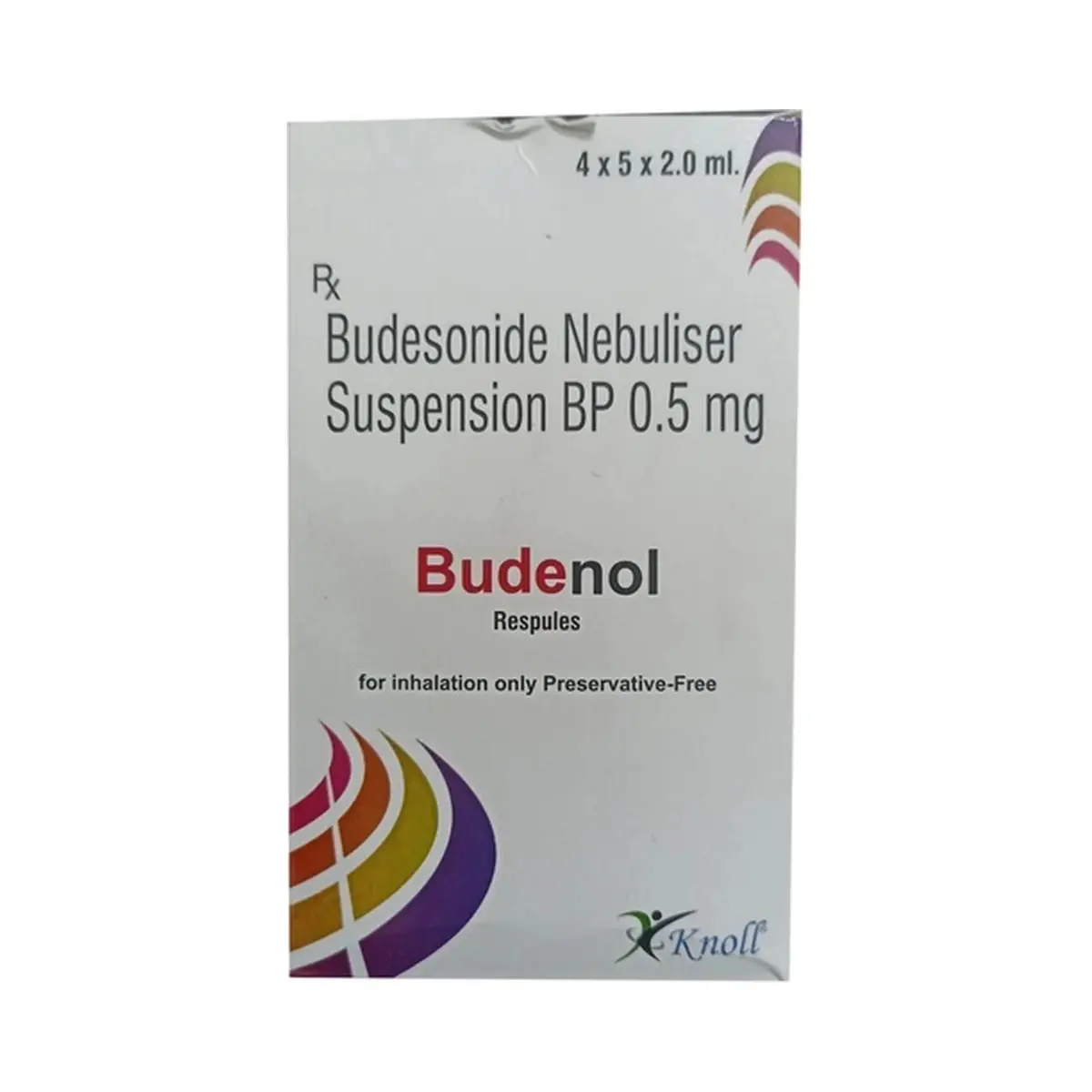
Budenol (Budesonide) 0.5 mg Respules
Budenol 0.5 mg respules contain budesonide, an inhaled corticosteroid used as maintenance therapy for asthma. This medicine is designed for inhalation as a nebulized suspension and is not intended for rapid relief of sudden breathing problems.
Active Ingredient and Medicine Class
The verified active ingredient is budesonide 0.5 mg in 2 mL. Budesonide belongs to the corticosteroid class, specifically an inhaled glucocorticoid with strong local anti-inflammatory activity in the airways and relatively limited systemic activity when used as directed in inhaled form.
Established Medical Uses
Official prescribing information identifies budesonide inhalation suspension for the maintenance treatment of asthma, including prophylactic therapy in young children in the approved age range. It is used to help control chronic airway inflammation rather than to treat an acute bronchospasm episode.
How It Works
Budesonide works by reducing inflammation in the respiratory tract. It acts on glucocorticoid receptors and helps suppress multiple inflammatory cells and mediators involved in asthma, including eosinophils, mast cells, lymphocytes, histamine, leukotrienes, and cytokines. By lowering airway inflammation, it can improve symptom control and reduce asthma instability over time.
Important Safety Information
This medicine is contraindicated in patients with hypersensitivity to budesonide or any ingredient in the product. It should not be used as primary treatment for status asthmaticus or other acute asthma episodes requiring urgent measures. Because it is an inhaled corticosteroid, important precautions include the risk of local fungal infection in the mouth and throat, adrenal suppression, reduced growth velocity in children, glaucoma, cataracts, and paradoxical bronchospasm. Strong CYP3A4 inhibitors such as ketoconazole, ritonavir, itraconazole, clarithromycin, and similar agents may increase systemic corticosteroid exposure and should be used with caution.
Possible Side Effects
Commonly reported adverse effects include upper respiratory infection, throat irritation, cough, ear infection, nasal bleeding, rash, and conjunctivitis. Other recognised risks include oral candidiasis, hoarseness, headache, and respiratory discomfort. Serious reactions can include hypersensitivity reactions, adrenal suppression, worsening asthma control, and ocular effects such as increased intraocular pressure or cataracts with long-term use.
Scientific Evidence
Clinical studies and reviews have shown that budesonide inhalation suspension improves asthma control in children with persistent asthma, including reductions in symptom scores and better airflow measures compared with placebo. Published reviews also support its corticosteroid-sparing role and its overall effectiveness as a maintenance inhaled corticosteroid. The evidence base is strongest for chronic asthma control rather than acute relief.
Medical Information Notice
This page is an educational summary based on sources available at the time of review. It does not replace the official patient leaflet, product label, or individual assessment by a qualified healthcare professional.
Medical Sources
- DailyMed / U.S. National Library of Medicine. PULMICORT RESPULES (budesonide) inhalation suspension, prescribing information. View official prescribing information
- U.S. FDA. PULMICORT RESPULES (budesonide) inhalation suspension, label. View FDA label
- K M Hvizdos et al. Budesonide inhalation suspension: a review of its use in infants, children and adults with inflammatory respiratory disorders. Drugs, 2000. View scientific article
- Budesonide Inhalation Suspension Study Group. Efficacy of budesonide inhalation suspension in infants and young children with persistent asthma. View scientific article