Description
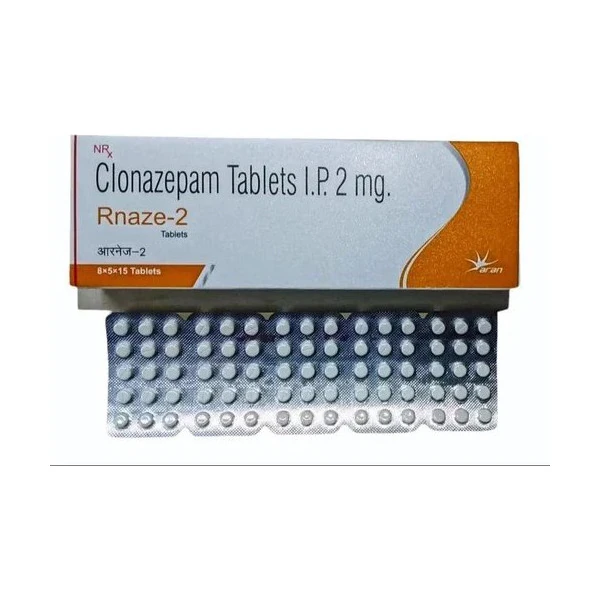
Clonazepam (Clonazepam) 0.5 mg
Clonazepam 0.5 mg is a prescription benzodiazepine tablet containing clonazepam as the active ingredient. It is used as an antiseizure medicine and as an antipanic medicine in adults. Because clonazepam acts on the central nervous system, it can cause sedation and other benzodiazepine-related effects.
Active Ingredient and Medicine Class
The active ingredient is clonazepam. It belongs to the benzodiazepine class. Benzodiazepines are central nervous system depressants with anticonvulsant, anxiolytic and sedative properties. The 0.5 mg strength identifies the tablet, but does not imply any recommended individual dose.
Established Medical Uses
Official prescribing information identifies clonazepam tablets for two main uses: certain seizure disorders and panic disorder with or without agoraphobia in adults. In seizure disorders, clonazepam has been used alone or as adjunctive therapy for Lennox-Gastaut syndrome, akinetic seizures and myoclonic seizures, and it may be useful in some patients with absence seizures who have not responded to succinimides.
For panic disorder, clonazepam is an established short-term treatment option in adults. The official label notes that effectiveness beyond the initial controlled trial periods has not been systematically studied for long-term use in panic disorder.
How It Works
The exact mechanism of clonazepam is not fully known. Its antiseizure and antipanic effects are thought to be related to enhancement of gamma-aminobutyric acid, or GABA, the brain’s main inhibitory neurotransmitter. By strengthening inhibitory signalling in the central nervous system, clonazepam can reduce excessive neuronal activity and lessen panic symptoms in susceptible patients.
Important Safety Information
Clonazepam should not be used in people with a history of hypersensitivity to benzodiazepines, significant liver disease, or acute narrow-angle glaucoma. Caution is also warranted in patients with respiratory disease, kidney problems, depression, mood disorders or suicidal thoughts.
Clinically important interactions include opioids, other sedatives, alcohol and other central nervous system depressants, which can increase the risk of profound sedation and respiratory depression. The official label also notes interaction potential with phenytoin. As with other benzodiazepines, clonazepam may cause dependence, and abrupt discontinuation can trigger withdrawal symptoms and, in some cases, seizures. Pregnancy and breastfeeding require special caution because benzodiazepine exposure may affect the newborn.
Possible Side Effects
Commonly reported adverse effects include drowsiness, dizziness, fatigue, impaired coordination or walking, memory problems and depression. Because it depresses the central nervous system, clonazepam can also impair alertness and motor performance.
More serious reactions may include worsening of seizures in some patients, respiratory depression when combined with opioids or other sedatives, paradoxical behavioural changes, misuse, dependence and withdrawal symptoms after stopping treatment. In pregnancy, late exposure to benzodiazepines has been associated with neonatal breathing problems, feeding problems, hypotonia, hypothermia and withdrawal.
Scientific Evidence
Clinical trials in adults with panic disorder showed that clonazepam was more effective than placebo in reducing panic attacks and improving global clinical ratings over short treatment periods. A fixed-dose study found a clearer response at higher doses than at 0.5 mg, while a flexible-dose study reported significant improvements in panic outcomes with generally good short-term tolerability. Somnolence was a notable adverse event in trial data.
Evidence for seizure disorders is longstanding, but the modern controlled evidence base is more limited than for some newer antiepileptic medicines. Clonazepam remains recognised in prescribing information for selected seizure types, especially when other therapies are inadequate or as part of combination treatment.
Medical Information Notice
This educational summary is based on official prescribing information and selected peer-reviewed studies available at the time of review. It does not replace the official patient leaflet, full prescribing information or individual assessment by a qualified healthcare professional.
Medical Sources
- U.S. Food and Drug Administration. Klonopin (clonazepam) tablets, official prescribing information
- DailyMed / National Library of Medicine. Clonazepam tablets USP, medication guide and label
- Clonazepam Panic Disorder Dose-Response Study Group. Clonazepam in the treatment of panic disorder with or without agoraphobia: a dose-response study of efficacy, safety, and discontinuance. Journal of Clinical Psychopharmacology, 1997. View scientific article
- L Beauclair et al.. Clonazepam in the treatment of panic disorder: a double-blind, placebo-controlled trial investigating the correlation between clonazepam concentrations in plasma and clinical response. Journal of Clinical Psychopharmacology, 1994. View scientific article