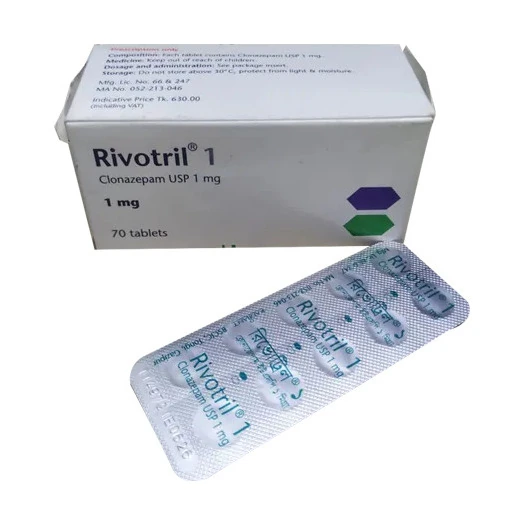
Description
Rivotril (Clonazepam) 0.5 mg
Rivotril 0.5 mg is a brand of clonazepam, a benzodiazepine medicine used in some markets as an anticonvulsant and, in certain settings, for panic disorder. It is an oral tablet formulation containing 0.5 mg of clonazepam.
Active Ingredient and Medicine Class
The verified active ingredient is clonazepam. It belongs to the benzodiazepine class of medicines. Benzodiazepines act on the central nervous system and are known for anticonvulsant, anxiolytic, sedative and muscle-relaxant properties.
Established Medical Uses
Clonazepam is established in the treatment of seizure disorders. Official prescribing information also describes use for panic disorder, with or without agoraphobia, in adults in some jurisdictions. Use varies by country and product authorisation, so the approved indication should always be confirmed in the local product information.
How It Works
Clonazepam’s precise mechanism is not fully known. Its effects are believed to be related to enhancement of gamma-aminobutyric acid (GABA), the main inhibitory neurotransmitter in the central nervous system. This calming effect helps reduce abnormal neuronal firing in epilepsy and may lessen panic symptoms in approved psychiatric use.
Important Safety Information
Clonazepam should not be used in people with a history of allergy to benzodiazepines. Official product information also lists important contraindications and precautions in patients with significant liver disease, severe respiratory impairment, sleep apnoea, myasthenia gravis, coma, or substance misuse. Extra caution is needed in older adults, in people with chronic lung disease, and in those with impaired liver function.
Clinically significant interactions can occur with alcohol and other central nervous system depressants, including sedatives, hypnotics, opioids, anaesthetics and some other antiepileptic medicines. These combinations can increase sedation and respiratory depression. Clonazepam may also contribute to dependence and withdrawal symptoms if stopped suddenly after prolonged use.
Possible Side Effects
Commonly reported adverse effects include somnolence, dizziness, ataxia, slowed reaction time, fatigue, and impaired coordination. Some patients may experience depression, confusion, memory problems or paradoxical behavioural reactions such as agitation or irritability. Serious reactions can include excessive sedation, breathing problems, severe withdrawal symptoms and, rarely, allergic reactions.
Scientific Evidence
Human studies and reviews have supported clonazepam’s role in panic disorder, including controlled trials showing benefit versus placebo in short-term treatment. Earlier reviews of antiepileptic drugs for panic disorder also identified clonazepam as one of the agents with clinical evidence of antipanic activity. These data support established use in selected settings, but long-term treatment decisions remain individualized.
Medical Information Notice
This summary is provided for educational purposes only and is based on sources available at the time of review. It does not replace the official patient leaflet, local prescribing information, or advice from a qualified healthcare professional.
Medical Sources
- DailyMed / U.S. prescribing information Clonazepam Tablets USP, including indications, contraindications, warnings, interactions and adverse reactions. View official prescribing information
- Electronic Medicines Compendium (emc) Clonazepam Tablets, Patient Leaflet, 0.5 mg and 2 mg. View patient leaflet
- European Medicines Agency (EMA) Clonazepam list of nationally authorised medicinal products, including Rivotril entries. View EMA document
- Nardi AE et al. Clonazepam for the treatment of panic disorder. Current Opinion in Psychiatry, 2013. View scientific article
- Keck PE Jr et al. Antiepileptic drugs for the treatment of panic disorder. Neuropsychobiology, 1993. View scientific article