Description
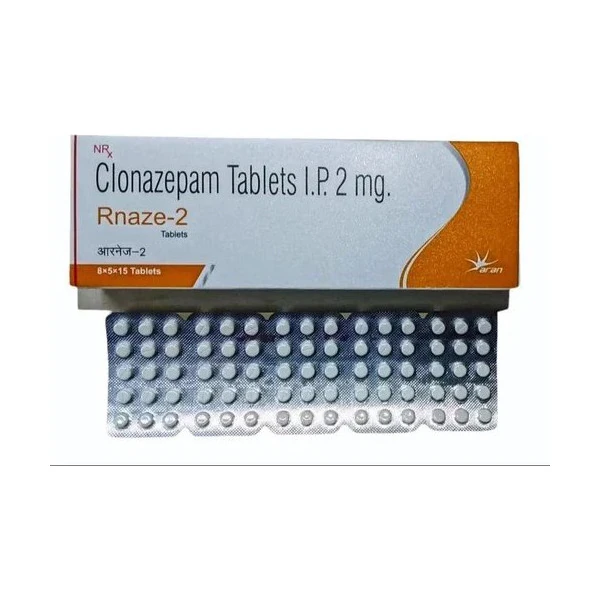
Rnaze (Clonazepam) 2 mg
Rnaze 2 mg is an oral tablet containing clonazepam, a benzodiazepine medicine. Clonazepam is used in established prescribing information for certain seizure disorders and for panic disorder in adults. It is a prescription medicine with central nervous system effects and a known potential for sedation, dependence, and withdrawal reactions.
Active Ingredient and Medicine Class
The verified active ingredient is clonazepam. It belongs to the benzodiazepine class, which acts on the brain and spinal cord by enhancing the effect of gamma-aminobutyric acid, a major inhibitory neurotransmitter. Because of this, clonazepam can reduce excessive neuronal activity and has both anticonvulsant and anxiolytic properties.
Established Medical Uses
Clonazepam tablets are established for the treatment of panic disorder, with or without agoraphobia, in adults. They are also used for seizure disorders, including certain forms of epilepsy, as described in official prescribing information. The medicine has not been systematically studied for long-term use beyond the periods described in controlled trials, so ongoing treatment should be periodically re-evaluated by a healthcare professional.
How It Works
Clonazepam is thought to work by increasing the activity of GABA, which helps dampen overactive nerve signals in the central nervous system. In practical terms, this can lessen abnormal electrical activity associated with seizures and may also reduce the physical and psychological symptoms of panic.
Important Safety Information
Clonazepam has important contraindications and precautions. It should not be used in people with a history of sensitivity to benzodiazepines, in those with significant liver disease, or in acute narrow-angle glaucoma. It can cause additive, potentially dangerous effects when combined with opioids, including profound sedation and respiratory depression. Alcohol and other central nervous system depressants may also intensify its effects.
Because clonazepam can impair alertness and coordination, caution is needed with activities requiring concentration. The medicine may also be associated with misuse, physical dependence, and withdrawal reactions, especially with longer use or higher exposure. Abrupt discontinuation can be hazardous. Antiepileptic medicines, including clonazepam, carry a warning about suicidal thoughts and behavior.
Possible Side Effects
Common side effects include drowsiness, fatigue, dizziness, and impaired coordination. In people treated for seizures, drowsiness and ataxia have been reported frequently. Other possible adverse effects include behavioral changes, confusion, memory problems, mood changes, and paradoxical reactions such as agitation or irritability in some patients.
More serious reactions may include respiratory depression, especially with opioids or other sedatives, severe withdrawal symptoms after stopping treatment, and overdose-related central nervous system depression. Any new or worsening psychiatric or breathing symptoms require prompt medical attention.
Scientific Evidence
Published clinical literature supports clonazepam as an established benzodiazepine used in panic disorder and epilepsy. Older reviews describe anticonvulsant activity across several seizure types and frequent sedating effects, while later reviews discuss its role in panic disorder and the risks associated with nonmedical use, tolerance, and dependence. Overall, the human evidence supports recognised therapeutic use, but also shows that adverse effects and misuse potential are clinically important considerations.
Medical Information Notice
This page is an educational summary based on sources available at the time of review. It does not replace the official patient leaflet, the full prescribing information, or an individual assessment by a qualified healthcare professional.
Medical Sources
- DailyMed, U.S. National Library of Medicine. Clonazepam Tablets, USP: prescribing information and product label. View official prescribing information
- R M Pinder et al. Clonazepam: a review of its pharmacological properties and therapeutic efficacy in epilepsy. Drugs, 1976. View scientific article
- Vinícius Dokkedal-Silva et al. Clonazepam: Indications, Side Effects, and Potential for Nonmedical Use. Harvard Review of Psychiatry, 2019. View scientific article